By Aliyu Samba
There are journeys that take a person from one city to another. There are journeys that take a person from one country to another. But Hajj is different. Hajj takes a person from one state of the soul to another.
As I reflect on the days I spent between Madina, Makkah, Mina, Muzdalifa and Arafat, I realize that what I experienced was not merely a religious obligation. It was a migration of the heart. A journey away from the noise of the world toward the silence where the soul can finally hear itself.
Before arriving in Madina, I thought I understood what love for the Prophet Muhammad (SAWA) meant. But Madina taught me that there is a difference between knowing love and living it.
The city carries a tranquility that is difficult to explain. It is not something visible to the eye, yet it surrounds everything. The streets are calm. The people are calm. Even the birds seem to share in that serenity. There were moments when I watched pigeons standing peacefully among crowds of people without fear. It was as if the city itself had inherited a portion of the mercy of the man who rests within it.
Every step in Madina felt like walking through history. This was where revelation descended. This was where the Prophet (SAWA) built a community from people who had once been divided by tribe, status and bloodline. This was where he smiled, taught, suffered, forgave and ultimately departed from this world.
Standing before his resting place was an experience beyond language. Some emotions belong to the soul and cannot be translated into words. The heart simply understands.
Read Also:Before my eyes met the Ka’abah-Aliyu Samba
One of the greatest lessons Madina taught me was the futility of tribalism and ethnic superiority. In the Prophet’s city, I saw Hausa, Fulani, Arabs, Persians, Turks, Asians, Africans and Europeans standing shoulder to shoulder in prayer. No one asked where another person came from. No one cared about tribe, language or nationality.
Everyone faced one Qiblah. Everyone worshipped one God. Everyone followed one Prophet.
Madina reminded me that Islam came to destroy the walls that separate people and replace them with the bonds of brotherhood.
Leaving Madina for Makkah was one of the most emotional parts of my journey.
As our vehicle moved through the desert, my heart remained suspended behind in the city of the Prophet. Yet the road itself carried profound meaning. Somewhere within those vast landscapes were the paths once travelled by the Messenger of Allah during the Hijrah.
The mountains still stand. The desert still stretches endlessly. The land still bears silent witness to footsteps that changed human history.
That road became a classroom. It taught me that faith is perseverance. That conviction means continuing forward even when the destination is not visible. The Prophet (SAWA) left Makkah with sorrow in his heart, trusting entirely in Allah. His migration was not an escape. It was a declaration that truth is worth every sacrifice.
Read Also:Kaduna leads as Northwestern States spend N40.9 billion on debt servicing in three months
Then came Makkah. The first sight of the Ka’aba is something no photograph, video or description can ever prepare a person for. Millions have tried to describe it. Yet each person discovers a completely different experience.
When my eyes first fell upon the Ka’aba, something inside me broke, and something else was born.
I was overwhelmed by the realization that this was the House toward which I had turned in prayer my entire life. Every prayer I had ever performed was spiritually connected to this sacred place.
The Ka’aba is not simply a structure. It is the center around which Muslim hearts revolve.
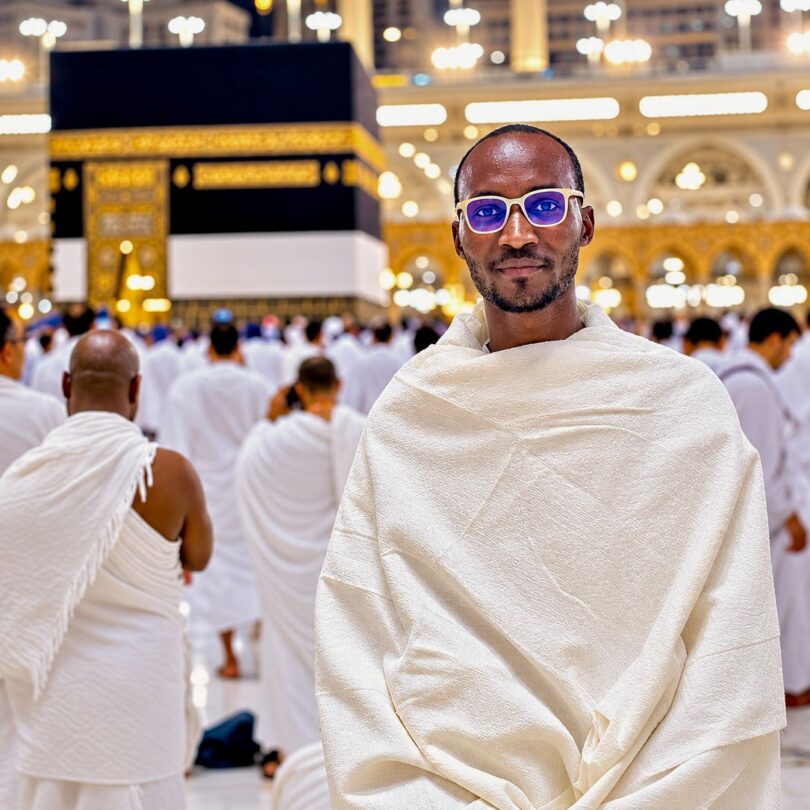
Performing Tawaf among thousands of believers was one of the most powerful manifestations of unity I have ever witnessed. People of every race, language and background moved together in a single direction, united by a single purpose.
The world divides humanity into categories. The Ka’aba dissolves them. There, the rich and poor become equal. The powerful and weak become equal. The famous and unknown become equal. All that remains is a servant and his Lord.
The journey then moved through the sacred stations of Hajj. In Mina, I learned humility.
Among endless rows of tents housing millions of pilgrims, worldly distinctions disappeared. Everyone became a guest of Allah.
In Arafat, I learned accountability. Standing beneath the sun with raised hands, surrounded by oceans of white Ihram, felt like standing on the Day of Judgment before its arrival. Arafat strips away illusions. It forces a person to confront his weaknesses, his failures and his desperate need for divine mercy.