
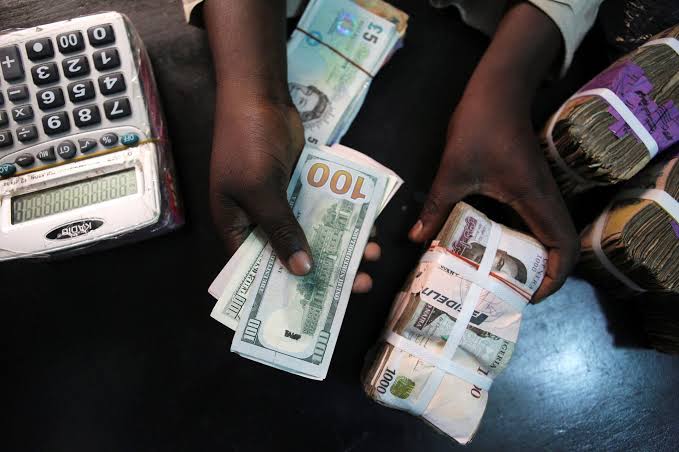
The Nigerian Naira opened the new month with slight fluctuations, trading around ₦1,374.69 per US Dollar in the official market, while the parallel market hovered between ₦1,374 and ₦1,376 as of early Friday, May 1, 2026.
The local currency showed signs of cautious movement across both the official and informal segments, reflecting ongoing efforts to stabilise after recent volatility.
Official Market Performance
In the Nigerian Foreign Exchange Market (NFEM), the Naira began the day at approximately ₦1,374.69 per Dollar.
This comes after mild fluctuations recorded during the final trading days of April.
Analysts highlight that liquidity supply from the Central Bank remains critical in удержing the exchange rate within the current range, especially as the previous session closed close to ₦1,375 per Dollar.
Demand in the official window remains largely driven by trade-related transactions.
However, the narrow gap between the session’s highest and lowest rates suggests a careful and measured start to the new trading month.
Parallel Market Trends
At the parallel market, also known as the black market, the Dollar traded at rates closely aligned with the official figures.
Bureau De Change (BDC) operators quoted the currency between ₦1,374 and ₦1,376 per Dollar.
This near convergence between both markets continues to stand out, as it discourages speculative activities such as round-tripping and hoarding.
Meanwhile, demand for other foreign currencies appears to be rising.
Traders reported slight increases in interest for the British Pound and Canadian Dollar, which exchanged at about ₦1,735 and ₦1,010 respectively in the parallel market.
Economic Outlook
The relative stability seen at the start of May is largely linked to consistent regulatory interventions and close monitoring of foreign exchange inflows.
Even so, economic watchers remain focused on global oil price movements and Nigeria’s inflation trends, both of which play a key role in shaping the Naira’s long-term direction.
For many Nigerians, the reduced gap between official and parallel market rates offers more clarity for financial planning.
However, the high cost of imports continues to drive up prices of goods, particularly consumer items and electronics, across the country.