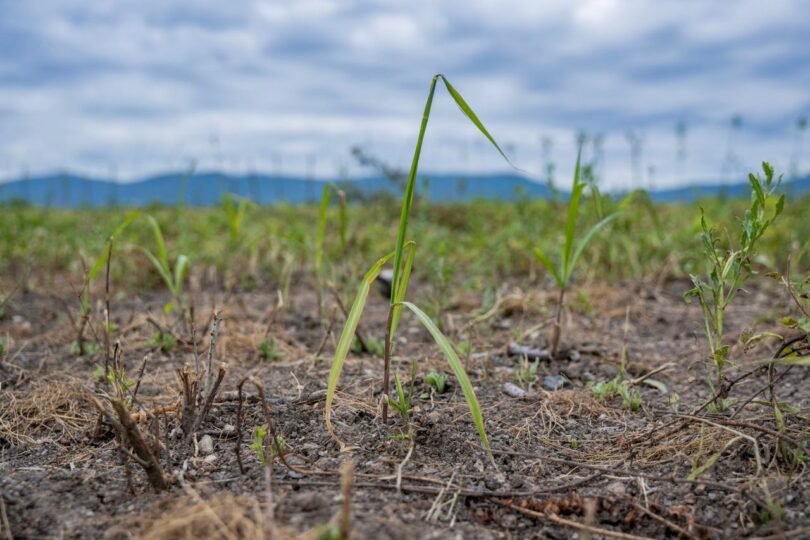
“The development of humus and soil fertility is better here than under other plants,” said Trogl, adding the grass “supports soil microorganisms to faster degrade organic pollutants such as petroleum”.
The UJEP project has run since 2023 and is part of NATO’s Science for Peace and Security programme designed to stem “the environmental impact of military activities”.
A team led by Ukraine-born Valentina Pidlisnyuk, an UJEP professor, is currently growing giant miscanthus in Vorzel near Bucha, a Kiev suburb where Russia’s army is accused of killing hundreds of civilians.
“The area was occupied by Russian troops between February and March 2022, liberated in April 2022, and subsequently demined in autumn 2022,” Pidlisnyuk said.
By then, the local soil was affected by “disturbance, vegetation loss, compaction, and disruption of ecosystem functions,” she said.
The project seeks to “support the environmental regeneration of former military sites while mitigating climate change through the implementation of advanced (giant miscanthus) phytotechnology on contaminated military lands,” she said.
Analyses conducted so far have revealed “positive effects on soil biological parameters and carbon sequestration”, Pidlisnyuk said.
Long-term
The NATO-sponsored project worth 346,000 euros ($395,000), run in cooperation with Canadian, Croatian, Kazakh, Ukrainian and US partners, is due to continue until next year.
But Trogl said he hoped for an extension as miscanthus takes years to cleanse the soil.
A recent French study took 13 years to conclude that “perennial bioenergy crops increase soil organic carbon stocks in the long term”.
“Ideally, the plant will give enough biomass for 20 to 25 years,” Trogl said.
“Then we’ll have to dig it out, but hopefully we’ll be able to use the soil for regular farming.”