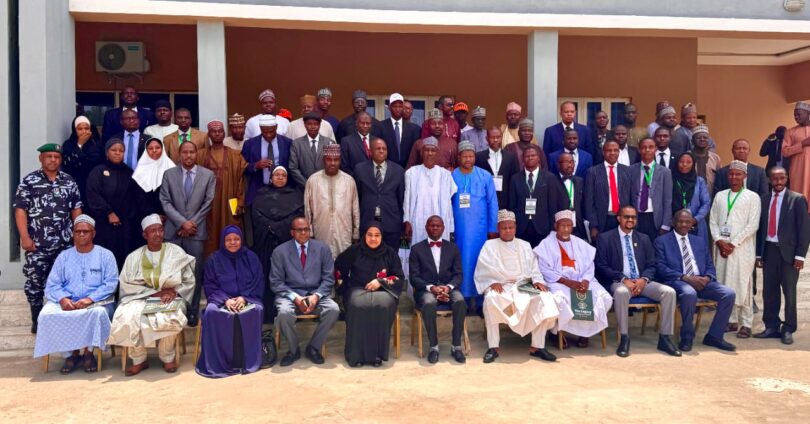
The Nigerian Bar Association (NBA), Ungogo Branch, has called for stronger judicial independence, improved welfare for legal officers, and the adoption of technology-driven solutions to tackle insecurity in Nigeria.
Chairman of the branch, Ahmad Abubakar Gwadabe, made the call at the opening of the 2026 Law Week in Kano, describing the event as a platform for critical reflection on national challenges and institutional reforms.
Gwadabe said the theme, “The Role of Law and Technology in Addressing Insecurity in Contemporary Nigeria,” was carefully chosen to address the country’s worsening security situation, including kidnapping, banditry, cybercrime, terrorism, and political violence.
“This is not merely a ceremonial event, but a gathering of minds united by a common purpose — the pursuit of justice, peace, security and national development,” he said.
He warned that political thuggery continues to undermine democratic values and expose young people to violence, stressing the need for stronger laws, responsible political leadership, and sustained public enlightenment to curb the trend.
SolaceBase reports that the NBA chairman also emphasized the critical role of the judiciary, describing it as the “last hope of the common man,” and insisted that its independence—particularly financial autonomy—remains essential for the effective administration of justice.
According to him, judicial independence is not a privilege but a constitutional necessity, adding that without financial autonomy, the judiciary could be subjected to undue pressure capable of eroding public confidence.
He urged governments at all levels to fully implement judicial financial autonomy, while also calling on judges to uphold fairness, courage, and integrity in the discharge of their duties.
Gwadabe further acknowledged the sacrifices of security agencies, including the police, military, and other services, noting that their efforts must be supported with improved welfare, training, and modern technological tools.
“Modern insecurity requires modern solutions,” he said, advocating increased investment in digital surveillance systems, forensic investigation tools, and cybercrime monitoring to strengthen law enforcement operations.
Addressing participants, the Chief Judge of Kano State, Dije Abdu Aboki, stressed that the fight against insecurity must be firmly rooted in the rule of law.
Read Also:NBA holds fireside chat on Nigeria’s tax laws, tasks lawyers on compliance role
She noted that while security agencies play a vital role in maintaining order, their operations must align with legal principles and court decisions.
“The rule of law remains the foundation of every democratic society. Court orders are binding and must be obeyed,” she said, warning that disregard for judicial decisions could weaken public confidence in institutions.
The Chief Judge also highlighted ongoing efforts to modernise the judiciary through technology, including digital record systems, electronic filing, and improved case management processes aimed at enhancing efficiency and access to justice.
She, however, cautioned against the misuse of legal processes and unethical conduct among some practitioners, noting that such actions could undermine the integrity of the justice system.
Read Also:NBA honours Kano attorney general, Abdulkarim Maude, celebrates leadership, reforms
Also speaking, Associate Professor Kabiru Adamu, chairman of the Law Week planning committee, said the event was designed to generate practical solutions to insecurity, particularly in northern Nigeria.
He noted that the conference brings together experts and stakeholders to share ideas and recommendations that could help improve security and legal practice.
“We have a lot of discussants and experts who will bring knowledge and suggestions on how to address insecurity in Nigeria,” he said, expressing optimism that participants would translate discussions into actionable outcomes.
The week-long event is expected to feature panel discussions on policing, artificial intelligence, governance, and the role of legal practitioners in addressing security challenges in the country.