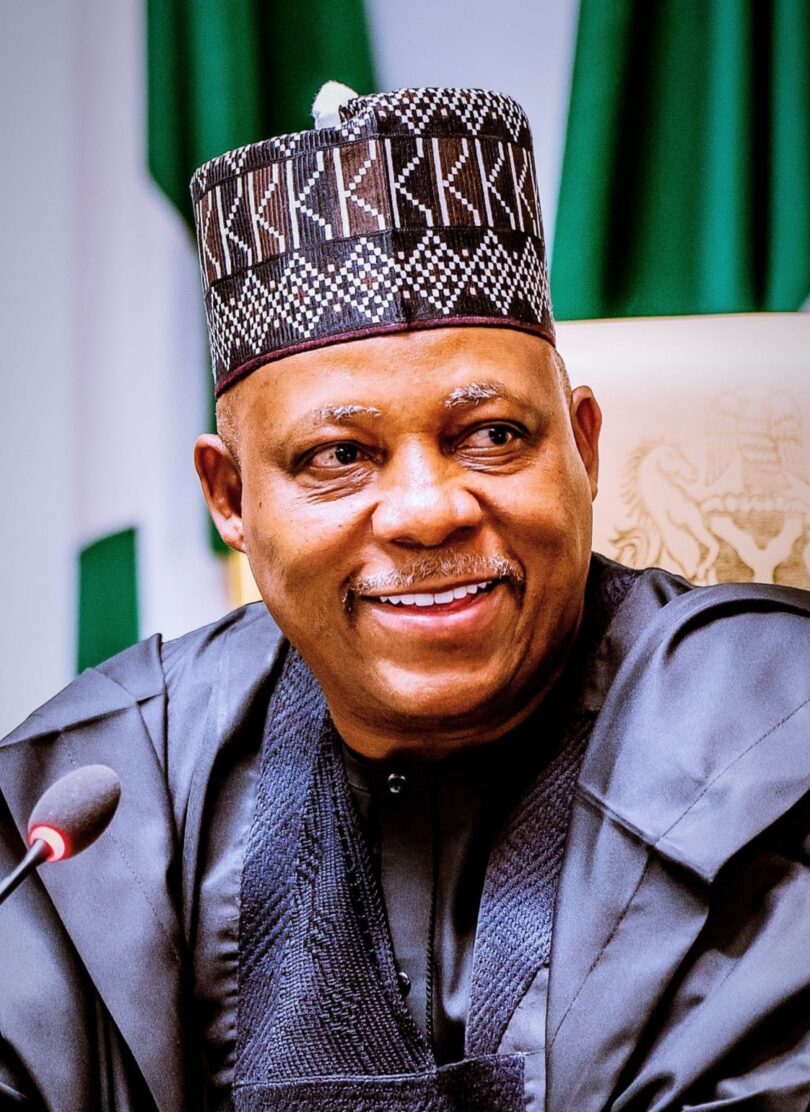
Vice President Kashim Shettima has urged the National Examinations Council, NECO, and other bodies administering public examination to keep their fees affordable to ordinary Nigerian children while maintaining global standards.
Shettima gave the charge on Thursday at the 25th Anniversary Celebration of NECO in Abuja where the council’s achievements and future reforms were elaborately shocased.
Represented by Barr. Bashiru Maidugu, the Vice President described NECO’s 25-year journey as “a profound testament to collective national resolve, our enduring faith in the Nigerian child, and unwavering commitment to educational excellence.”
He said the council had evolved into “one of Africa’s foremost examination bodies,” adding that its adoption of digital solutions had improved “examination administration, result processing, accessibility, transparency, and overall operational efficiency.”
Shettima urged the examination body to sustain its commitment to credibility and innovation.
“As NECO enters the next phase of its institutional journey, I urge the Council to redouble its efforts to greater excellence, innovation, and global competitiveness.
“We must continue to deepen our commitment to upholding integrity in examination administration and strengthening security mechanisms that safeguard the sanctity of assessments,” he said.
Also speaking, the Minister of Education, Dr. Tunji Alausa, announced that NECO will commence Computer-Based Examinations, CBE, this year as part of reforms aimed at curbing examination malpractice and improving the integrity of national assessments.
Alausa said the introduction of Computer-Based Examinations represented a major milestone in ongoing education reforms.
“We are at the threshold of a very important reform, which NECO is spearheading, and that is the Computer-Based Examination (CBE), which is to commence this year,” the minister stated.
According to him, the initiative “will go a long way in curbing the menace of examination malpractice due to its ability to track and detect suspicious activity and also provide real-time monitoring of candidates.”
Alausa further said the government would continue exploring “innovative assessment approaches that reflect 21st-century competencies such as critical thinking, problem-solving, and digital literacy.”
On his part, the Registrar of NECO, Prof Ibrahim Dantani Wushishi, NECO has grown from a fledgling institution battling trust and infrastructure challenges into an internationally recognised examination body.
“Today, NECO is recognized on international platforms as a credible examination body contributing to educational integrity and mobility,” he said.
Wushishi disclosed that the council currently conducts examinations in eight countries, noting that its embrace of online registration and internet-based result checking had become “a game-changer, bringing speed, transparency, and convenience to candidates and institutions.”
The NECO boss added that the council’s success was built on “transparent processes, timely release of results, and consistent standards,” which helped it gain public confidence both within and outside Nigeria.
He also paid tribute to former Nigerian leaders, including Ibrahim Badamosi Babangida, Abdulsalami Abubakar, and Olusegun Obasanjo, for their roles in the establishment and growth of the council.