Nigeria and Cameroun are taking steps to end duplication in border checks and speed up the movement of people and goods through the Ekok-Mfum corridor….
Nigeria and Cameroun are taking steps to end duplication in border checks and speed up the movement of people and goods through the Ekok-Mfum corridor.
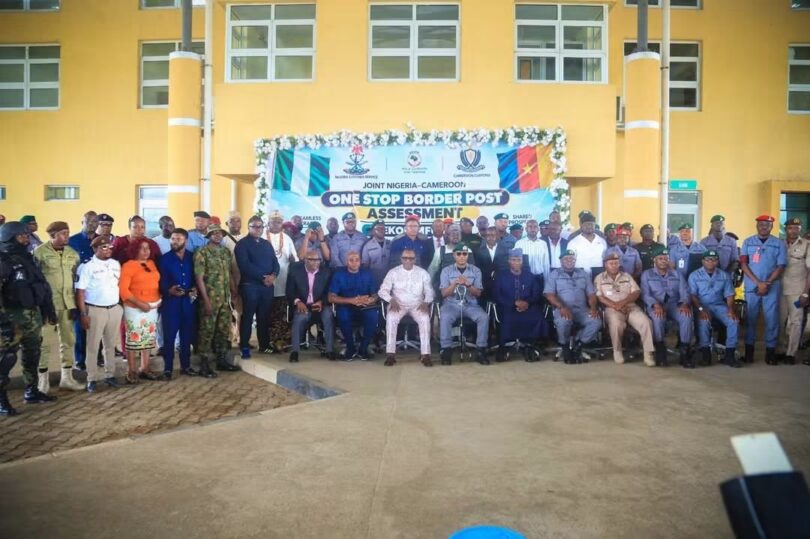
The two countries have commenced a joint assessment of the Ekok-Mfum One Stop Border Post, with their Customs administrations examining how operations can be better coordinated.
The exercise brought together the Comptroller-General of the Nigeria Customs Service, Bashir Adewale Adeniyi, the Director-General of Cameroun Customs, Fongod Nuvaga, and officials from relevant government and security agencies.
The assessment began with stakeholder consultations before officials conducted a joint inspection of facilities at the border post.
The exercise is expected to identify gaps in infrastructure, technology, information sharing and procedures that could hinder the effective operation of the One Stop Border Post.
Adeniyi said the initiative builds on existing cooperation between Nigeria and Cameroun and could provide a model for deeper regional integration.
He stressed that successful border management requires more than physical facilities.
“Effective border management requires more than physical infrastructure. The systems on both sides have to communicate, and our procedures have to be better aligned.”
Nuvaga described the assessment as a practical step towards coordinated border management between the two countries.
He said the objective was to reduce unnecessary duplication while maintaining effective controls.
“The objective is to examine how Customs processes can be carried out jointly, reducing duplication while maintaining effective controls at the border.”
Cameroun Customs officials are also drawing lessons from a recent benchmarking visit to the Beitbridge border post between Zimbabwe and South Africa, where they studied the operation of a coordinated border management system.
At Ekok-Mfum, officials are assessing how relevant elements of that model can be adapted to the Nigeria-Cameroun corridor.
The Comptroller of the Cross River, Calabar Free Trade Zone and Akwa Ibom Area Command, Momodu Dauda, said the assessment would focus on existing facilities, operational gaps and practical measures needed to make the border post more efficient.
He identified infrastructure, technology, information sharing, harmonised procedures and cooperation among border agencies and host communities as critical requirements.
“For the One Stop Border Post to work effectively, we need the right infrastructure, information sharing, technology and harmonised procedures, as well as cooperation among the agencies and communities operating around the border.”
The Ekok-Mfum corridor is an important gateway for trade and movement between Nigeria and Cameroun.
The joint technical assessment is expected to pave the way for a more seamless border system that reduces delays and duplication while strengthening security and Customs controls.