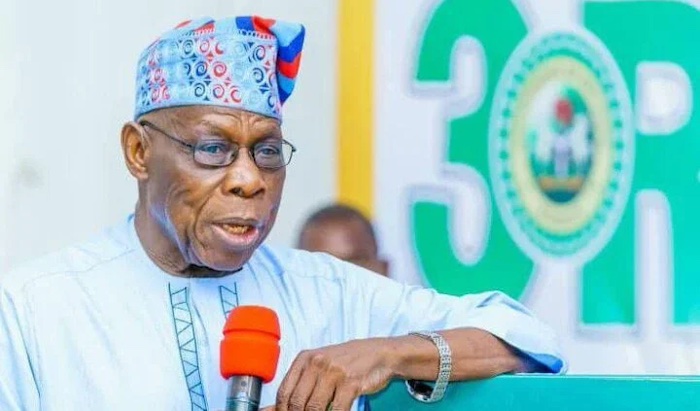
Former President Olusegun Obasanjo has said Nigeria has no justification for its widespread poverty, given the country’s vast natural resources, agricultural potential and human capital.
Obasanjo made the remarks during an interview on C-Suite Café, where he discussed Nigeria’s economic challenges and what he described as the failure of successive governments to fully harness the country’s resources.
The former president said Nigeria had millions of hectares of arable land, favourable climatic conditions and abundant water resources capable of supporting large-scale food production and agricultural exports.
According to him, the country’s human capital is another major asset that remains largely underutilised.
He cited the entrepreneurial and intellectual capacity of Nigerians living in the country and abroad as resources that could contribute significantly to economic growth if properly harnessed.
Obasanjo also identified solid minerals, crude oil and natural gas as resources capable of providing Nigeria with diversified sources of revenue.
He, however, blamed policy inconsistency for some of the country’s economic difficulties, particularly the tendency of successive administrations to abandon long-term programmes initiated by their predecessors.
The former president said frequent changes in agricultural policies had affected efforts to achieve sustainable food production and economic development.
He also expressed concern about public borrowing, recalling the debt relief secured under his administration, which he said amounted to about $30bn between 2005 and 2006.
Obasanjo further identified corruption, crude oil theft and revenue leakages as major obstacles to Nigeria’s development.
He argued that the country’s resources could generate greater prosperity if properly managed and protected from diversion.
According to the former president, tackling poverty requires strong political will, continuity in government policies and greater fiscal accountability across all levels of government.
He said Nigeria’s economic challenges were not insurmountable, stressing that sustained implementation of development policies and proper management of the country’s resources could put the nation on a path to long-term prosperity.