0
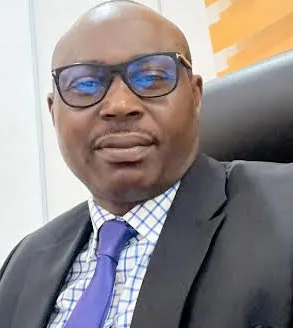
Joshua Oghenejiru Muwhen, the Acting Managing Director and Chief Executive Officer of Delta Trust Mortgage Bank Limited is a mortgage banking professional and public sector development advocate. He recently bagged the prestigious Leadtimes Africa Leadership Excellence Award 2026 and was inducted to the Leadtimes Africa Magazine Hall of Fame. He spoke with EJIKEME OMENAZU on the state of the nation including insecurity, the need for State Police, President Bola Ahmed Tinubu’s Renewed Hope Agenda and other crucial issues. Excerpts:
Could you please introduce yourself to our readers?
I am Barrister Joshua Oghenejiru Muwhen, Acting Managing Director/CEO of Delta Trust Mortgage Bank Limited. I am a legal practitioner, mortgage banking professional, administrator and public-sector development advocate with many years of experience in financial services, corporate governance, housing finance and institutional leadership. I was recently inducted to the prestigious Leadtimes Africa Magazine Hall of Fame after winning the Leadtimes Africa Leadership Excellence Award 2026 at the University of Lagos.
How did you feel when you received the nomination letter?
I felt deeply humbled, honoured and grateful. Awards of this nature are not merely personal decorations; they are reminders that service, diligence and consistency are being observed. I received the nomination with gratitude to God and with renewed commitment to do more.
How will the award influence your work and commitment to Nigeria’s development?
The award will strengthen my resolve to continue contributing to national development through housing finance, ethical leadership, institutional reform and mentorship. Recognition comes with responsibility, and this induction into the Leadtimes Africa Magazine Hall of Fame will inspire me to remain a positive example in public service and the mortgage banking sector.
What are some of the major challenges facing the housing sector?
The housing sector is challenged by high cost of land, weak mortgage penetration, low disposable income, high construction costs, limited long-term funding, title perfection delays, infrastructure deficits and regulatory bottlenecks. Nigeria must deepen mortgage liquidity, simplify land administration and support affordable housing schemes.
What are your advice to young Nigerians pursuing law and public service?
Such young Nigerians must embrace discipline, integrity, continuous learning and patience. Law and public service are not shortcuts to wealth; they are platforms for service, justice and nation-building. Young professionals must build competence before seeking influence.
Bearing in mind the vast landscape called Nigeria and its heterogeneous nature, some Nigerians are advocating for rotational presidency. What is your take on this?
I believe in equity, inclusion and national cohesion. Rotational presidency can help manage Nigeria’s diversity, but it must not replace competence, character, capacity and national vision.
What challenges do you think are being faced by Nigerians who are into politics?
The major challenges of young people going into politics are money politics, godfatherism, unemployment, lack of internal party democracy and limited mentorship. Youths can overcome these through education, organisation, credibility, grassroots engagement and value-driven participation.
What do you think is wrong with President Bola Tinubu’s economic reforms?
The reforms are bold, especially subsidy removal, exchange-rate reforms and tax reforms, but the main concern is the hardship transmission to ordinary Nigerians. Reform without sufficient cushioning, food security, job creation and price stability can create public frustration. The government has argued that the reforms are beginning to reposition the economy, but many households are still waiting to feel real relief.
What key reforms do you think are needed for growth, security and good governance?
Nigeria needs power sector reform, food security, industrial production, affordable credit, public sector discipline, judicial efficiency, security decentralisation, transparent budgeting and stronger accountability institutions.
Following renewed bandit attacks on schools, how do you think the government should this trend which puts the lives of teachers and students at risk?
Government must combine intelligence-led policing, community security networks, forest surveillance, rapid response units, school protection systems and prosecution of sponsors of violence. Recent mass abductions show the need for emergency-level coordination, not reactive responses.
With the increase of terrorism, kidnapping for ransom and banditry, would you say the government doing enough to check the rising cases of insecurity?
Government is making efforts, but the results must become more visible. Citizens judge security by safety on roads, farms, schools, churches, mosques and homes. More coordination, intelligence and accountability are required.
How do you think the government and citizens can collaborate on issue of insecurity?
Citizens must provide timely intelligence, reject shielding criminals and support community policing. Government must protect informants, respond quickly and build trust through fairness, transparency and visible justice.
Will you say the creation of State Police being advocated by a cross section of Nigerians can reduce insecurity?
Yes, if properly structured. State Police can bring security closer to communities and improve local intelligence. However, safeguards must prevent political abuse, ethnic bias and misuse by state actors. President Bola Tinubu has urged constitutional amendment to accommodate state police, and the Senate has indicated commitment to the process.
What constitutional reforms do you think are necessary for the advancement of democracy and good governance?
Nigeria indeed needs constitutional reforms. These are in the areas of fiscal federalism, local government autonomy, electoral accountability, judicial independence, state policing, devolution of powers and clearer separation of powers.
Corruption has been a major issue in the country. How can the war against corruption be more effective?
Anti-corruption war must move beyond arrests to prevention. We need transparent procurement, digital public finance systems, speedy trials, protection for whistleblowers and consequences for both public and private-sector collaborators. Institutions must be stronger than individuals. The anti-corruption will succeed when systems make corruption difficult, detection easy and punishment certain.
How can the government strike a balance between the issue of insecurity and human rights?
Security agencies must be firm, but lawful. They should carry out their duties in lawful manner. Human rights should not weaken security, and security should not destroy liberty. Proper training, oversight, intelligence-based operations and judicial accountability are essential.
What is your take on the new Tax Reform Laws enacted by the Federal Government? Do you think there are some areas that should be reviewed?
The new tax laws are a major attempt to harmonise Nigeria’s tax system. President Bola Tinubu signed four Tax Reform Laws in June 2025, including the Nigeria Tax Act and Nigeria Tax Administration Act. They are useful, but implementation must be sensitive to businesses, low-income earners and subnational realities. Periodic reviews of the laws are necessary.
One of the major reforms in the power sector is the decentralisation of power. What do you think are the benefits and challenges of decentralisation of power?
The benefits include faster development, local accountability and stronger federalism. The challenges include weak state institutions, risk of abuse, uneven capacity and possible duplication of costs.
How do you think Nigeria’s electoral system should be improved upon?
Nigeria needs credible voter registers, transparent party primaries, improved technology, faster election dispute resolution, campaign finance control and true independence for electoral bodies.
Who is your mentor among Nigeria’s legal luminaries?
Nigeria has produced many outstanding legal minds, but I hold in high regard legal luminaries who combine brilliance with courage, integrity and service to justice. My admiration goes to those who have used law as an instrument of national development, institutional reform and protection of society’s moral order.