The Secretary to the Government of the Federation (SGF), Senator George Akume, has raised concerns that persistent allegations of corruption within Nigeria’s electoral system are weakening public confidence in the country’s democratic process.
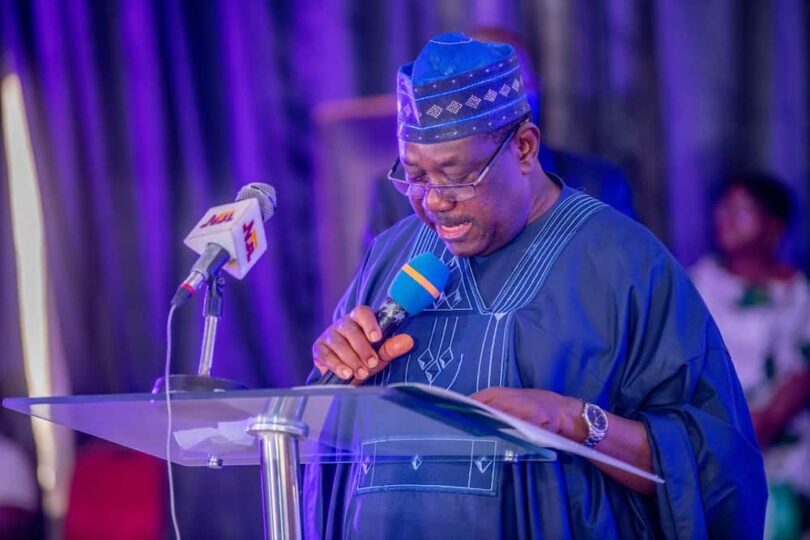
Akume made the remarks on Thursday while speaking at the State House Conference Centre, Abuja, during a lecture marking the 2026 Democracy Day celebration.
Addressing the theme, “27 Years of Democratic Governance: Achievements, Challenges and the Road Ahead,” the SGF acknowledged that Nigeria has made notable democratic progress since the return to civilian rule in 1999.
However, he cautioned that concerns over electoral integrity continue to threaten democratic consolidation.
He said claims of corruption in electoral processes have continued to undermine citizens’ trust in elections and democratic institutions.
“Electoral integrity remains a work in progress. While our electoral management body and the judiciary have demonstrated growing independence, persistent allegations of corruption in the electoral system and processes remain critical to its integrity,” Akume said.
He stressed that democracy goes beyond voting, adding that its true value lies in ensuring that every vote carries equal weight.
Reflecting on Nigeria’s 27-year democratic journey, Akume described it as one marked by resilience and progress, noting that the country has successfully conducted eight consecutive general elections.
He also pointed to peaceful transitions of power, including transfers between political parties and what he described as a historic handover from a ruling party to the opposition.
Despite these milestones, he urged stronger efforts to address issues capable of weakening public confidence in the democratic system.
Akume also warned against allowing ethnic, religious, and regional divisions to undermine national unity and democratic stability.
He highlighted key achievements under democratic governance, including economic growth, improved financial inclusion, and major infrastructure projects such as the Lagos-Calabar Coastal Highway and the Sokoto-Badagry Superhighway.
He also cited reforms in the power sector and expanded access to education and healthcare through initiatives like the National Health Insurance Scheme, the Universal Basic Education programme, and the Nigerian Education Loan Fund.
Calling Democracy Day a moment for national reflection, Akume urged Nigerians to consider the kind of democracy they hope to build in the next 27 years.
Concerns over electoral malpractice, vote-buying, result manipulation, and other irregularities, he noted, continue to fuel public debate about electoral credibility.
He reiterated the need for sustained reforms to strengthen transparency, accountability, and trust in Nigeria’s democratic process.