
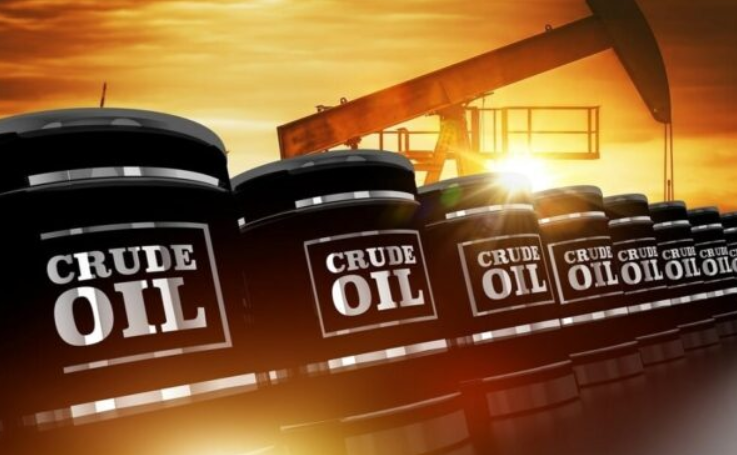
Nigerian crude and major oil contracts continue their losing streak for the fourth day in a row, falling by almost 6% and trading at about $105 per barrel.
Crude oil prices decline as easing supply concerns boost optimism over a possible US-Iran agreement.
According to a US official quoted by Axios, an agreement involving a 60-day extension of the ceasefire between the US and Iran is about to be signed.
Iran would agree to remove the mines it placed in the Strait of Hormuz and permit ships to travel freely as part of the proposed agreement, which would also reopen the waterway.
The United States would end its current blockade of Iranian ports in return for these measures.
President Trump posted on social media that he had advised his representatives “not to rush into a deal,” which somewhat dampened hopes for a deal.
The agreement would not be signed on Sunday, a senior US administration official added, even though progress had been made.
The agreement would see Iran give up its enriched uranium, reopen the Strait of Hormuz, and put an end to the conflict. The agreement would begin with a 60-day extension of the ceasefire, during which time nuclear talks would continue, and traffic through the Strait would resume.
If a deal is reached, the number of ships passing through the Strait could return to pre-war levels in 30 days, according to Iranian news agency Tasnim.
Israeli Prime Minister Netanyahu stressed that “any final agreement with Iran must eliminate the nuclear danger” even though the agreement would end the conflict between Israel and Hezbollah. Esmai, Iranian Ministry of Foreign Affairs spokesperson.
About one-fifth of the world’s oil and liquefied natural gas travels through the Strait of Hormuz, which would be reopened, greatly easing the strain on major Asian economies and causing oil prices to drop sharply.
Earlier, the conflict and a double blockade severely disrupted energy markets, causing Middle Eastern producers to shut down millions of barrels of crude output per day.
However, according to Reuters, citing Iran’s Tasnim news agency, the US government is still blocking some sections of the deal to end the conflict, including the release of blocked Iranian assets.
US Secretary of State Marco Rubio highlighted that while there was regional support for an agreement with Iran, a comprehensive nuclear deal was not something that could be done quickly or carelessly. The structural forces driving Nigerian crude now are a combination of an external pricing bonanza and internal supply constraints.
The extra N5.13 trillion in windfall revenue from market prices averaging around $110 has enabled Nigeria to pay down domestic debt, defend the Naira (stabilizing around N1,365/$ – N1,375/$), and build a fiscal buffer.
Upstream recovery is picking up, but it continues to battle legacy infrastructure challenges, with production rising to an average of 1.49 million per day in Q2 (compared to roughly 1.35 million per day in Q1) and still below its OPEC+ quota of 1.50 million per day and internal 2026 budget target of 1.84 million barrels per day.
The surge in revenue is purely price-driven, with volume output remaining limited by localized pipeline security and technical constraints. Nigeria is in a sweet spot with global oil prices that are well over $110 a barrel, which is offsetting lower-than-targeted domestic production.