
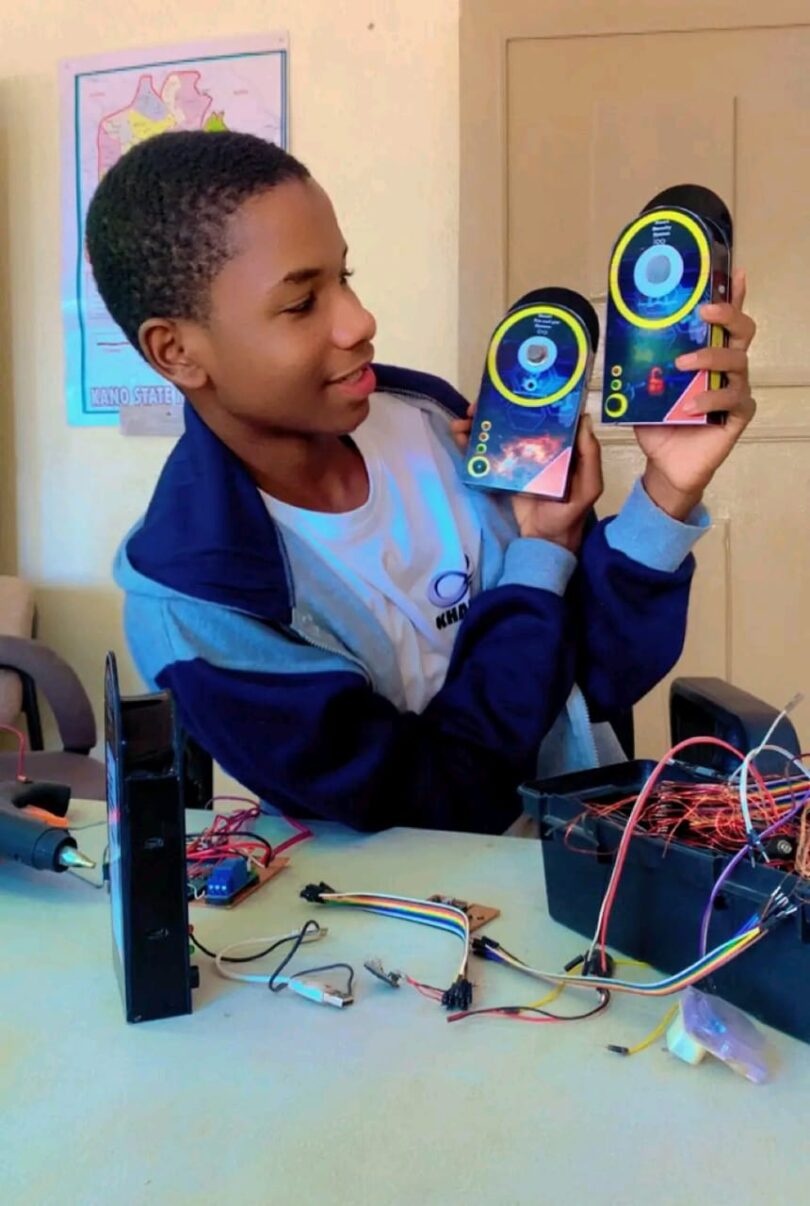
A young Nigerian innovator, Khalifa Aminu, has raised concerns over the lack of recognition and support for locally developed solutions, despite creating a fire detection system capable of reducing fire outbreaks by up to 70 percent.
His frustration comes against the backdrop of recurring market fires, including the recent incident at Singa Market in Kano, where shops and goods were destroyed.
According to Khalifa, such disasters persist largely because early warning systems are not taken seriously or widely adopted in Nigeria.
“I built this system a long time ago, but it has not been appreciated here as I had hoped,” he said, expressing disappointment at the low level of local acceptance.
He told SolaceBase on Thursday that the device, which combines several smart safety features, can detect gas leaks before they become dangerous, identify smoke and fire instantly, and sense extreme heat levels. It also triggers a loud alarm to alert nearby people and sends immediate WhatsApp notifications to the user, ensuring a quick response even from a distance.
Despite its potential to save lives and property, Khalifa revealed that most of the interest in his innovation has come from outside Nigeria, particularly from neighbouring countries such as Niger and Chad. This, he said, reflects a troubling pattern where locally made innovations receive more appreciation abroad than at home.
Read Also:Gombe-born aerospace engineer delivers self-built rocket, showcases Nigeria’s growing innovation capacity
Observers say this trend highlights a broader challenge in Nigeria’s innovation ecosystem, where inventors often struggle with poor funding, limited government backing, and low public trust in indigenous technology.
Khalifa warned that failure to embrace homegrown solutions could continue to expose markets and communities to avoidable disasters. He stressed that preventive technologies should be prioritized rather than ignored until tragedy strikes.
“I am appealing to the government and traders to examine this system and understand its importance,” he urged, calling for a shift in mindset toward valuing Nigerian ingenuity.
Experts note that Nigeria is rich in intellectual talent, with many young innovators capable of addressing critical national challenges. However, without adequate support and recognition, such ideas risk being underutilized or lost entirely.
Khalifa’s experience underscores the urgent need for Nigeria to foster a culture that supports and invests in local innovation, ensuring that homegrown solutions are not only created but also adopted for national development.