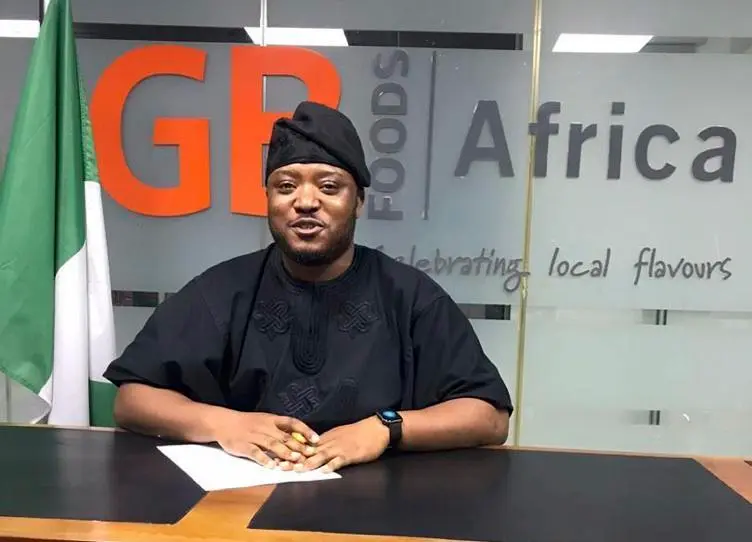
The Managing Director of GB Foods Nigeria, Vincent Egbe, has stated that despite Nigeria being the world’s largest producer of cassava, the country’s cassava value chain remains underdeveloped.
Egbe made these remarks during the signing of a $100,000 investment agreement between GBHub Africa and Iyene Agro Processing Factory in Lagos, aimed at driving local production of cassava products.
Despite Nigeria’s position as the top producer of cassava globally, challenges such as limited access to credit, an over-reliance on traditional processing methods, and poor infrastructure continue to hinder the development of the value chain.
At the event, Egbe emphasized the importance of job creation, making food more affordable, improving nutrition, and reducing Nigeria’s dependence on imported food.
Egbe further explained that GBHub Africa is focused on cassava due to Nigeria’s high production capacity.
According to UN Comtrade, Nigeria exported approximately 5,000 metric tonnes of cassava products in 2023, which is less than 1% of its total production.
These exports mainly consisted of derivatives like starch and flour, as well as food products like garri and fufu.
In contrast, Thailand exported about seven million metric tonnes of cassava-based products, accounting for roughly 21% of its production, even though it produces about half the amount of cassava as Nigeria.
This stark contrast highlights a significant opportunity for Nigeria to expand its cassava export market.
Vicenç Bosch, CEO of GB Foods Africa, emphasized the importance of developing local industries to drive growth.
He shared that GB Foods’ shareholders have committed up to $10 million to support local food production.
Speaking at the event, Blessing Akpan, Founder and CEO of Iyene Agro Factory, shared her journey of starting the garri processing business with only N14,000 as a young graduate eight years ago.
She expressed that the $100,000 investment would significantly help scale the startup and impact its footprint in the cassava sector.
The Federal Government has recently reaffirmed its commitment to developing Nigeria’s cassava bioethanol value chain, aiming to drive industrial expansion and economic stability.
Atiku Bagudu, the Minister of Budget and Economic Planning, revealed this during a capacity-building workshop in Abeokuta.
He stressed that the initiative seeks to move Nigeria beyond producing cassava solely for food consumption, towards large-scale industrial and energy applications.
Despite being the world’s largest producer of cassava, Nigeria has not fully tapped into the economic potential of the crop.