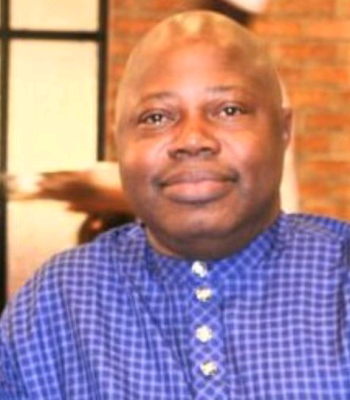
Veteran journalist and public affairs commentator, Mayor Akinpelu, has said Nigeria’s economic reforms have strengthened the fundamentals of the economy but have yet to translate sufficiently into relief for households and businesses….
Veteran journalist and public affairs commentator, Mayor Akinpelu, has said Nigeria’s economic reforms have strengthened the fundamentals of the economy but have yet to translate sufficiently into relief for households and businesses.
Akinpelu, speaking on an Independence Day special edition of Journalists Hangout on TVC News, acknowledged that the Federal Government had made progress through the removal of fuel subsidy and reforms to the foreign exchange market.
“They were able to remove subsidy, which is removal of waste. They were able to stop the scam that was the foreign exchange that we had where you have the dual exchange rate,” he said.
He said the reforms had helped stabilise the foreign exchange market and improve the fundamentals of the economy.
“When you look at the fundamentals of the economy, it is strong. I concede that to them. The reforms that they’ve done, I concede that to them,” Akinpelu said.
However, the journalist argued that the benefits of the reforms were yet to sufficiently reach ordinary Nigerians, particularly through lower living costs and increased economic opportunities.
“But most of the things the president said was just politics, political rhetorics,” he said.
Akinpelu urged the government to focus on translating its economic reforms into tangible benefits for Nigerians, particularly by reducing transportation costs, improving agricultural production and making credit more affordable.
On agriculture, he said insecurity remained a major obstacle preventing many farmers from accessing their farms.
He called for farmers to be organised into cooperative groups that could benefit from mechanisation, improved infrastructure and easier access to farm equipment.
“If you put farmers in a cluster, you can bring the hardware there, the tractors and all that, that can help them to till the land,” he said.
He also called for improved roads linking farms to markets, saying efficient transportation would help farmers move their produce quickly and reduce costs.
On transportation, Akinpelu advocated a more deliberate government-backed transition to compressed natural gas (CNG), arguing that wider adoption across the transport sector could reduce transportation costs and ease pressure on the prices of other goods and services.
He also criticised the high cost of borrowing in Nigeria, saying elevated interest rates were restricting economic activity and investment.
“The interest rate in Nigeria is too high,” Akinpelu said.
He argued that double-digit interest rates would make it difficult for businesses to expand and for the productive sector to grow, urging the government to find ways of driving lending rates lower.
“The government has to find a way to bring it down more so that we can have a single-digit interest rate, or at best, 10 per cent,” he said.
“Twenty-five per cent cannot work.”
Akinpelu’s comments followed President Bola Tinubu’s Independence Day address, in which the President said the government’s economic priority had shifted from stabilising the economy to delivering “shared and widespread prosperity”.
Tinubu said the government would focus on lowering production and transportation costs, expanding mechanised farming, improving access to agricultural inputs and investing in roads, railways and ports.
Akinpelu, however, said the key challenge was ensuring that the gains from the reforms translated into measurable improvements in the living conditions of Nigerians.