The Minister of State for Petroleum Resources (Oil), Heineken Lokpobiri, has defended the Federal Government’s deregulation of the downstream petroleum sector, saying the average price of petrol in Nigeria remains lower than in the United States and some African countries. Lokpobiri made the remarks on Channels Television’s Politics Today on……
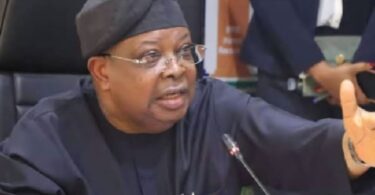
The Minister of State for Petroleum Resources (Oil), Heineken Lokpobiri, has defended the Federal Government’s deregulation of the downstream petroleum sector, saying the average price of petrol in Nigeria remains lower than in the United States and some African countries.
Lokpobiri made the remarks on Channels Television’s Politics Today on Tuesday while responding to concerns over rising petrol prices despite the removal of subsidy.
His comments came as the Dangote Petroleum Refinery and other fuel marketers began reducing their depot prices following a decline in international crude oil prices.
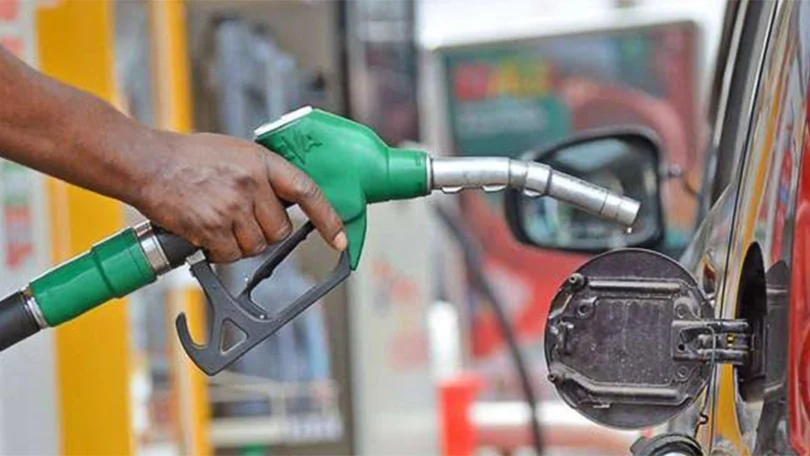
TVC News reported on Wednesday that Dangote Refinery reduced its petrol depot price from N1,350 to N1,325 per litre, while other marketers also announced price cuts in Lagos, Port Harcourt, Calabar and Warri.
However, petrol was still being sold between N1,370 and N1,450 per litre in some locations.
Speaking on the programme, Lokpobiri said petrol remained cheaper in Nigeria than in the United States, Cameroon, Ghana and South Africa.
“In the US, the average, you know, liter of fuel is N1,633. In Nigeria, it’s on the average of N1,430. If you go to Cameroon, it’s N1,959. If you go to Ghana, it’s N2,070. If you go to South Africa, it’s N2,070. So Nigeria’s average cost of fuel per litre is still lower than,” he said.
Read Also: Lokpobiri reaffirms FG’s commitment to complete Brass Refinery project
The minister also argued that being an oil-producing nation and having the Dangote Refinery operating locally did not necessarily mean petrol prices would automatically fall.
“As at today, the records available show that USA is the highest producer of oil and gas in the world. The United States is the highest producer of oil and gas in the entire world. They also have the highest refining capacity, but the fuel price per liter is higher than that of Nigeria.
“So despite the fact that Dangote Refinery is here, that doesn’t mean that the fuel price will be lower because Dangote Refinery is available. But what is important is that the regulation has also created a new economy.”
Lokpobiri maintained that deregulation had helped attract private investment into the petroleum industry, arguing that the Dangote Refinery would have struggled if government-controlled petrol imports and below-market pricing had continued.
“But for the policy of deregulation, Dangote Refinery wouldn’t have been the most attractive IPO in the continent. If government was continuously importing, as NNPC was doing, and selling at a lower price than the market price, Dangote wouldn’t have been able to survive.”
He said the deregulation policy was designed to create room for private-sector participation in the midstream and downstream segments of the oil and gas industry.
“Deregulation all over the world is to enable private sector businesses to thrive and all the businesses that are associated with with the oil and gas sector.”
The minister also defended the removal of the petrol subsidy, saying funds saved from the policy were being shared among the federal, state and local governments through the Federation Account Allocation Committee.
“These days we get 2.1 trillion being shared. This is the first time it is happening. You’ll recall that before this government came, about 27 states had no capacity to pay even salaries. Today, states are doing gigantic projects. It’s because of the savings that we made from this subsidy.”
Lokpobiri further argued that the effects of higher energy prices were being felt globally, including in the United States and Europe.
“Oil and gas is a global commodity. What is sold in New York is what is also sold here. So, no matter what you may think, America, or Saudi Arabia, or anywhere in the world, energy prices will always be the same.”
He said the Federal Government had no plans to reverse the deregulation policy despite the pressure higher petrol prices have placed on consumers, insisting that deregulation remained necessary to attract investment.
Lokpobiri also pointed to the Dangote Refinery’s supply of aviation fuel and the increase in Nigeria’s foreign reserves as some of the gains recorded in the oil and gas sector.
He added that the Central Bank of Nigeria had recently stated that 85 per cent of the country’s foreign reserves came from the oil and gas sector.