
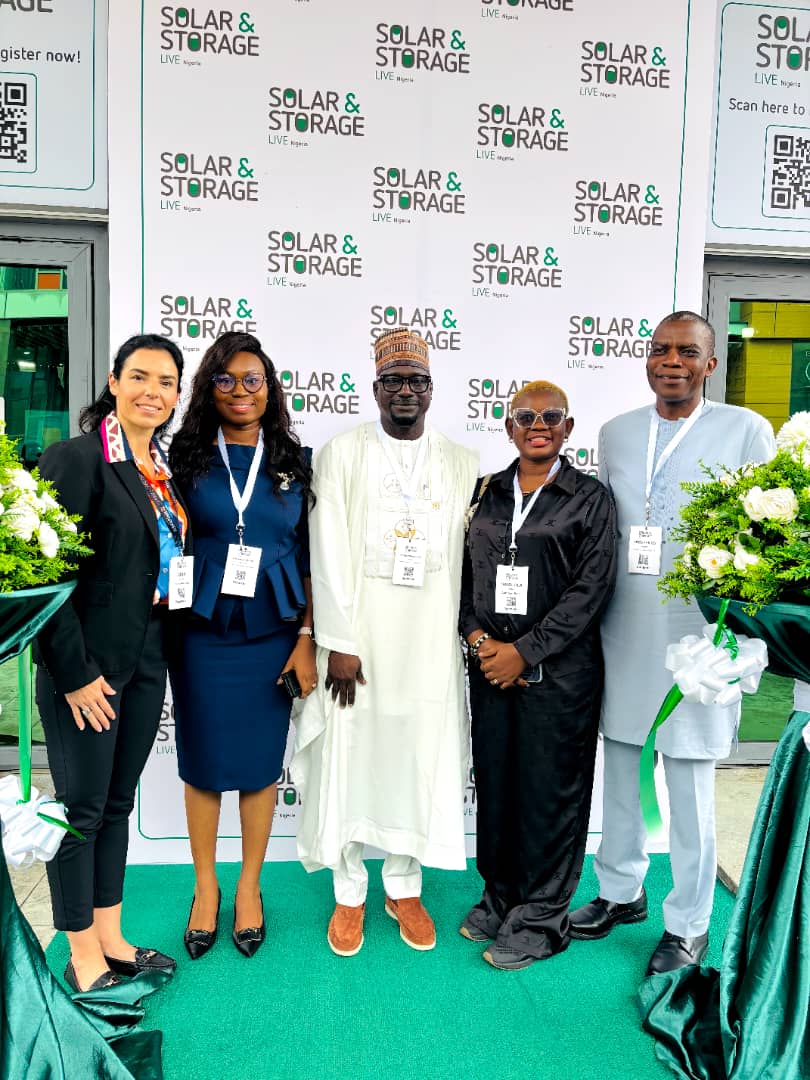
Falling equipment costs, battery storage and smarter energy infrastructure dominated discussions at Solar & Storage Live Nigeria 2026, as industry leaders said Nigeria’s renewable energy market is entering a new stage of development.
In an interview with THISDAY on the sidelines of the event, President of the Renewable Energy Association of Nigeria (REAN), Ayo Adedimulua, said the perception that renewable energy remains prohibitively expensive no longer reflects market realities.
“Component costs have fallen by more than 100 per cent over the last 10 to 15 years, and in some cases we’re seeing declines of 200 to 300 per cent,” he said.
According to him, the falling cost of renewable energy technologies has altered the economics of power generation, making solar increasingly competitive with conventional energy sources.
“Every naira spent on diesel or petrol is gone the moment it is burned. Every naira invested in solar panels or batteries continues delivering value over the lifetime of the asset.”
He added that Nigeria’s renewable energy potential extends beyond solar, citing hydro, wind, biomass and geothermal resources as opportunities that remain largely untapped.
“We have everything we need,” he said. “What we’ve lacked is the conviction to price risk correctly,” Adedimulua said.
According to him, the growing participation of manufacturers, developers, financiers and policymakers at this year’s conference reflected increasing confidence in the sector and the scale of opportunities emerging across the renewable energy value chain.
Speaking during a panel session at the conference, the Managing Director and Chief Executive Officer of the Rural Electrification Agency (REA), Abba Aliyu, said battery storage would play a central role in the next phase of investment in Nigeria’s power sector.
“The next wave of capital will not go into generation,” he said. “It will go into storage. That is where the unlock happens.”
He said REA is developing 48 interconnected mini-grids with a combined capacity of about 288 megawatts as part of efforts to connect isolated electricity systems and improve reliability.
He said all new REA-supported mini-grid projects are equipped with Internet of Things (IoT)-enabled smart meters capable of two-way communication, allowing operators to improve load management, billing and predictive maintenance.
Aliyu also said the agency has deployed artificial intelligence to map more than 750,000 communities across the country, using demographic and economic data to guide project development and investment decisions.
“We know where the people are. We know what they can pay. We know which clusters make commercial sense,” he said.
He said the Electricity Act 2023 has created new opportunities for private investment by devolving electricity regulation to state governments, although implementation has varied across the country.
“The reform is consequential, no question,” he said. “States have the authority now. The question is whether they have the ambition to use it.”