
0
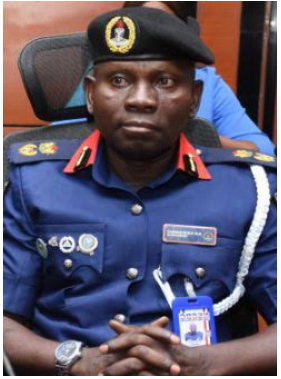
Adedotun Keshinro, the Lagos State Commandant of the Nigeria Security and Civil Defence Corps (NSCDC) has proven to be a vibrant, results-driven officer. Under his watch syndicates responsible for vandalising Eko and Ikeja Disco cables and NNPC pipeline fittings in the Ikorodu, Ijegun, and Apapa axis have been effectively neutralised. He spoke with EJIKEME OMENAZU on his strategies in combating crimes in Lagos State, welfare of its personnel, among others. Excerpts:
Could you introduce yourself to our readers?
I am Adedotun Keshinro, the Lagos State Commandant of the Nigeria Security and Civil Defence Corps. My role is to coordinate NSCDC operations across Lagos, with a focus on protecting critical infrastructure, supporting disaster response, and working with communities to improve safety.
What are the major challenges facing NSCDC operations in Lagos?
Lagos is unique. We deal with high population density, with 24/7 commercial activities, and a long coastline that exposes us to piracy and vandalism. The main challenges are vandalism of power, water and telecom assets, traffic and access issues during emergencies, and the need for faster intelligence sharing in a city this size.
What do you see as the major breakthrough or achievement of NSCDC in Lagos State?
In the last one year, we have successfully neutralised several syndicates targeting Eko and Ikeja DisCo cables and NNPC pipeline fittings in Ikorodu, Ijegun and Apapa axis. We have also strengthened our Marine Unit’s presence around Lagos ports and Badagry waterways, leading to more arrests and faster recovery of stolen materials.
What do you see as top security threats in Lagos State, and how are you addressing them?
Vandalism of critical infrastructure, sea robbery in the Lagos channels, and cable theft in industrial areas. Our response is intelligence-led patrols, joint operations with the Nigerian Navy and Police, and working with community leaders in hotspots like Ikorodu, Ojo, and Apapa to secure local buy-in.
President Bola Tinubu promised that government would instal 5000 CCTV cameras in Plateau State to check rising wave of terrorism. What is your view?
It is a step in the right direction. Lagos will benefit significantly from expanded CCTV coverage, especially around ports, markets, and major highways like Apapa-Oshodi and Lekki-Epe. Technology gives us faster detection and better evidence for prosecution.
How do you collaborate with other security agencies to tackle crimes like piracy and vandalism?
We operate within the Lagos State Joint Security framework. For maritime crimes, we collaborate with the Nigerian Navy’s NNS Beecroft, for land-based vandalism We also work with the Police, DSS, and LASG agencies. Information is shared daily, and we conduct joint patrols and raids.
What are the most common forms of vandalism in Lagos and how do you prevent them?
Theft of armored cables, telecom fiber, manhole covers, and pipeline fittings. Prevention comes from 24/7 patrols of known hotspots, undercover operations, and prosecuting offenders to deter others. We also engage landlords’ associations and CDA leaders to protect assets in their communities.
What strategies do you have to protect critical infrastructure and industries in Lagos?
Three things: physical deployment to high-value sites like substations and water works, regular security audits with private operators, and licensing/supervision of Private Guard Companies to ensure standards. Lagos houses Nigeria’s busiest ports and power hubs, so this is non-negotiable.
How does NSCDC approach policing Lagos State with its teeming population?
As the Lagos State Command of the NSCDC, our approach to localised security is anchored on grassroots intelligence gathering and proactive asset protection rather than a reactive law enforcement model. We believe security is most effective when it begins where people live and work, utilising our unique statutory mandates to keep local communities safe. To achieve this, we leverage our regulatory oversight of Private Guard Companies (PGCs), transforming thousands of guards embedded in residential estates and markets into a 24/7 grassroots intelligence network that feeds timely information directly to our Divisional Officers. Additionally, true community protection involves safeguarding the vital infrastructure that keeps Lagos alive, such as electricity grids, telecommunications networks, and petroleum pipelines. The Command works hand-inhand with local Community Development Associations (CDAs) and traditional rulers to identify local vulnerabilities. In return, we provide rapid-response tactical deployments to protect these critical national assets, ensuring neighborhoods do not suffer from artificial blackouts or economic disruptions caused by vandals. Finally, our strategy emphasizes human-level engagement through specialized units like the Female Special Squad and our Safe School and Community Vanguard initiatives. We frequently collaborate with local schools and community stakeholders to conduct security advocacy, establish early warning systems, and teach basic conflict mitigation and emergency management. By empowering Lagosians with heightened security awareness and a direct, trusted line of communication to the Corps, we ensure a safe and resilient environment across all local government areas.
How does NSCDC engage with communities in Lagos to prevent crimes and gather intelligence?
Through our 10 Area and 50 Divisional Commands. We hold regular town halls (we have held 56 of such engagements within the last eight months), run school safety programmes, and maintain direct lines for CDAs, CDCs, market leaders and other stakeholders. The goal is simple: make it easy for Lagosians to report what they see.
What measures do you put in place for disaster response in Lagos?
We maintain a rapid response team for floods, building collapses, and fire support. We work closely with Lagos State Emergency Management Agency (LASEMA) and National Emergency Management Agency (NEMA), especially during the rainy season. Our officers are pre-positioned in flood-prone LGAs like Alimosho, Kosofe, and Eti-Osa.
How does your Command’s programmes build public trust?
We run ‘Safe Lagos’ outreaches in markets and schools, and have an open-door policy at our Alausa Command. Any complaint against an officer is investigated, and we publish outcomes internally. Trust is earned through consistency.
How do you equip personnel for modern security challenges?
WE carry out continuous training at our Abeokuta training school and other national colleges, focusing on counter-vandalism, basic cyber hygiene, and disaster response. Officers also attend joint training with the Army, Police, Navy, Airforce and LASG agencies.
Is the NSCDC involved in international partnerships and Memorandum of Understanding (MoUs)?
International partnerships are attended to at the Commandant General’s level. Partnerships and MoUs are handled at National Headquarters, Abuja. The Commandant General coordinates all international training and collaboration.
How prepared is the NSCDC in Lagos State to tackle cyber threats?
We have a Cyber Crimes Unit in Lagos that supports investigations into attacks on critical infrastructure and works with NITDA. Officers are trained to secure digital systems linked to power, water, and transport assets in the state.
How do you ensure the safety of your personnel during operations?
The NSCDC remains fully committed to the physical protection of its officers. Through the strategic integration of drones and solar-powered communication grids, we are ensuring that our personnel are not just brave, but scientifically and tactically insulated against the dangers on the field. To eliminate blind spots during tactical operations, the NSCDC has completed the distribution of advanced surveillance drones across all state formations, including the Lagos State Command. Instead of sending personnel blindly into volatile or unmapped terrains, commands now deploy these drones for real-time reconnaissance. This helps to identify ambushes, map out exit routes, and monitor high-risk locations like petroleum pipelines and dense forest areas before boots hit the ground. To support field personnel on prolonged deployments, the Corps has distributed advanced operational backpacks designed to act as mobile tech hubs.
How do you motivate your personnel and boost their morale?
Welfare is handled through the Lagos Command’s Welfare Desk and the National Headquarters .The Corps leadership ensures salaries and allowances are paid regularly, medical care is accessible, and officers have a channel to raise concerns. A motivated officer is a professional officer.
How do you check the activities of pirates and oil theft in Lagos waters?
Operationally in Lagos, our Marine Unit conducts patrols and arrests in coordination with the Navy.
How virile is your intelligence sharing mechanisms?
We share actionable intelligence regularly with other security agencies. Real-time alerts go out to all relevant agencies when a threat is identified.
How can communities report suspicious activities?
In case of distress call, our Lagos Command Control Room is available. People can walk into any of our 10 Area Commands, or reach out to their local Divisional Officers. Reports can be anonymous. Every tip is logged and followed up.