World

Opinion | Trump, Putin summits show an Eastward power shift

Watch Video Here ➜

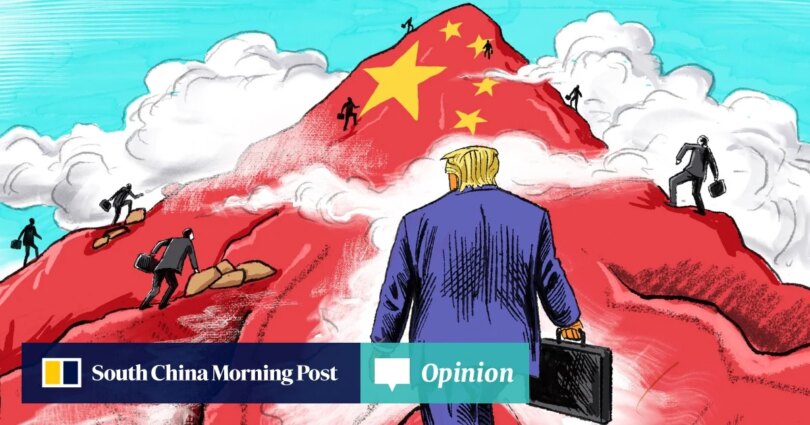
Russian President Vladimir Putin’s visit to China last week saw the signing of some 40 documents and a joint statement on strengthening the Beijing-Moscow partnership. The visit, just days after US President Donald Trump’s Beijing trip, is more than a diplomatic coincidence. It is a vivid reminder that the global order is now being shaped less by alliances than by a fluid triangle of China, the United States and Russia, with Beijing increasingly sitting at the centre.

Timing is diplomacy. When President Xi Jinping receives Trump and then welcomes Putin almost immediately afterwards, China is sending a clear message: it intends to manage both relationships on its own terms, and it does not see US-Russia rivalry or US-China competition as separate stories.

For China, this sequence of visits is a strategic opportunity. It allows Beijing to present itself as a stable and indispensable power in Eurasian politics, capable of engaging both Washington and Moscow without becoming subordinate to their agendas.

China has long preferred flexibility over ideological alignment. In practical terms, that means keeping channels open with the US on trade, technology and crisis management, while sustaining a broad strategic partnership with Russia in energy, diplomacy and geopolitical coordination. This reveals how China sees the world: not as a binary struggle between democracy and “authoritarianism”, but as a competitive environment in which major powers bargain, hedge and recalibrate.

From Washington’s perspective, the China-Russia relationship remains one of the most important strategic challenges. American policymakers have spent years trying to prevent a deeper alignment between Beijing and Moscow, but the sequence of these visits suggests it has not produced the intended effect. Trump’s visit to China, however it is interpreted politically, showed the US still sees value in direct engagement with Beijing.

For Russia, the visit carries a different meaning. Putin went to China not from a position of strength but out of necessity. Sanctions, Western isolation and ongoing Ukraine war costs have narrowed Russia’s options, and Beijing is now the partner Moscow cannot afford to lose. Russia matters to China as well: as a strategic neighbour, an energy supplier and a geopolitical counterweight to the West.

Watch Video Here ➜