That reading, however, underestimates both Spain’s intentions and the broader shift under way in Europe’s approach to China. Europe’s de-risking strategy is necessary to curb excessive dependencies, but if reduced to limiting exposure alone, it could create another vulnerability: too little engagement in areas where the cost of doing without China is higher than the cost of cooperating.
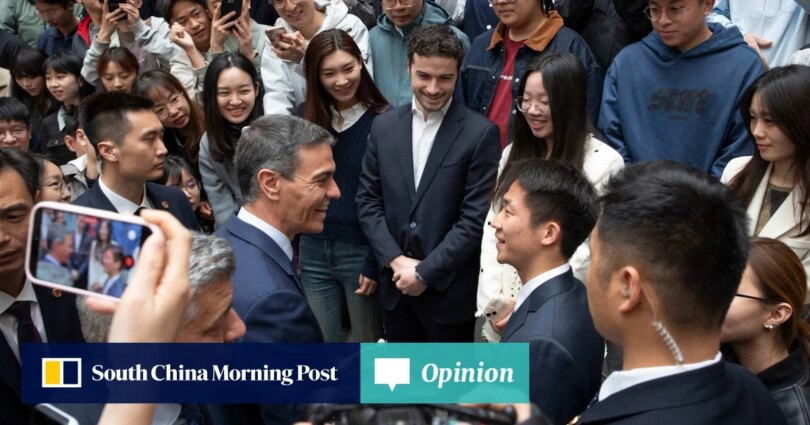
Sanchez’s latest visit to Beijing points to a more pragmatic path, with Spain positioning itself at the forefront of an approach that mitigates risks while preserving and deepening ties in domains where China plays a critical role.
Spain’s engagement rests on a simple premise: China is not a marginal actor that Europe can sideline. It is central to global industrial production, green technologies and major global challenges. The question is not whether to engage, but how to do so in ways that strengthen resilience, reduce asymmetries and expand Europe’s room to manoeuvre.
The recent visit produced three notable advances.
First, Spain and China agreed to establish an annual strategic dialogue, signalling Beijing’s recognition of Madrid as a key European interlocutor. This is not symbolic. It creates a permanent channel to address both opportunities and frictions, from market access to geopolitical coordination, strengthening Spain’s ability to shape outcomes rather than merely react.