
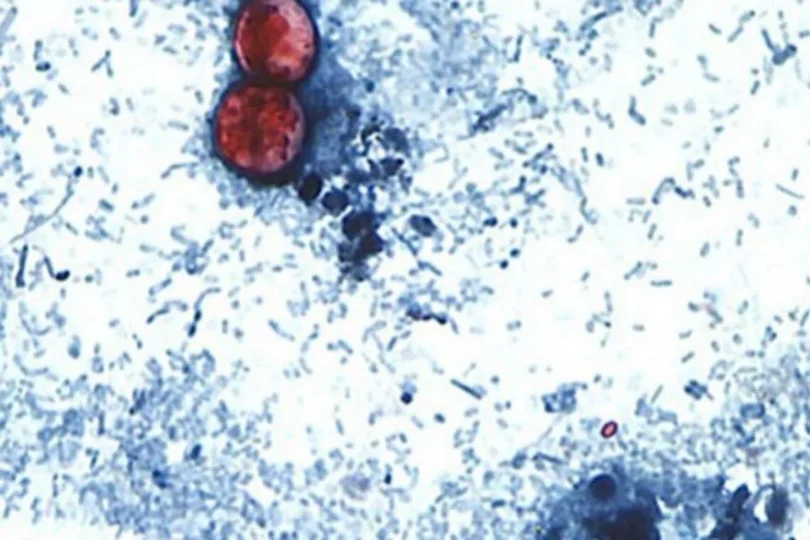
NEW YORK – A dangerous parasite that causes explosive diarrhoea is spreading throughout the Midwest in the US, as federal health officials investigate the still-undetermined source of the outbreak.
Michigan – the state with the highest infection count – recorded 1,251 total cases of cyclosporiasis on July 9, a 26 per cent jump from the previous day.
The infections are largely concentrated in the south-eastern part of the state.
Neighboring Ohio has reported more than 360 cases, according to a spokesperson for the health department.
Other states, including New York and Illinois, are also seeing rising rates. Since May 1, New York City has recorded 273 infections. The health department’s investigation into the source of exposure is ongoing.
“When you hear over 1,000 cases, we are probably talking about a lot more people out there just not being diagnosed,” said Daniel Griffin, an infectious disease physician and president of the non-profit Parasites Without Borders.
The disease can cause frequent watery diarrhoea for a few days or even months, according to the US Centers for Disease Control and Prevention.
It stems from consuming a microscopic parasite, known as cyclospora, that can contaminate food or water.
Outbreaks in the US usually are linked to basil, cilantro, lettuce and raspberries, or stem from infections acquired outside the country.
“It could really be this explosive, significant diarrhea that doesn’t get better,” Griffin said, noting it can take hold even in healthy people.
Michigan typically identifies about 50 cases a year. The surge that has occurred since June 22 points to a common source, physicians said.
The CDC is working with the Food and Drug Administration to find the origin and help contain the outbreak.
Taco Bell franchisees in some stores in Michigan stopped serving lettuce as a precaution amid the outbreak, according to a person familiar with the matter who was not authorised to speak publicly.
The state’s health department earlier issued guidance to contain the spread with special handling suggestions for lettuce and other leafy greens, including extra washing and cooking.
A spokesperson for Taco Bell declined to comment.
Restaurant Brands International, the parent company of chains including Burger King and Popeyes, and Inspire Brands, owner of restaurants such as Dunkin’ and Jimmy John’s, said they were not affected by the outbreak.
Wendy’s said it was not aware of any impact to its supply chain or restaurant operations.
Chains including Chipotle Mexican Grill and Chick-fil-A did not reply to requests for comment.
The parasite is typically passed between humans through fairly indirect transmission, Griffin said. For example, someone who was infected with cyclospora or who recently had diarrhoea caused by it could contaminate food and transmit the pathogen when it is consumed.
Missing picture
With no source identified, “people don’t know what it is that they should be avoiding,” said Bobbi Pritt, a pathologist and clinical microbiologist at the Mayo Clinic.
“This is the time of year when we are eating a lot of fresh produce.”
Once someone tests positive, the local health department conducts an interview to learn more about the length and type of their symptoms, said Lynn Sutfin, a spokesperson for Michigan’s Department of Health and Human Services.
Investigators ask which restaurants and grocery stores the person visited, looking for specific dates, locations and items purchased.
The information is shared with state and federal experts to build a national picture of the outbreak and help determine their next steps, she said.
The CDC has not provided a national update on the outbreak since June 16, when it said there had been 145 cases across 17 states.
On July 1, the Atlanta-based public health agency said there was no evidence of a single, multistate outbreak.
Physicians said that is a gross undercount of the national picture. To detect the disease, a doctor needs to order a special laboratory test, which is not always routinely done.
“I think it’s very safe to say that with all outbreaks, the numbers that are reported for any specific disease is always the tip of the iceberg,” Pritt said.
If not treated with an antibiotic, the illness can last a few days to more than a month, according to the CDC.
Symptoms, including loss of appetite and weight, nausea and stomach cramps, can disappear and flare back up repeatedly.
People should seek medical care if gastrointestinal issues persist for longer than a few days and continue to hydrate if they are experiencing symptoms, Griffin said.
Young children and older adults are the most susceptible to needing hospitalisation.
The best way to prevent infection is to avoid food and water that could be contaminated with feces, and take care when handling produce, the CDC said. BLOOMBERG