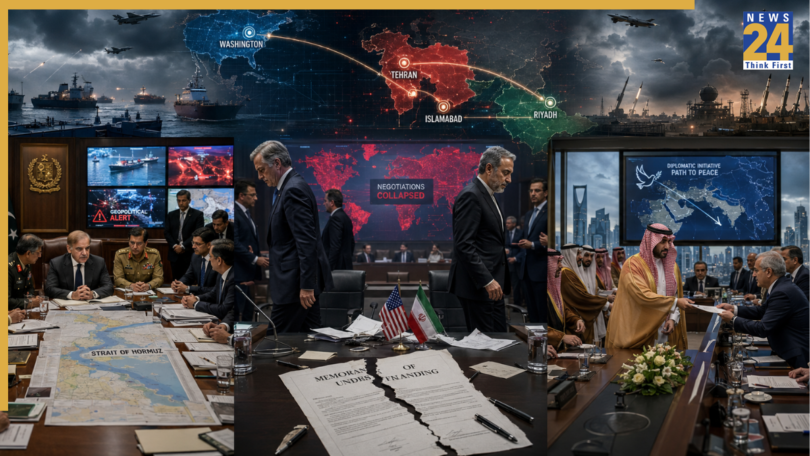
Growing tensions between the United States and Iran have once again raised concerns across West Asia after the suspension of their peace process. Pakistan and Saudi Arabia have expressed concern over the renewed conflict and called for diplomatic efforts to resume, warning that continued instability could affect regional peace and security. The latest developments come after a Memorandum of Understanding (MoU) signed in June failed to prevent fresh hostilities.
What happened after the US-Iran MoU?
The United States and Iran had signed an MoU in Islamabad on June 18, 2026, with the aim of restoring peace and reducing tensions in West Asia. This was followed by technical-level talks in Switzerland on June 21, where Pakistan and Qatar acted as mediators to help both sides continue discussions.
However, recent attacks and rising military tensions reportedly brought the peace process to a halt. As a result, diplomatic efforts that had shown promise in recent weeks have now stalled, increasing concerns about the possibility of a wider regional conflict.
Why are Pakistan and Saudi Arabia concerned?
Pakistan and Saudi Arabia believe that renewed fighting is not in the interest of any country in the region. Pakistan’s Foreign Minister Ishaq Dar and Saudi Foreign Minister Prince Faisal bin Farhan held a telephone conversation to discuss the latest developments.

According to Pakistan’s Foreign Office, both leaders agreed that escalating conflict could weaken efforts aimed at restoring peace and stability in West Asia. Saudi Arabia stressed the importance of continuing diplomatic engagement and reducing tensions through dialogue rather than military action.
Pakistan also repeated its appeal to all parties to exercise restraint and allow ongoing mediation efforts enough time to achieve meaningful and peaceful results.
What role is Pakistan playing?
Pakistan has been actively involved in diplomatic efforts between Washington and Tehran. A day before the foreign ministers’ conversation, Prime Minister Shehbaz Sharif separately spoke with the leaders of Iran and Qatar to support efforts aimed at restarting the stalled negotiations.
Pakistan has consistently maintained that dialogue remains the only practical solution to resolving disputes and preventing further escalation in the region.
What could happen next?
The breakdown of the peace process has increased uncertainty across West Asia. If negotiations remain suspended, regional tensions could continue to rise, affecting diplomatic relations, energy markets and overall stability.
Pakistan and Saudi Arabia have urged all sides to return to the negotiating table as quickly as possible. Officials from both countries believe that sustained dialogue and mediation offer the best chance of preventing further conflict and restoring peace in the region. The coming days are expected to be crucial as international efforts continue to revive the US-Iran talks and reduce the risk of another major escalation.
First published on: Jul 12, 2026 08:08 PM IST
Get Breaking News First and Latest Updates from India and around the world on News24. Follow News24 on Facebook, Twitter.
End of Article
About the Author

Sagar Puri
Sagar Puri is a seasoned Senior Sub-Editor with over four years of newsroom experience, bringing sharp editorial judgment and an eye for detail to every story he handles. Over the years, he has worked across a diverse range of beats, including sports, education, news desk, entertainment, and lifestyle, giving him a well-rounded understanding of the digital news ecosystem.
Read MoreRelated Story