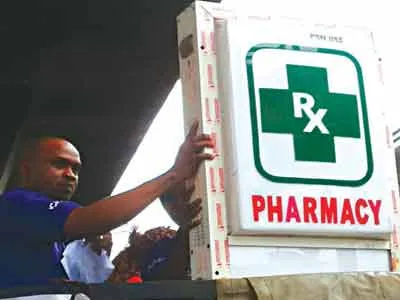
The Pharmacy Council of Nigeria, PCN, has sealed 724 illegal pharmaceutical outlets in Kwara.
The Registrar of PCN, Pharm. Ibrahim Ahmed, made this known in Ilorin at a news conference organised after a four-day operation across 10 Local Government Areas of Kwara.
Mr Ahmed, represented by Dr Suleiman Ciroma, Head of Enforcement in PCN noted that the team inspected a total of 1,238 premises, comprising 167 pharmacies, 957 patent medicine stores, and 114 illegal outlets.
“The enforcement exercise covered the following local government areas: Ilorin South, Ilorin East, Ilorin West, Asa, Offa, Ifelodun, Oyun, Moro, Irepodun and Edu.
“Consequently, 724 premises were sealed, including 68 pharmacies, 542 patent medicine stores, and 114 illegal outlets. In addition, 11 compliance directives were issued,” he said.
According to Ahmed, nine per cent of the total of 1,238 premises inspected during the exercise were found to be operating illegally.
He explained that this relatively low rate reflects improved regulatory outcomes in Kwara, while also commending the development.
“Illegal premises accounted for 15.7 per cent of all facilities sealed due to one or more regulatory breaches.
“Among licensed operators, 59.2 per cent of pharmacies inspected were in full compliance with regulatory standards, compared with 43 per cent of Patent and Proprietary Medicine Vendor outlets.
“As required by law, 100 per cent of the illegal premises identified were sealed,” he said.
Ahmed further explained that the breaches uncovered include operation without valid PCN licence, poor storage conditions and unauthorised access to controlled medicines, training of apprentice, and cooking in patent medicine shops.
He warned that these practices endanger public health and pose risks to national security when controlled drugs are diverted to criminal networks.
The expert stated that when medicines are dispensed by untrained persons or stored in unsuitable conditions, treatment failures, antimicrobial resistance, and avoidable deaths increase.
He lamented that this raises out-of-pocket health expenditure and erodes public trust in the health system.
“By enforcing compliance, the council protects the integrity of the pharmaceutical supply chain, which is a critical pillar of the Universal Health Coverage (UHC).
“In line with its statutory obligations, the Pharmacy Council of Nigeria maintains a steadfast commitment to safeguarding standards across the pharmaceutical sector.
“Every facility engaged in the handling, storage, or dispensing of medicines will undergo strict and sustained regulatory scrutiny.
“Any breach of established regulations will be met with decisive enforcement action by the council,” he warned.
The PCN boss called on members of the public to obtain their medicines exclusively from premises duly licensed by the PCN.
He added that such premises could be verified through the valid PCN licence prominently displayed within the facility.