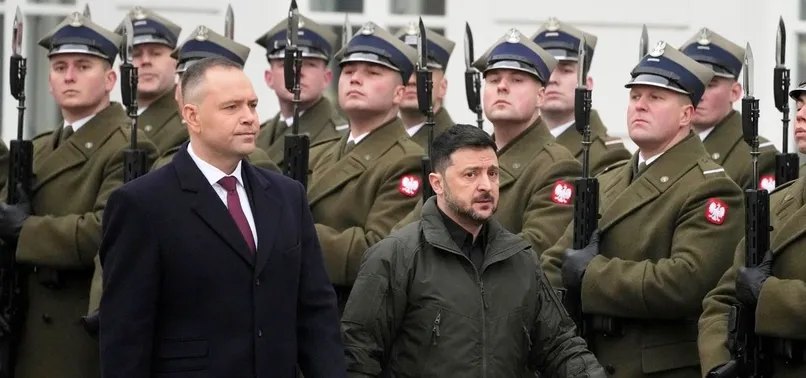
Poland’s top officials on Saturday are commemorating the tens of thousands of Poles killed by Ukrainian nationalists during WWII, as the country marks a new national day of remembrance highlighting one of the most sensitive issues in relations between Warsaw and Kyiv.
President Karol Nawrocki is due to take part in commemorations in southeastern Poland marking the anniversary of the “Bloody Sunday” of July 11, 1943, the culmination of a campaign of killings of Polish civilians in Volhynia and Eastern Galicia.
Poland regards the killings carried out by the Ukrainian Insurgent Army (UPA) and the Organisation of Ukrainian Nationalists (OUN) as genocide. Estimates vary, but Polish historians say tens of thousands of Poles were killed during the campaign in 1943-45.
Saturday’s commemorations are the first since Poland established July 11 as the National Day of Remembrance of Poles-Victims of Genocide committed by the OUN and UPA in the eastern territories of the pre-war Polish state.
The issue remains a source of tension between Poland and Ukraine, even as Warsaw remains one of Kyiv’s key political and military supporters in its war against Russia.
Tensions have risen in recent weeks over Ukraine’s commemoration of figures and organizations associated with the nationalist movement, including a decision by Ukrainian President Volodymyr Zelenskyy to honor the UPA.
Polish officials have warned that the glorification of figures associated with the wartime killings damages efforts at historical reconciliation.
The dispute presents both governments with a difficult balance. Poland has insisted that support for Ukraine against Russia does not require silence over historical grievances, while Kyiv regards parts of the OUN and UPA legacy through the lens of the struggle for Ukrainian independence.