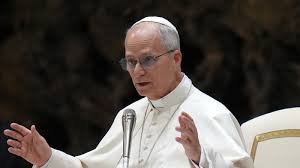
(Pope Leo XIV. Photo by CTV News)
Pope Leo has urged world leaders to ask God to “touch hearts, calm rancour and fratricidal hatreds, and enlighten those who have special responsibilities of government” in order to ease tensions and put an end to cycles of hatred.
As the pontiff commemorated the first anniversary of his leadership of the Roman Catholic Church on Friday, he made the call while visiting Pompei, a contemporary city south of Rome close to the remnants of the historic volcanic eruption site, according to Reuters.
His statement came after he met with U.S. Secretary of State Marco Rubio on Thursday at the Vatican amid rumored tensions between Washington and the Holy See.
Following the discussions, the Vatican said that both parties had decided to work toward strengthening bilateral relationships. Officials described the conversation as unusually candid given what insiders have described as strained ties. Discussions were on “topics of mutual interest in the Western Hemisphere,” according to a later statement from the U.S. embassy to the Holy See on X.
On May 8, 2025, Leo, the first American-born pope and former Cardinal Robert Prevost, was chosen to replace Pope Francis as head of the 1.4 billion members of the Church. Before being elected, he worked as a missionary and bishop in Peru for many years.
He has become more outspoken on international conflicts in recent months, criticizing the Iran War in particular, which has caused U.S. President Donald Trump to react sharply.
Speaking to thousands of people in Pompei’s main square, Leo promised to join in prayers for God to lead those in positions of authority.
He declared, “God would start touching hearts, calming rancour and fratricidal hatreds, and enlightening those who have special responsibilities of government.”
He also cautioned that there was increasing pressure on world peace.
“International tensions and an economy that prioritizes the arms trade over respect for human life are endangering world peace,” he declared.
The pope warned people to avoid losing their sensitivity to conflict.
He declared, “We cannot accept the pictures of death that the news presents to us on a daily basis.”