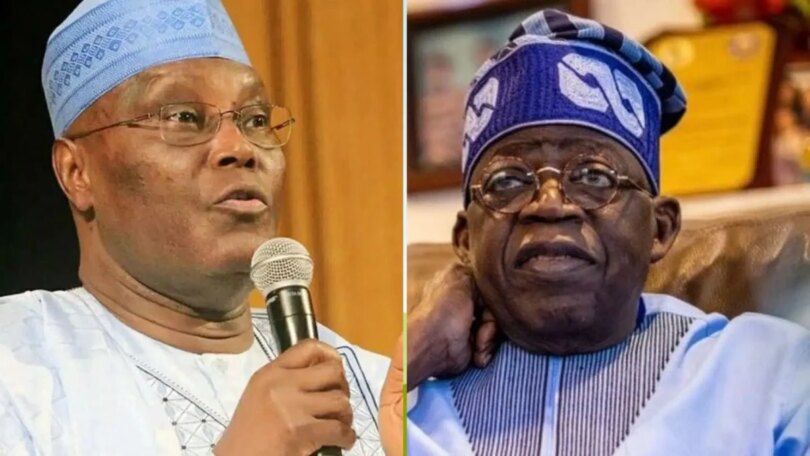
Former Vice President and 2027 presidential candidate of the African Democratic Congress (ADC), Atiku Abubakar, has challenged the President Bola Tinubu administration to investigate and prosecute him if it has evidence of wrongdoing over the $16 billion power sector fund.
Atiku, through his Senior Special Assistant on Public Communication, Phrank Shaibu, dismissed the renewed allegations linking him to the power projects and other public assets as an attempt to divert attention from questions about the use of public funds.
Atiku said the National Assembly had previously investigated the power projects but never invited him to respond to any allegation.
“The National Assembly investigated the power projects. I was never invited to answer any allegation of wrongdoing,” he said.
The former vice president explained that although he chaired the National Council on Privatisation while serving as vice president, he did not oversee the implementation of the power projects.
“Yes, I chaired the National Council on Privatisation as Vice President. But on the power project, I disagreed with its concept and did not preside over its implementation. The responsible minister did. The same applies to the Aluminium Smelter matter,” Atiku said.
He maintained that he had nothing to fear from any investigation and challenged the Federal Government to present evidence if it believed he had misappropriated public funds.
“I have repeatedly asked to be investigated. I left office in 2007 and have spent much of the period since then opposing governments in power. If there is evidence that I stole public money, why has no government produced it before a court?” he asked.
Atiku added, “It is still not too late. Investigate me. Invite me. Produce the evidence. Prosecute me if you have a case. But propaganda cannot substitute for evidence.”
His comments came amid a renewed political dispute over his criticism of the Tinubu administration, particularly the use of funds saved from the removal of petrol subsidy.
Atiku argued that Nigerians had accepted the hardship caused by the removal of subsidy on the promise that the savings would be redirected towards development and improving their welfare.
“They removed subsidy from the poor and promised that the sacrifice would free resources for development. Nigerians accepted extraordinary pain on that promise,” he said.
He noted that petrol, transportation and food prices had risen significantly while the purchasing power of workers had weakened.
“Today, petrol is more expensive, transportation is more expensive, food is more expensive and the purchasing power of the Nigerian worker has been devastated,” Atiku said.
He also questioned how increased government revenues were being used, particularly against the backdrop of tax incentives, waivers and other concessions available to businesses and wealthy interests.
“So our question remains brutally simple: Where is the people’s money?” he asked.
Atiku argued that the government could not withdraw support from poor Nigerians while describing interventions benefiting powerful economic interests as incentives.
“You cannot take relief away from the poor, celebrate the resulting revenue and then tell the same impoverished citizens that government intervention on their behalf is economically irresponsible while interventions benefiting powerful interests are called incentives. That hypocrisy is precisely what we are challenging,” he said.
The former vice president also accused the government and its supporters of attempting to silence his criticism through what he described as “sponsored social-media mudslinging”.
He insisted that allegations dating back several years could not be used as a substitute for evidence, particularly when successive governments had had access to the country’s investigative institutions.
“The people who removed subsidy from the poor cannot frighten us into silence by resurrecting allegations that governments with all the investigative machinery of the Nigerian state have had nearly two decades to establish,” Atiku said.
“If you have evidence against Atiku, bring it. If you have a case, prosecute it. But if you have neither, stop manufacturing distractions and answer Nigerians: You removed the subsidy. You collected the savings. Where is the money?”
The latest exchange comes as Atiku remains engaged in a wider disagreement with the Tinubu administration over the future of petrol subsidy.
Atiku has promised to introduce what he calls a targeted subsidy if elected president in 2027, arguing that the policy would help restore purchasing power and ease the economic burden on Nigerians.
The Presidency has, however, criticised the proposal, pointing to what it described as conflicting explanations from Atiku and his aides over how the proposed subsidy would operate and when it would be removed.
Special Adviser to the President on Information and Strategy, Bayo Onanuga, recently said Nigerians had received different explanations of Atiku’s position within a short period.
Onanuga questioned the cost, funding mechanism, beneficiaries and duration of the proposed subsidy, arguing that Nigerians needed a clear and workable policy rather than broad campaign promises.
The Presidency has also maintained that petrol prices are affected by several factors beyond government subsidy, including crude oil prices, exchange rates, refining costs, transportation and distribution.