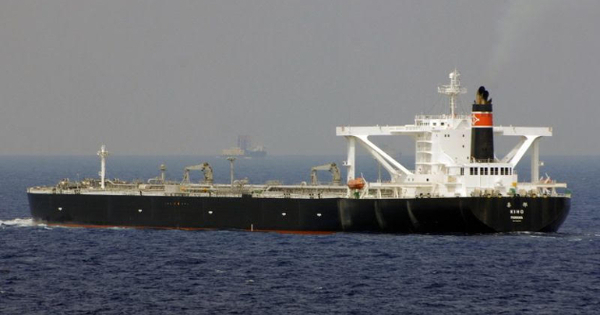
DUBAI, U.A.E.: A tanker was hit by a projectile in the Strait of Hormuz on June 27, Britain’s maritime security agency said. This happened after the United States and Iran carried out strikes, marking their biggest escalation since agreeing to a temporary peace deal.
Both sides blamed each other for breaking the agreement made two weeks ago to end the four-month conflict. The U.S. said it struck Iranian targets overnight, while Iran said it attacked targets linked to U.S. forces on June 27 in response.
The tanker attack came after a cargo ship was also hit on June 25, which increased tensions. Iran is trying again to assert control over the Strait of Hormuz, a key global energy route that had just begun to reopen after months of disruption.
Britain’s UKMTO said the tanker’s bridge was damaged, but all crew members were safe. A naval coalition group also raised its security threat level due to recent incidents.
Iran has not directly confirmed the ship attacks. However, its state TV said the Revolutionary Guards fired “warning shots” at ships using routes not approved by Iran. This has led more ships to seek permission from Iran before passing through the Strait.
Earlier, Iran said it carried out “defensive” attacks on U.S.-linked military targets. Bahrain, where the U.S. Navy has a base, reported an Iranian drone attack, but the U.S. military did not immediately comment.
Iran also accused the U.S. of not keeping its promises under the agreement, especially over a ceasefire in Lebanon. Israel, a U.S. ally, invaded Lebanon in March, targeting Hezbollah, which is backed by Iran.
Although the U.S. has helped broker several ceasefires between Israel and Lebanon, including one announced on June 26, they have had little effect. Israel says it will not withdraw from areas it controls, while Hezbollah refuses to disarm as long as Israeli forces remain.
Lebanese state TV reported an Israeli drone strike on June 27 in southern Lebanon. Israel said it targeted someone posing a threat to its forces.
Hezbollah leader Naim Qassem rejected the latest ceasefire deal, calling it invalid. Meanwhile, an adviser to Iran’s supreme leader said the U.S. had broken the agreement by supporting proxy forces and increasing tensions in the Strait of Hormuz.