Fresh questions are emerging over the prolonged leadership crisis at the Federal College of Education (Technical), Akoka, Lagos, following allegations that efforts are underway to remove the institution’s Provost, despite multiple investigations failing to establish wrongdoing on his part.
Documents reviewed by PM News and interviews with individuals familiar with the matter suggest that a dispute that began as a disagreement over the interpretation of tenure has evolved into a broader battle involving union politics, governing council decisions, ministerial interventions, and competing reports produced over two years.
At the centre of the controversy is an unresolved question: why has a Special ministerial visitation panel report, completed in September 2025, not been publicly acted upon nearly a year after its completion?
According to records and sources familiar with the proceedings, the Federal Ministry of Education, led by Tunji Alausa, constituted a visitation panel in 2025 to investigate a prolonged period of instability, including concerns about the provost’s tenure and other administrative issues. The panel was specifically tasked to conduct a comprehensive investigation and recommend to HME’s office.
The panel was chaired by the former Governor of Bauchi State and Senior Advocate of Nigeria (SAN), His Excellency Mohammed Abdullahi Abubakar, plus nine other members, who were mandated to examine all the issues plaguing the institution and recommend solutions.
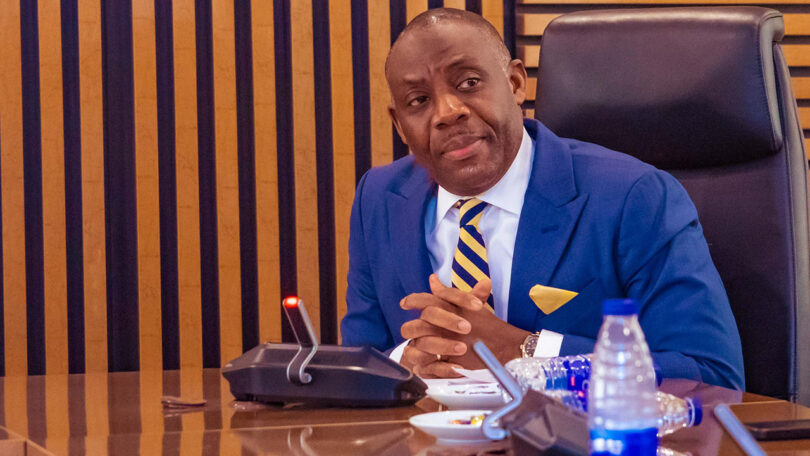
The 10-member panel was inaugurated on Tuesday, 29th July, 2025, in Abuja by Dr. Tunji Alausa. (Picture of inauguration attached).
During the inauguration, the Minister of Education, Dr Tunji Alausa, was quoted in the media as saying: “The panel’s formation followed a report submitted by the Governing Council of the College, which documented a prolonged crisis that had severely disrupted academic and administrative operations at the institution. The Minister described the government’s action as a decisive step toward holistically addressing the crisis and restoring discipline, accountability, and effective governance at the College and at other tertiary institutions facing similar issues. According to the Minister, “This is not a fault-finding mission driven by sentiment. It is a structured intervention aimed at restoring institutional integrity and creating an environment conducive to learning and academic growth. “The panel has been given a two-week deadline to submit its findings and recommendations to the ministry,” he said. Reaffirming the Federal Government’s commitment to strengthening institutional credibility under the Renewed Hope Agenda, Alausa urged members of the panel to approach their task with diligence, fairness, and a strong sense of national duty.
Responding on behalf of the panel, then Chairman Mohammed Abubakar, SAN, pledged a thorough and impartial investigation into the crisis at the institution. “I am accepting this knowing fully well that it is a very important responsibility. “I assure you that we will leave no stone unturned in getting to the root of the problem,” Abubakar stated. He commended the Minister for his foresight in constituting the panel and lauded the selection of experienced professionals to handle the assignment. He also assured the Minister, the National Commission for Colleges of Education, and all stakeholders that the panel would discharge its duties with integrity, objectivity, and professionalism.
The Terms of Reference of the Special Visitation Panel on FCE(T), Akoka were to:
Examine the historical background, nature, and scope of the crisis, including administrative, governance, and industrial relations dimensions.
Review the roles and actions of staff unions during the crisis period, including their impact on college operations, governance stability, and service delivery.
Investigate the conduct and performance of the former and acting Provosts, particularly in relation to delays in signing official documents and other administrative lapses.
Identify individuals or groups responsible for acts of misconduct, including, but not limited to, the physical locking of the Provost’s office, obstruction of administrative duties, and any other unlawful activities.
Assess the functionality and impartiality of the institution’s internal disciplinary mechanisms, including the roles of key officials such as the Registrar, internal Council members, and other implicated parties.
Evaluate whether due process and institutional regulations were observed in addressing complaints and disciplinary matters throughout the crisis.
Recommend appropriate disciplinary actions against all persons found culpable, including interdiction, dismissal, demotion, or referral to appropriate regulatory or law enforcement bodies.
Advise the Ministry on legal, administrative, and institutional reforms necessary to prevent future occurrences of similar crises in the College or other Federal Colleges of Education.
A source with direct knowledge of the proceedings told PM News that the panel sat for several weeks, interviewed numerous witnesses, reviewed documentary evidence and examined allegations ranging from administrative misconduct to financial impropriety.
“The panel was comprehensive. People appeared before it, documents were submitted, and all sides were heard,” the source said.
According to the source, the panel was meant to submit its report to the Federal Minister of Education on September 4, 2025.
However, nearly a year later, questions remain regarding the status of the report and why the report has not been received by the Minister, which would have led to the release of the Government’s White Paper on the recommendations of the Panel. With the calibre of professionals and technocrats that served in the panels, the Nigerian public would like to know why the delay in receiving the report by the Minister of Education.
Crisis traced to tenure dispute
Documents reviewed by PM News indicate that the crisis originated after the enactment of the Federal Colleges of Education Act 2023.
Four union leaders under the auspices of ‘Joint Action Committee’ led by Chairman, Nwachukwu Ikechi Augustine and Secretary, Kazeem Olasupo Quadri representing Senior Staff Union of Colleges of Education in Nigeria (SSUCOEN) and Chairman, Alonge Olasunkanmi Sefiu and Secretary, Odukunle Taiwo David representing the Non-Academic Staff Union (NASU) wrote to the Minister of Education’s office for the interpretation and clarification of Section 17 of the Act by the letter captioned “Federal Colleges of Education Act, 2023: Request for proper and wholesome Implementation of the Federal Colleges Act, 2023 to avoid Crisis in the Colleges of Education Sector” believing that provisions contained in the new legislation affected the tenure of the institution’s principal officers, including the provost.
However, ministry records seen by PM News interpreted by the ministry’s legal department later issued an interpretation that did not support the position advanced by those challenging the provost’s tenure.
Despite the interpretation by the ministry in favour of the Provost’s second tenure in a letter with reference: SAF.36/S.511/T/143, dated 23rd May, 2024, agitation within the institution reportedly continued. Immediately after the clarification by the Ministry, the NASU Executives asked its members to go about their activities peacefully and not participate in any act that can disrupt the College activities.
A source familiar with internal developments said that after the tenure argument failed to gain traction, attention shifted toward allegations relating to administration, certificate processing, project execution and institutional management.
“The issues kept changing,” the source alleged. “First, it was tenure. Then it became non-signing of certificates. Then, financial allegations. Then, the administrative allegations.”
Ministry interventions fail to restore stability
The dispute, which led to protests, office closures, and disruptions within the institution since 27th May, 2024, continued.
Documents reviewed by PM News show that ministry officials were dispatched to Akoka in June 2024 to investigate the growing crisis.
Subsequent meetings involving ministry representatives, regulators, union leaders and college officials produced resolutions intended to restore normalcy was signed on the 4th July 2024. The resolutions which were sighted by the PM News were signed by Dr Uchenna Uba on behalf of the Federal Ministry of Education, the then Chairman of the Governing Council, Dr Adenuga Adeniyi Olatunde, Chairman of COEASU, Lawal, Sadik Ishola, Chairman of SSUCOEN, Nwachukwu Augustine, I. and Chairman of NASU, Alonge, O.S. The resolutions were to be complied with by the Provost, and the Union leaders were invited to the meeting.
Yet sources familiar with those meetings claim implementation proved difficult as divisions within the institution deepened.
The situation later deteriorated on the 29th July, 2024, when students destroyed cars and Provost’s Lodge, which eventually led to security interventions, temporary closure of the college and the establishment of multiple investigative panels. It was confirmed by this newspaper that some of the staff who instigated the protests and locked up the Provost’s office for months have been participating in the Governing Council meetings and decisions, and students who destroyed the College vehicles and properties are moving about freely, while some of them have graduated.
Allegations fail to produce criminal findings
Several individuals familiar with the various investigations told PM News that no criminal findings were ultimately established against the provost.
The allegations reportedly examined included claims relating to certificate processing, project execution, official accommodation and financial management.
A source who participated in one of the review processes said investigators repeatedly requested evidence to support allegations of financial misconduct.
“People made allegations, but investigators kept asking for documentary proof,” the source said.
PM News could not independently verify all claims made by sources. However, documents reviewed by this newspaper suggest that various review exercises examined many of the allegations over an extended period.
Focus shifts to the visitation panel report
The most significant issue now confronting stakeholders appears to be the fate of the 2025 visitation panel report.
Several sources familiar with the matter alleged that recommendations emerging from earlier reports were reviewed more than once before the ministry eventually established the visitation panel to provide a definitive assessment.
One source described the visitation panel as “the most comprehensive review of the entire crisis.”
“The expectation was that once the panel submitted its report, that would bring closure to the matter,” the source said.
Instead, according to multiple sources, uncertainty has persisted.
Questions are now being raised about whether actions currently being contemplated within official circles are based on recommendations contained in the visitation panel report or on findings from earlier investigations that were themselves subjected to review.
Due process concerns emerge
Legal and governance experts contacted by PM News said the central issue is no longer simply whether allegations were made, but whether any disciplinary action complies with the procedures established under the Federal Colleges of Education Act. Is the Investigative Panel of Inquiry a replacement for the one stipulated in the Act? Was the Provost found guilty of misappropriation of funds that will warrant his removal?
As contained in the Federal Colleges of Education Act (2023) as amended, it does not give the Investigative Panel of Inquiry any modicum of right to decide the punishment against the person occupying those recognized roles such as the office of the Provost, Registrar, Bursar and College Librarian.
Several sources close to the matter argue that any decision affecting the tenure of a serving provost must strictly follow statutory procedures.
“The rule of law is what is at stake,” one source familiar with the dispute said.
“If there is evidence against any public officer, due process should be followed. But if panels have been established and reports and reviews submitted, stakeholders have a right to know what happened to those reports.”
FOI litigation adds a new dimension
Court records reviewed by PM News indicate that efforts have also been made to obtain access to the visitation panel report through the Freedom of Information Act (FOI).
The litigation has further intensified public interest in the matter, particularly among staff members, alumni and education stakeholders who believe transparency is necessary to resolve the crisis permanently.
Ministry yet to publicly clarify position
As of the time of filing this report, the Federal Ministry of Education had not publicly explained the status of the visitation panel report or whether its recommendations have been adopted.
Meanwhile, concerns have emerged over what some stakeholders describe as a long delay in the receipt of the visitation panel report by the Minister of Education, the eventual consideration and implementation of the recommendations contained in the report of the Federal Ministry of Education’s visitation panel.
Sources familiar with the matter alleged that the report did not recommend the removal of the Provost, a development they claim may have contributed to the delay in the receipt of the report for consideration.
The sources further alleged that there are ongoing efforts to pursue actions that are not reflected in the panel’s findings and recommendations.
A senior official who spoke on condition of anonymity because they were not authorised to comment publicly on the matter said:
“The visitation panel was constituted to independently review the issues and submit its findings. From what we understand, the panel focused strictly on the facts presented before it and did not recommend the removal of the Provost. There are concerns among some stakeholders that actions being contemplated may not align with the panel’s recommendations.”
PM News has not independently verified these claims. Efforts to obtain comments from the Minister of Education, Dr Tunji Alausa, and other relevant officials were ongoing as of the time of filing this report.
Meanwhile, with a Governing Council meeting reportedly expected in the coming weeks and legal proceedings relating to the dispute still pending, stakeholders say the decisions taken in the coming days could have far-reaching implications not only for the leadership of the Federal College of Education (Technical), Akoka, but also for broader issues of due process, institutional governance, and accountability within Nigeria’s tertiary education sector.