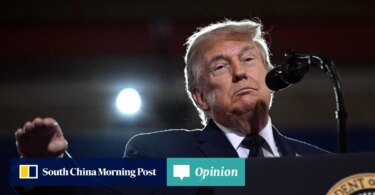
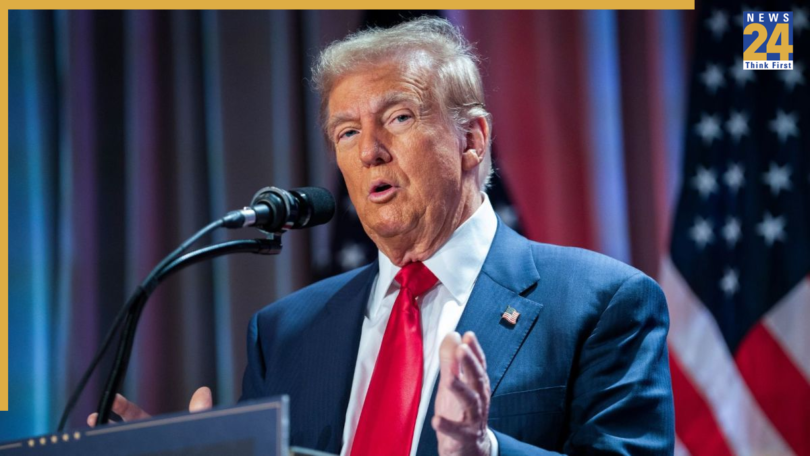
When US President Donald Trump first introduced the Abraham Accords in 2020, they were seen as a major diplomatic breakthrough that could reshape Middle East politics. Now, during Trump’s second term, the accords have once again returned to the global spotlight, this time linked to talks involving Iran, Gulf nations and even Pakistan. However, Islamabad has clearly rejected the idea.
So, what exactly are the Abraham Accords? Why do some Muslim-majority countries support them while others remain uncomfortable? And why has Pakistan firmly said no?
What Are The Abraham Accords?
The Abraham Accords are a set of US-brokered agreements under which several Arab and Muslim-majority countries agreed to normalise relations with Israel. The agreements were signed in 2020 during Donald Trump’s first presidency. Under these deals, countries formally recognised Israel, opened diplomatic relations, established embassies and expanded cooperation in areas like trade, tourism, technology, security and investment.
The term “Abraham” was chosen because Islam, Christianity and Judaism all trace their spiritual roots to the Prophet Abraham.
The first countries to sign the accords were the United Arab Emirates, Bahrain, Morocco and Sudan. Egypt and Jordan had already recognised Israel years earlier through separate peace agreements.
For Trump, the accords became one of the biggest foreign policy achievements of his first term because they broke the long-standing Arab position that Israel would not be recognised until a Palestinian state was created.
What Does Trump Want Now?
Trump is now pushing for a much larger regional agreement. He wants any future peace or nuclear deal involving Iran to also include a major expansion of the Abraham Accords. Trump has publicly said that countries like Saudi Arabia, Qatar, Pakistan, Turkey, Egypt and Jordan should also normalise relations with Israel.
His broader vision appears to be the creation of a regional alliance where Israel and major Muslim-majority countries work together economically and strategically while also countering Iran’s influence in the region.
Supporters believe such cooperation could reduce regional tensions and improve economic ties. However, critics argue that Trump is trying to combine several highly sensitive geopolitical issues into one large deal, which could make already difficult negotiations even more complicated.
Why Did Pakistan Reject The Proposal?
Pakistan rejected the proposal quickly and very clearly. Pakistani Defence Minister Khawaja Asif said joining the Abraham Accords was “not acceptable” because it goes against Pakistan’s “fundamental ideologies”. He also pointed out that Pakistani passports do not recognise Israel. The main reason lies in Pakistan’s long-standing position on Palestine.
Since its creation in 1947, Pakistan has refused to formally recognise Israel, saying this can only happen after the establishment of an independent Palestinian state. This stance has strong political, religious and public support inside the country.
Any move towards recognising Israel could trigger strong backlash from religious organisations, opposition parties and sections of Pakistan’s political establishment.

Why Are Many Muslim Countries Hesitant?
The biggest issue remains Palestine and the ongoing war in Gaza. For decades, many Arab and Muslim-majority countries believed Israel should not receive full diplomatic recognition until Palestinians are granted statehood and sovereignty. Many governments fear that joining the Abraham Accords without progress on Palestinian rights would appear as abandoning the Palestinian cause.
These concerns have grown stronger because of Israel’s military operations in Gaza. Public opinion in many Muslim-majority countries has become increasingly opposed to normalisation with Israel during the conflict.
This is especially important for countries like Saudi Arabia. Before the Gaza war escalated, Riyadh had been exploring possible normalisation talks with Israel. However, Saudi leaders have repeatedly stated that Palestinian statehood remains essential for any future agreement.

Why Is This Issue Particularly Sensitive For Pakistan?
Pakistan faces a difficult balancing act. On one side, Islamabad wants strong ties with the United States and Gulf nations and has quietly played a role in some diplomatic efforts involving Iran. On the other side, recognising Israel would completely change decades of Pakistani foreign policy and could create major domestic political unrest.
That is why many analysts describe Trump’s proposal as placing Pakistan in a “historic paradox” balancing strategic interests with ideological commitments and domestic political realities.
Trump’s renewed push for the Abraham Accords may now become a major test for the region: can the agreements expand further, or have the Gaza war and rising regional tensions made wider normalisation politically impossible for much of the Muslim world?
First published on: May 26, 2026 04:05 PM IST
Get Breaking News First and Latest Updates from India and around the world on News24. Follow News24 on Facebook, Twitter.
End of Article
Related Story