
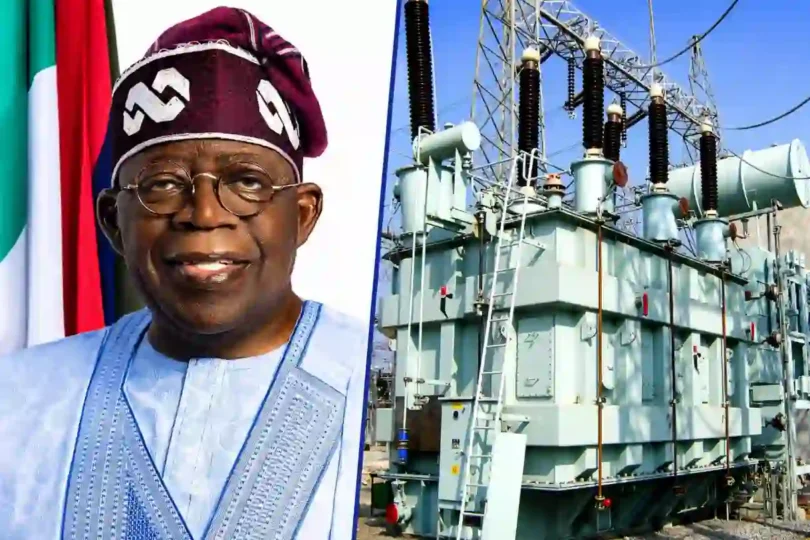
Relief may soon come for millions of Nigerians battling unstable electricity supply as the Federal Government begins repayment of long-standing debts owed to power generation companies, a move industry players say could improve liquidity and strengthen power generation across the country.
The development was disclosed by the President and Group Chief Executive Officer of Transnational Corporation Plc (Transcorp), Owen Omogiafo, during an interview with journalists on the sidelines of the company’s 20th Annual General Meeting (AGM) held in Abuja on Friday.
According to Omogiafo, the Federal Government has already started settling parts of the huge debts owed to electricity generation companies, popularly known as GenCos, with some payments already reaching Transafam Power Limited, while Transcorp Power Plc is expected to begin receiving payments later this year.
“For us in Transcorp Power and Transafam, we have actually signed our settlement reconciliation contracts. For Transafam, they started the payments. And for Transcorp Power, they will start sometime this year,” she said.
She described the move as one of the biggest breakthroughs the Nigerian Electricity Supply Industry (NESI) has seen in years, especially in resolving the long-running liquidity crisis affecting operators in the sector.
“So first of all, let me start by commending the Federal Government under President Bola Tinubu. This is the greatest progress we have made as it relates to dealing with the historical debt,” Omogiafo added.
The Federal Government is currently working to clear about N3.3tn in legacy debts owed to GenCos and gas suppliers. Industry stakeholders have repeatedly warned that the debt burden has weakened operations across the power value chain, affecting generation capacity, investment, infrastructure upgrades and stable electricity supply.
Experts believe the repayment process could improve confidence among investors and operators while helping generation companies maintain operations, pay gas suppliers and invest in equipment upgrades needed to improve electricity supply nationwide.
Nigeria’s power sector has struggled for years with several challenges including inadequate gas supply, ageing infrastructure, transmission bottlenecks and insufficient market liquidity. These issues have contributed to repeated grid collapses, poor electricity distribution and high operating costs for businesses and households.
Despite the challenges, Omogiafo said Transcorp’s power businesses continued to record growth and operational improvements.
“It’s common knowledge about the challenges the power sector is facing. We deal with the gas issues and the transmission infrastructure issues… but despite the challenges that we saw in the sector, we were able to produce the kind of results that we have produced,” she stated.
She noted that while challenges remain within the sector, operators must continue finding ways to create opportunities and improve efficiency.
“There will always be challenges. That’s just the reality. But it’s what you do with those challenges and how you create opportunities out of them,” she added.
Operational figures presented during the AGM showed improvements in the Group’s electricity generation business. Transcorp Power Plc increased its average available capacity to 550 megawatts (MW) from 477MW recorded in 2024. Peak generation capacity also rose to 625MW, while average power generation increased from 332MW to 391MW.
Transafam Power Limited also improved its available capacity to 348MW from 250MW, while average generation increased to 102MW, reflecting ongoing asset optimisation efforts and improved gas supply conditions.
The company also announced strong financial results for the 2025 financial year, driven largely by growth in its power and hospitality businesses.
According to the figures presented at the AGM, Transcorp recorded a 33 per cent increase in revenue to N544bn. Profit before tax rose by 31 per cent to N179.5bn, while profit after tax increased by 44 per cent to N135.9bn.
Total assets grew by 33 per cent to about N1tn from N751bn recorded in 2024, while shareholders’ funds increased by 47 per cent to N353bn.
The Board of Directors also proposed a total dividend payout of N2.00 per share for shareholders for the 2025 financial year. The proposed dividend includes an interim dividend of 40 kobo and a final dividend of N1.60, amounting to over N20.32bn in total payout.
Speaking during the AGM, Chairman of the Board, Tony Elumelu, said the company’s growth was supported by improved operating conditions, management efficiency and continuous support from shareholders.
“I think the operating environment is gradually also improving. All of these culminated in the increase in performance that you have seen,” Elumelu said.
He also highlighted the improvement in shareholder returns, noting that the company had moved from paying kobo-denominated dividends to naira payouts.
“More importantly, to our shareholders who have told us that they are tired of kobo kobo dividend, they are now happy to be receiving two naira per share. That is fantastic,” he said.
Beyond financial performance, industry observers say the Federal Government’s debt repayment plan could become a major turning point for Nigeria’s electricity sector if sustained properly.
Nigeria Startup News reports that with GenCos receiving overdue payments and liquidity gradually improving, many Nigerians and businesses will be hoping the intervention eventually translates into more reliable electricity supply, fewer disruptions and better economic productivity across the country.
What do you think about this?
Drop your opinion in the comment section.
FOLLOW US & Share this with someone who needs to see this.