

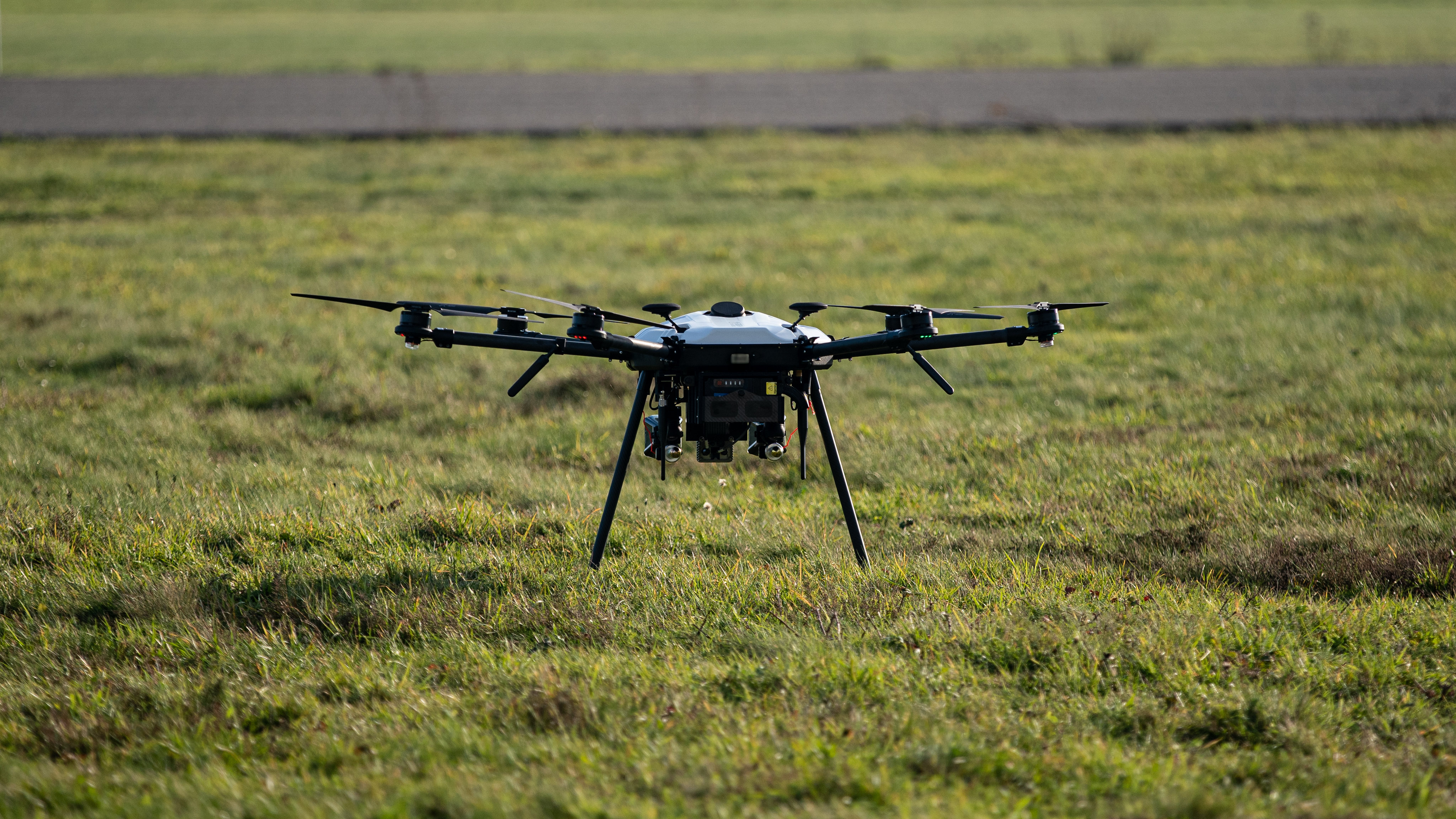
The House of Representatives has called for the establishment of a National Drone Industrialisation Policy aimed at strengthening Nigeria’s defence manufacturing capacity and improving the country’s response to security threats.
Lawmakers also urged the Federal Government to provide financial support to indigenous drone manufacturers, including Beirech UAS, Terra Industries, Elites Group, Pro-force and the Air Force Institute of Technology (AFIT), through the Bank of Industry, the Defence Industries Corporation of Nigeria (DICON) and other financing platforms.
The House said the support would enable local manufacturers to expand production and meet the procurement standards required by the military. The resolutions followed the adoption of a motion sponsored by Hon. Ademorin Kuye, who stressed the need for a strategic policy framework to develop Nigeria’s drone industry.
Presenting the motion, Kuye expressed concern over the country’s worsening security challenges, including terrorism, banditry, kidnapping, insurgency and pipeline vandalism, noting that these threats continue to put pressure on the Armed Forces and other security agencies.
He said unmanned aerial vehicles (UAVs), commonly known as drones, have become essential tools for intelligence gathering, surveillance and counter-insurgency operations, while warning that terrorist groups such as Boko Haram and ISWAP have also deployed commercial drones in attacks against Nigerian troops. Kuye, however, highlighted Nigeria’s progress in indigenous drone technology, pointing to the development of the Tsaigumi UAV by the Air Force Institute of Technology in 2018.
“The House is concerned that Nigeria, with a pool of engineering talent, a growing technology entrepreneurship ecosystem, existing military-industrial partnerships and the largest economy in Africa, possesses the foundational conditions to become the hub for drone technology, provided there is structured government policy, capital and legislative support.”
He lamented that the country’s drone manufacturing sector remains largely driven by private investment, with limited access to funding, inadequate government support and weak technology transfer arrangements.
Following the motion’s adoption, the House mandated its Committees on Defence; National Security and Intelligence; Science and Technology; and Industry and Commerce to develop a National Drone Industrialisation Policy that would transform the sector into a structured, government-supported strategic industry.
Lawmakers also directed the Committees on Defence and National Security and Intelligence to work with the military and relevant agencies to pursue technology transfer agreements with reputable international drone manufacturers to promote local production, reduce dependence on imported components and train Nigerian engineers.
The House further called for the establishment of dedicated Defence Industrial Zones for drone manufacturing, research and maintenance, backed by incentives, infrastructure and regulatory support to attract investment.
In addition, the Committees on Defence, National Security and Intelligence, Industry and Commerce, Air Force, and Science and Technology were tasked with reviewing existing laws on defence procurement, local content, aviation and investment incentives to encourage drone industrialisation through tax incentives and stronger protection for locally developed intellectual property. The committees were given four weeks to submit their reports for further legislative consideration.