The Revenue Mobilisation, Allocation and Fiscal Commission, RMAFC, has reiterated its resolve to promote transparency, accountability and equity in Nigeria’s revenue administration system, while strengthening partnerships aimed at driving ongoing fiscal and tax reforms.
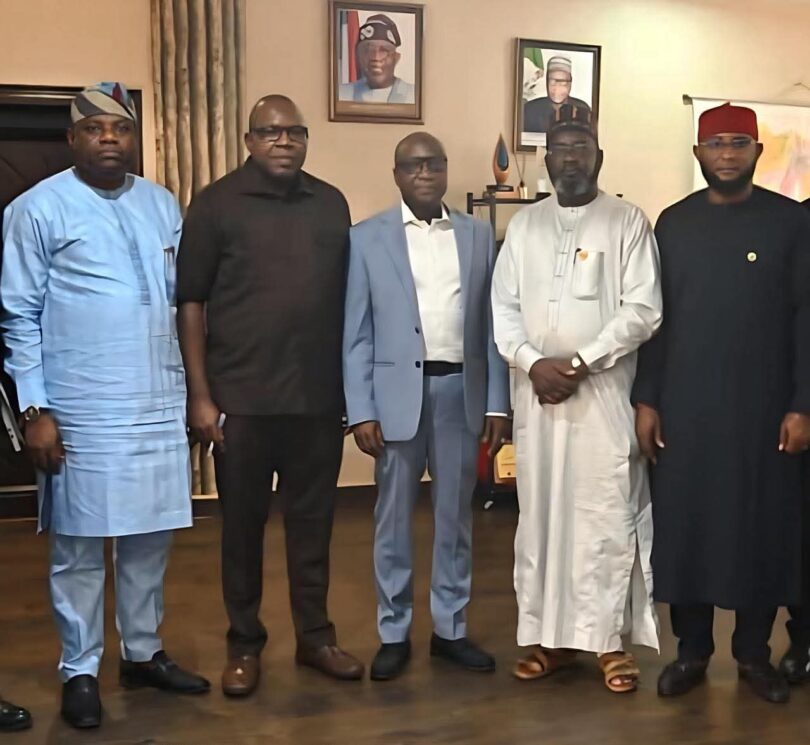
RMAFC Chairman, Mohammed Bello Shehu, stated this during a courtesy visit by a delegation from the Joint Revenue Board, JRB, led by its Executive Secretary, Olusegun Adesokan.
According to a statement by the Head of Information and Public Relations Unit at RMAFC, Maryam Umar Yusuf, reiterated the Commission’s committment to ensuring that revenue reform initiatives yield tangible benefits for government institutions and taxpayers nationwide through enhanced cooperation among relevant stakeholders.
He noted that the effectiveness of the reforms would largely depend on strong collaboration among agencies involved in revenue generation and administration.
He stressed the need for policy alignment, stakeholder engagement and institutional synergy to achieve the objectives of the ongoing reform programme.
The RMAFC chairman maintained that the Commission would continue supporting government efforts aimed at boosting revenue generation while ensuring that funds are distributed in line with existing legal and regulatory frameworks.
He added that sustained cooperation among federal and state governments, as well as revenue-generating institutions, would improve fiscal efficiency and revenue performance over the coming years.
He also acknowledged concerns raised over aspects of the emerging tax framework, particularly issues relating to tax refunds, revenue-sharing arrangements and electronic transfer taxation.
According to him, continuous consultations and technical engagements are necessary to strengthen fairness, efficiency and public trust in the tax administration system.
Speaking earlier, Adesokan said the visit was intended to reinforce cooperation between the Joint Revenue Board and RMAFC in support of the implementation of the country’s revenue reform agenda.
He emphasized that effective coordination among key institutions remains critical to the success of the new tax framework.
The JRB Executive Secretary explained that the reform programme seeks to promote fairness, transparency and accountability in tax administration while establishing clearer mechanisms for revenue allocation between the federal and subnational governments.
He said the reforms are designed to benefit taxpayers, strengthen public institutions and enhance Nigeria’s fiscal stability.
Adesokan further noted that concerns surrounding electronic money transfer levies, stamp duties, tax refunds, revenue allocation and advance tax payments had been brought to the attention of the Board.
He assured stakeholders that consultations and technical discussions would continue to address the issues and improve implementation.
He reaffirmed the Board’s commitment to working closely with RMAFC and other stakeholders to ensure accurate revenue attribution to states and fair treatment of taxpayers under the evolving tax regime.
He also commended the Commission for its efforts in stakeholder engagement and harmonisation, expressing optimism that stronger collaboration and public enlightenment would improve compliance and revenue generation.
Both organisations pledged to deepen cooperation in revenue administration, strengthen taxpayer protection measures and support reforms aimed at enhancing Nigeria’s fiscal framework and accelerating national development.
Among those present were Daniel Kolade Abimbol, Abubakar Wamakko, and Joseph Nwaze Okechukwu, alongside other senior officials from RMAFC and the Joint Revenue Board.