For much of its 77-year history, NATO’s strategic compass has pointed squarely at Europe. Russia remains its principal military threat, and the war in Ukraine continues to dominate the alliance’s agenda.
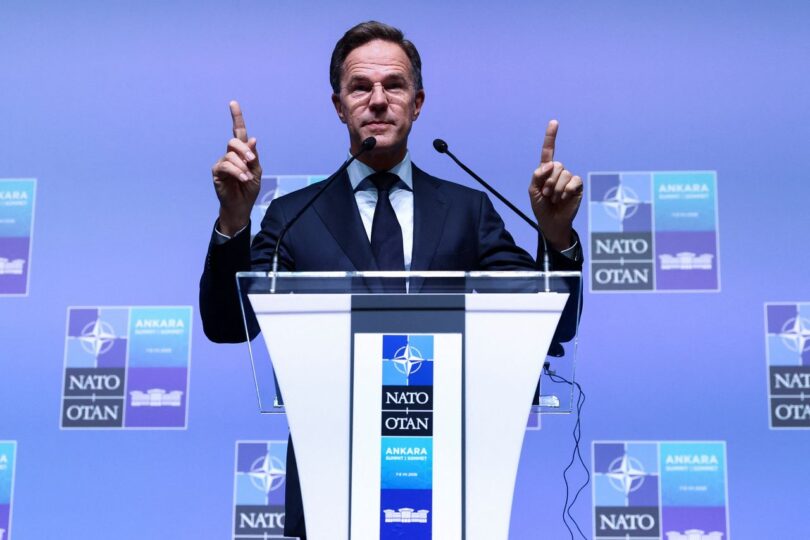
But on the eve of the NATO Summit in Ankara, Secretary General Mark Rutte outlined a broader vision — one that reflects an alliance simultaneously adapting to a changing American role while increasingly viewing China as a long-term strategic challenge.
Addressing journalists on Monday, Rutte repeatedly stressed that Europe’s security architecture is undergoing a fundamental rebalancing. The United States, he said, will remain NATO’s indispensable military power, but European allies can no longer rely on Washington to shoulder a disproportionate share of the alliance’s defence responsibilities.
“I would argue that the NATO as we had only three, four, five years ago was not sustainable,” Rutte said.
“It is not sustainable that we ask a country with 350 million people living eight hours flying from here to defend against the Russians while 600 million people live in this part of NATO territory.”
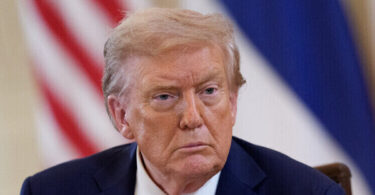
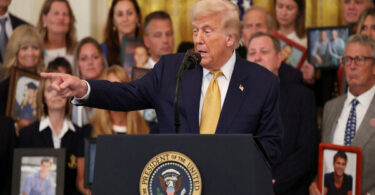
The remarks underscore a broader shift that has accelerated under US President Donald Trump, whose administration has consistently demanded that European allies spend more on defence.
Rather than portraying Washington’s pressure as divisive, Rutte embraced it.
“He is the first president since Eisenhower who was able to bring us to this situation where the Europeans and the Canadians will spend the same as the Americans,” Rutte said, crediting Trump with accelerating a burden-sharing debate that has lingered inside NATO for decades.
According to Rutte, European allies and Canada are already investing roughly four percent of GDP in defence and security, only a year after NATO leaders agreed to work towards spending 5 percent by 2035.
The Secretary General described the shift as transformational.
“We are creating an alliance which is sustainable, where the US knows it is a fair deal. We are spending the same as they are, taking more responsibility for the conventional defence of Europe. Stronger Europe, stronger NATO.”
Yet as NATO recalibrates its transatlantic balance, it is also widening its strategic gaze far beyond Europe.
Related
China moves higher on NATO’s agenda
While Russia remains NATO’s immediate military concern, questions from journalists about China’s latest missile test in the South Pacific prompted one of Rutte’s clearest warnings yet about Beijing’s growing role in global security.
“I think it is evidence of the fact that we cannot be naïve about China,” he said.
For Rutte, the Indo-Pacific is no longer a distant theatre disconnected from European security.
“These theatres are getting more and more intertwined, connected. What happens in the Pacific is relevant to what is happening in the transatlantic.”
His remarks reflect NATO’s evolving strategic concept, which increasingly links security developments in Europe with those unfolding across Asia.
Rutte pointed to what he described as an emerging partnership among states supporting Russia’s invasion of Ukraine.