By Ayushi Agarwal
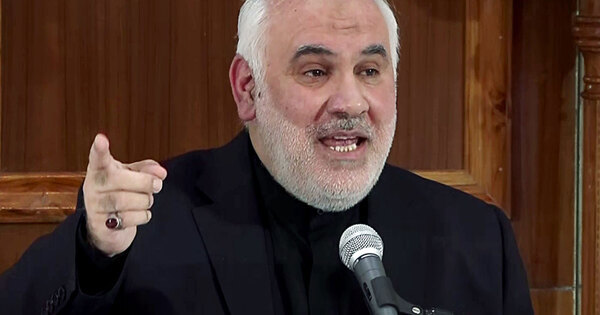
New Delhi [India], May 29 (ANI): Asserting Tehran’s resilience amid intense international pressure, the Ambassador of Iran to India, Dr Mohammad Fathali, declared on Friday that Iran still possesses formidable defensive capabilities and stands fully prepared to protect its security and national sovereignty.
Speaking with ANI, Ambassador Fathali emphasised that decades of economic restrictions have not crippled the country, but have instead armed it with valuable expertise in managing foreign hostility through a strategy of ‘economic resistance.’
Ambassador Fathali sharply dismissed claims that recent geopolitical conflicts and Western blocs have left Tehran fundamentally weakened. He cited the nation’s military performance during the recent 40-day war as definitive proof of its strategic depth.
‘Those who claim that Iran has been strategically and economically weakened saw the true power of the Iranian nation and our armed forces during the 40-day war,’ Fathali stated. ‘The Islamic Republic of Iran showed that despite heavy pressure, it still possesses significant defensive, popular, and strategic capabilities, and can defend its security and national interests.’
While acknowledging the undeniable ‘negative effects’ of global sanctions on the domestic economy, the Envoy noted that the sheer willpower, faith, and institutional resilience of Iranian society have allowed it to endure and push forward.
Addressing stalled peace talks and international pressure over uranium enrichment, Fathali made it clear that Iran will not bargain away its foundational sovereign rights. He emphasised that future talks must remain bound by the rules of the Non-Proliferation Treaty (NPT).
‘Regarding the issue of uranium enrichment, the position of the Islamic Republic of Iran is completely clear. We have stated many times that we will not give up the legal and legitimate rights of the Iranian people, including the right to the peaceful use of nuclear energy, which is mentioned in the NPT. For this reason, the nuclear issue is currently not on the agenda for negotiations, and talks on this matter will take place at a later stage within a specific framework,’ he said.
Fathali reiterated that lasting solutions cannot be dictated, stating, ‘Experience has shown that the language of sanctions and force cannot create a lasting solution.’
The envoy explained that Tehran’s current geopolitical decisions are guided by a realistic assessment of past interactions, particularly history involving broken promises and failed ceasefires.
‘We have bitter experiences with past ceasefires and broken promises, which is why we look at these developments realistically,’ Fathali told ANI.
‘Furthermore, we emphasise once again that we are fully prepared to defend ourselves and counter threats, but we also keep the path of diplomacy open.’
Fathali reiterated that Iran remains committed to international law and ethics, ultimately preferring dialogue and political solutions over kinetic actions because ‘war will only destroy the region’s resources.’
The Ambassador’s warnings align closely with statements from Iran’s Parliament Speaker, Mohammad Bagher Ghalibaf, who recently told Al Jazeera that Tehran harbours zero confidence in verbal assurances from Western powers.
‘In negotiations with the US, we have no trust in guarantees or words – only actions are the measure,’ Ghalibaf stated as broader peace negotiations continue to stall.
Fathali noted that the volatile conditions currently plaguing West Asia are the direct byproduct of foreign military action, threats, and pressure from nuclear powers, warning that such aggressive policies have only increased the catastrophic risk of a wider regional crisis. (ANI)