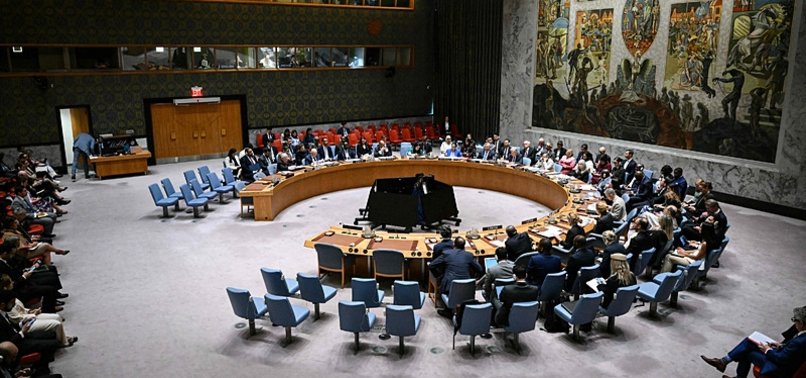
Some UN Security Council members warned Wednesday that the Middle East is edging toward a wider war, as the US blamed Iran for fueling virtually every active conflict in the region.
Russia and China pushed back against what they called “one-sided” pressure on Tehran.
Pakistan’s UN envoy Asim Iftikhar Ahmad said “the situation in the Middle East is fragile and increasingly volatile,” warning that “unresolved disputes have become protracted conflicts, and cycles of violence are becoming normalized.”
He urged a complete cessation of hostilities and normalization of conditions in the Strait of Hormuz, which he said is vital for all countries in the region and beyond.
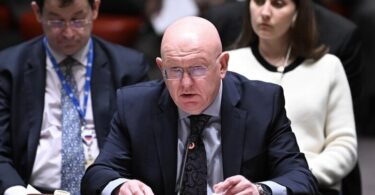
Russia’s UN envoy Vassily Nebenzia warned that “the dreams of the advent of lasting peace in the Middle East seem more elusive than ever,” accusing extra-regional players and their regional allies of attempting to redraw the Middle East’s political map.
He said the Security Council “should not attempt to impose a solution beneficial exclusively to one side or directed against any regional state,” and called for a Palestinian state in the West Bank and Gaza Strip with a capital in East Jerusalem.
China’s UN envoy Fu Cong said the Middle East “has long been plagued by turmoil and endured the ravages of war.”
Urging the international community to uphold international law at all times, he said, “They must not be applied selectively, nor can the world be allowed to revert to the law of the jungle.”
He said the Palestinian people’s inability to realize their national rights is “the greatest injustice in today’s world.”
US Alternative Representative for Special Political Affairs Jennifer Locetta said the region demands “real solutions and political capital, not recycled failed approaches,” and placed the blame squarely on Iran.
She accused Tehran of holding “the world’s economy hostage by unlawfully attempting to restrict freedom of navigation in the Strait of Hormuz,” and of allegedly backing the Houthis in Yemen, Hezbollah in Lebanon and militias in Iraq.
Locetta also accused Russia and China of shielding Tehran, saying the two countries vetoed a draft resolution in April that would have authorized action to secure transit through the Strait of Hormuz.
She argued that effective diplomacy must be paired with enforcement, warning that “dialogue without consequences failed to prevent destabilizing behavior.”