
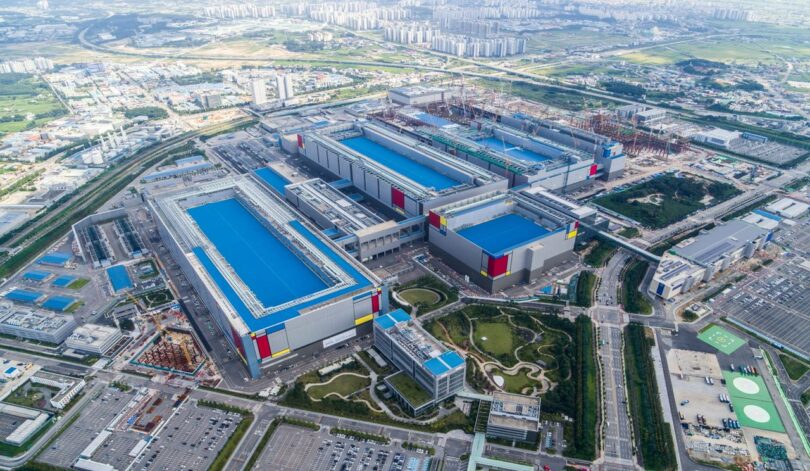
The southwestern region of Honam, a traditional liberal stronghold encompassing Gwangju and the Jeolla provinces, has long lagged behind the more industrialised southeast.
This disparity dates back to rapid economic development under former president Park Chung-hee in the 1960s and 70s.
But without incentives for companies to voluntarily relocate, the massive investment could backfire, warned Kim Dae-jong, a professor of Business Administration at Sejong University.
This could, in turn, hurt the nation’s semiconductor competitiveness.
“It is essential to minimise the financial burden, amounting to hundreds of trillions of won, as well as the time-related risks faced by companies,” said Kim.
Related
Renewables
Analysts say there are abundant renewable electricity resources in the southwest, making it possible for companies to meet their commitments to boosting green energy use.
But they caution that building an entirely new semiconductor manufacturing ecosystem away from the existing industrial base around Seoul would require significant time and investment.
“Establishing production lines from scratch could take more than five years,” Lee Jong-hwan, a semiconductor engineering professor at Sangmyung University, told AFP.
“The biggest challenge is that most skilled workers and suppliers remain concentrated around the Seoul metropolitan area.”
Concerns were also raised about heavy demand for water. President Lee wrote on X on Saturday that “assessments indicate it is possible to supply one million tons of industrial water per day” in the region.
The announcement comes as South Korea debates how the enormous profits generated by the global AI-driven semiconductor boom should be shared more broadly across society.
Kim Yong-beom, the president’s chief policy secretary, in May suggested using excess AI-related tax revenue to fund startup support for young people, basic income programmes for rural and fishing communities, and assistance for artists.
The boom has also fuelled worker demands over pay packages, with Samsung averting a major strike in May by agreeing a deal on bonuses with its largest union.
Industry experts say diversifying chip investment beyond Seoul could ease infrastructure bottlenecks, but warn that building cutting-edge fabs requires vast electricity and water, advanced logistics, deep supplier networks and highly skilled labour – elements that may not scale quickly enough in a new region to meet surging AI demand.
Opposition politicians have sharply criticised the plan, questioning whether the proposal is politically motivated given that 85 percent of voters in the region backed Lee in last year’s presidential election.
The announcement comes as Lee’s approval rating has slid for six weeks to 46.5 percent, according to pollster Realmeter.

Related