Spain called for the European Union to penalise Israel over its actions in Gaza, reviving a push after Hungarian leader Viktor Orban’s loss potentially removed one of the bloc’s biggest obstacles to taking action.
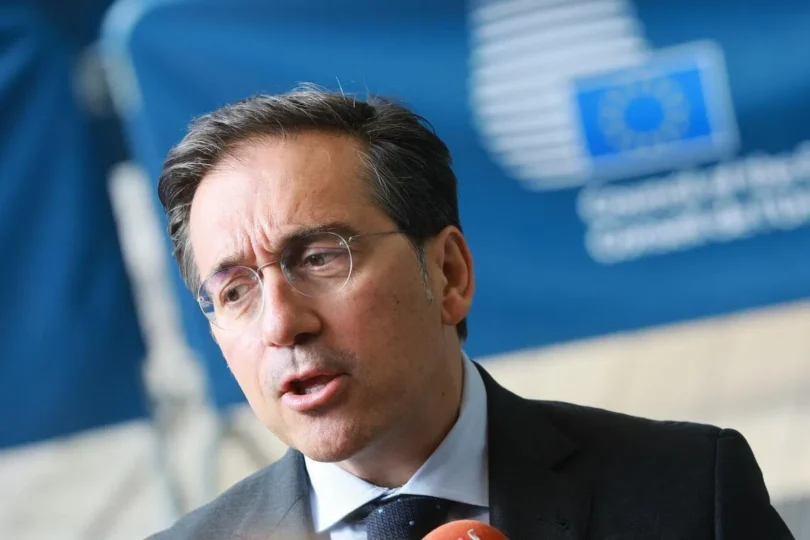
“We need to tell Israel clearly that it has to change course,” Spanish Foreign Minister Jose Manuel Albares told reporters on April 21, as he arrived for an EU foreign ministers’ meeting in Luxembourg.
“War can not be the only way of having relations with neighbors.”
Spain, Slovenia and Ireland are pressing the EU to suspend its association agreement with Israel, which covers trade between the two partners. The countries want to discuss suspending the entire agreement, but Mr Albares said there were other options.
“We’re open to any measure,” he said. “But we can not keep doing absolutely nothing.”
The renewed pressure reflects not only Europe’s shifting opinion toward Israel, but also the potential changes that Mr Orban’s ouster may bring. The Hungarian leader, who lost reelection earlier in April, has consistently opposed any EU attempt to sanction Israel.
The bloc first started considering punishing Israel in 2025, as the casualties in Gaza mounted and the war dragged on. But the initiative hit opposition – and not just from Hungary. Large countries like Germany and Italy, for instance, have opposed the call to suspend the EU’s Israel agreement.
“We find it inappropriate,” German Foreign Minister Johann Wadephul told reporters on April 21.
One proposal with broader support is to impose sanctions on violent settlers in the West Bank, potentially including several government ministers. Hungary blocked that effort, while other countries opposed including government officials.
At least some of those sanctions may now be back on the table. In addition to Mr Orban’s departure, historical Israel defender Germany has also criticised the settler violence. EU countries have similarly denounced a new Israeli death penalty law.
“We are witnessing and experiencing an unprecedented and unacceptable escalation of violence in the West Bank,” Irish Foreign Ministers Helen McEntee told reporters on April 21.
Mr Wadephul reiterated Germany’s concern about both issues.
“We have criticised the reintroduction of the death penalty,” he said. “There is a clear position on settler violence. I expect the Israeli government to take stronger and clearer steps against it.”
Still, any progress on sanctions may have to wait until Hungary’s new government is inaugurated early in May.
While the outgoing Hungarian government’s minister Peter Szijjarto is not expected to attend April 21’s gathering, he will be represented by officials still holding Mr Orban’s line. REUTERS