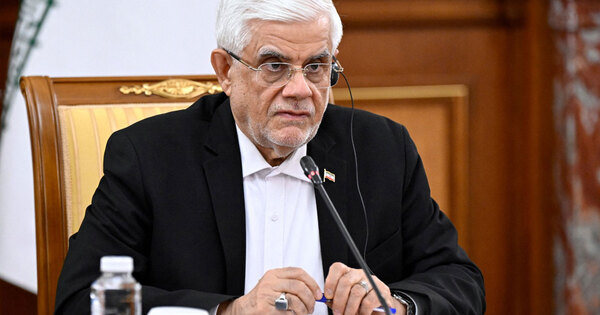
Tehran [Iran], June 17 (ANI): Iran’s First Vice President Mohammad Reza Aref has asserted that the Strait of Hormuz belongs to Iran and that its management will remain the responsibility of the Islamic Republic, amid ongoing efforts to formalise a peace agreement between Tehran and Washington.
Speaking during a meeting with officials from Iran’s Vice Presidency for Women and Family Affairs on Tuesday, Aref stressed the strategic significance of the waterway and said vessels using the Strait should contribute to the cost of services provided by Iran to ensure safe navigation.
‘The Strait of Hormuz belongs to Iran, and its management will remain Iran’s responsibility,’ Aref said, according to remarks published by the presidential office and reported by Press TV.
He further highlighted the role played by Iran in maintaining navigational safety in the strait, through which a significant share of the world’s energy supplies passes.
According to Aref, Iran provides key services that help guarantee the safe passage of vessels through the waterway. He warned that without such measures, ships could face serious risks, including encounters with naval mines and potential environmental hazards.
His remarks come as the United States and Iran move closer to formally signing a peace agreement expected later this week in Geneva.
On Tuesday, US Vice President JD Vance outlined Washington’s position on the emerging agreement, stating that the deal would ensure Iran never acquires a nuclear weapon while potentially opening a new chapter in bilateral relations if Tehran demonstrates verifiable changes in its conduct.
Speaking to Fox News, Vance dismissed reports suggesting that the United States was transferring billions of dollars to Iran under the agreement.
‘I’ve seen a lot of misinformation out there. I’ve seen USD 24 billion going from the United States to Iran. That number is totally false, totally made up,’ Vance said.
He stated that Iran had committed to eliminating its stockpile of enriched nuclear material and stressed that any broader benefits under the agreement would depend on Tehran ending uranium enrichment and complying with strict verification requirements.
‘If the Iranians are willing to change their ways and stop trying to build a nuclear weapon, stop trying to fund terrorism all over the Middle East, then we are willing to actually fundamentally transform our relationship with them,’ Vance said.
The US Vice President also said the current framework differs significantly from the 2015 Joint Comprehensive Plan of Action (JCPOA), arguing that the new arrangement would be based on verifiable Iranian commitments before any benefits are extended.
The peace agreement is expected to be formally signed later this week, with US President Donald Trump describing it as a ‘very powerful document’ whose full text will be released after the signing ceremony. (ANI)