
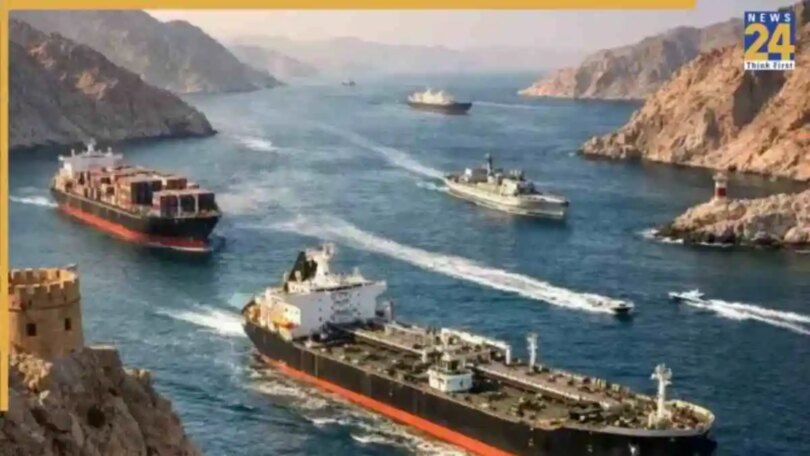
Iran has announced plans to develop a new system to control vessels passing through the Strait of Hormuz. According to Iranian officials, Tehran has developed a “professional mechanism” to regulate maritime traffic, collect transit fees, and control access through the crucial waterway, Reuters reported.
Ebrahim Azizi, the head of the Iranian parliament’s national security committee, made the announcement stating that the country has finalized a designated route for vessels crossing the strait. According to state-run media and Reuters, additional details about the new mechanism will be introduced soon.
ALSO READ: ‘Decade of disasters, all achievements will wash away if…’: PM Modi’s grim warning in The Hague
Which countries will be charged a toll fee? Route to remain closed to…
Azizi explained that the new mechanism falls “within the framework of its national sovereignty.” It will apply to commercial ships and countries that cooperate with Tehran. Meanwhile, the Iranian officials also warned that operators linked to the United States-led “Project Freedom” maritime initiative will be denied access to the strategic maritime route. “This route will remain closed to the operators of the so-called ‘Freedom Project’,” Azizi wrote in a post on X.
Iran, within the framework of its national sovereignty and the guarantee of international trade security, has prepared a professional mechanism to manage traffic in the Strait of Hormuz along a designated route, which will be unveiled soon.
In this process, only commercial…
— ابراهیم عزیزی (@Ebrahimazizi33) May 16, 2026
Iran to charge toll fee from ships
Under the new proposed plan, vessels using the route would be charged a fee for services provided by Iran. Tehran said the transit charges would cover “specialized services” linked to navigation and maritime security. Iranian officials, however, did not specify the charges that ships may have to pay or when the mechanism will officially start operation.
ALSO READ: Ebola outbreak in Congo kills 80: Know causes, symptoms, and risk factors of this deadly disease
Why is the Strait of Hormuz important?
The Strait of Hormuz, located between Iran and Oman, is a vital waterway for global oil and gas supplies. It connects the Persian Gulf to international shipping lanes. A large portion of the world’s energy exports passes through this narrow maritime route every day. Any disruption can severely impact energy prices and foreign trade.
The proposed mechanism comes at a time when regional waters are facing growing instability. Shipping firms have already experienced security concerns after missile and drone attacks, threats, and shipping disruptions in the Gulf region over the past few years.
ALSO READ: US to attack Iran again? Donald Trump’s ‘calm before the storm’ cryptic post hints at possible military action