By Nehru Odeh
It has been described as polyphonic. It has been hailed as intergenerational. It has also been praised for preserving memory. But the truth is, it is a documentary whose time has come, what with tempers rising against what many believe are the imbalances that characterize the Nigerian nation, as well as the proliferation of ethnic nationalities agitating for self-determination. Still, Nigerians continue to beat drums of secession and war. And the question is, have Nigerians learnt any lessons from the civil war?
This is the story of “Surviving Biafra: Voices of Survivors from the Nigerian Civil War”, a 75- minute film produced by the BBC African Eye and directed by acclaimed filmmakers Leke Alabi-Isama and Meji Alabi, which premiered at the University of Lagos on June 1, 2026.
It will be recalled that the Nigerian Civil War, fought between 1967 and 1970, remains one of Africa’s most devastating conflicts. Estimates suggest that between 600,000 and three million people died, many from starvation and disease. Entire communities were displaced. Families were separated. Childhoods were shattered.
The documentary offers a powerful, unfiltered look into the human cost of the conflict. It features accounts from both sides, including civilians, former Biafran civil defense members, and Nigerian army commandos.
What sets Surviving Biafra apart is its refusal to paint the conflict in monolithic strokes. It builds a balanced, multi-perspective mosaic.
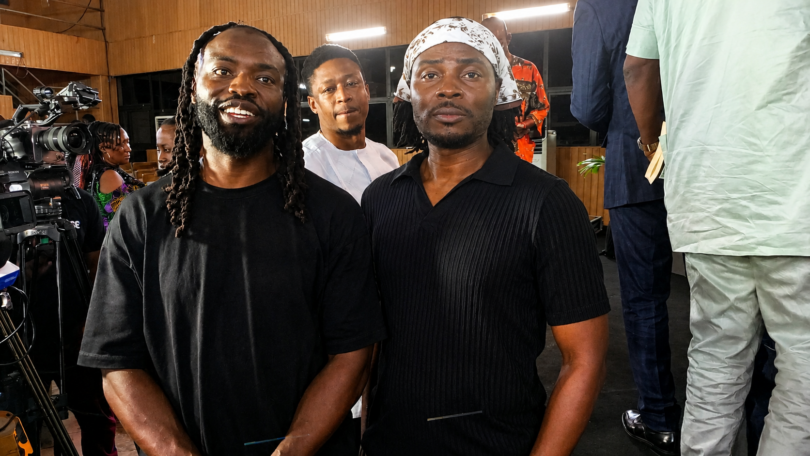
At the heart of this poignant documentary is an extraordinary intergenerational collaboration. And what makes it unique is that Leke and Meji (the filmmakers) are the son and grandson, respectively, of Brigadier General Godwin Alabi Isama (retd), Commander of the Third Marine Commando during the civil war and author of The Tragedy of Victory, a memoir of the Nigerian civil war.
Alabi-Isama’s experiences have long occupied a prominent place in discussions about the conflict. But rather than produce a family memoir disguised as history, the filmmakers chose a more ambitious path: to gather voices from all sides of the conflict and allow survivors themselves tell their stories.
The result is a documentary that moves beyond military strategy and political rhetoric to reveal the human beings trapped inside history.
Not only was the Afe Babalola Main Auditorium, where the movie premiered, filled, the filmmakers and dramatis personae in the documentary as well as in the civil war, were also there.
They included Brigadier General Isama, Sasa Nwoke (aka Corporal Nwafor), and Alhaji Amusa Bolomope. The filmmakers and the actors spoke on the documentary and the war before and after the screening.
Still, “Surviving Biafra: Voices from the Nigerian Civil War” is not merely a film about war and its devastation. It is about survival. It is about memory. It is about the burden of history and the responsibility of a new generation to listen.
Based on available reports, interviews, archival footage, and public statements by the filmmakers, the documentary is far more than a historical documentary. It is a deeply personal journey into identity, loss, and national healing, driven by a father-son-and-grandson creative partnership.
“All my life, I have seen photos, I have heard stories about the war. As a kid growing up, these stories, first of all, felt personal. It just felt like, oh, this is my father’s story. I was hearing what my dad did here. I was looking at photos, things that happened while my dad was in the army and the war was on.
“A lot of the stories before I became a filmmaker were things that I would say to myself, and we would talk about at home, and my dad would talk about his exploits during the war and the things that he did.
“But I didn’t really think it was a story that needed to be told. I didn’t really think much of that story. But then, when I became a filmmaker, I was like, wait, we’re sitting on a gold mine here. We’re sitting on an important part of Nigeria’s history, and, you know, thankfully, my dad had over 10,000 photos from the war.
“We’re lucky as well that, you know, one of the photographers who took those photos is also here with us today. Alhaji Bolomope,” Leke, who scanned his father’s war photos while his father was working on his memoir, The Tragedy of Victory, said.
Asked why it was important for them to make the film, Leke maintained: “The reason why we thought it was important to make a film like this is that, first of all, the people who were there and who witnessed it and who can tell us what it’s like when a country is at war with itself are dying off. They are of that age where a lot of them are just passing. And if we do not get these records in another 10, 20 years, it’s all going to be hearsay.
“What better way to tell the story than to hear from the people who were there? And that was one reason. The second reason why we thought it was important to make this film is that the relationship we have with this event as well as with my dad and Meji’s granddad, is personal
“And thankfully, he had all these photos that, once you see them, it almost feels like it transports you to that moment in time when the war was happening. And we thought, as young people, what’s a better way for people to consume a story like this if it is not audiovisual? And that’s one of the reasons why we decided to make this film. We decided to make it now as a matter of urgency,” Leke noted.
Meji, for his part, said he was inspired to make the movie because he wanted to tell his grandfather’s story and expand on that by telling other people’s stories around the Nigerian civil war.
“And obviously we’ve been feeling like the stories that need to be told from the point of view of those who survived it – the eyewitnesses. So, it started with my grandfather, Brigadier General Godwin Alabi-Isama. Then we decided to expand the story further to other people who were involved in the war from both sides,” Meji stated.
Then why choose the University of Lagos as the right place to screen such an important movie? “We decided to screen this film with this generation of people, because they’re the generation that knows nothing about the war,” Leke stated.
“They didn’t experience it. They didn’t live it, and we found out that when you go online and see how they interact, how they say hateful things to each other along tribal lines. And that’s what got us here in the first place.
“So we want this generation to see this film and what war does, what hate does, what disunity does, what ethnic and tribal bigotry does. And that’s the reason why we brought this film to a venue like this, so that young people can see it and not have to make the same mistake that those before us made, before they learn the lessons.
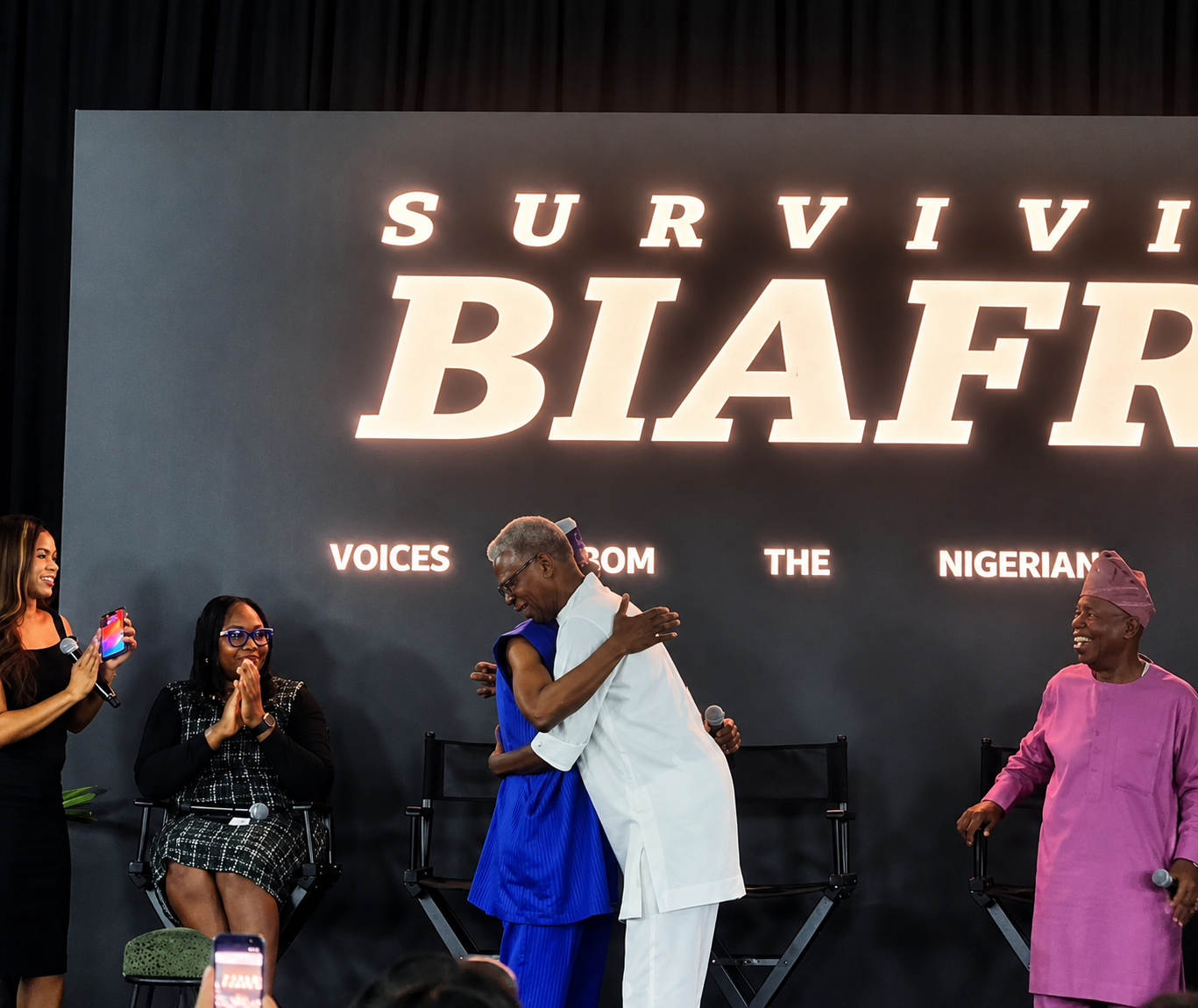
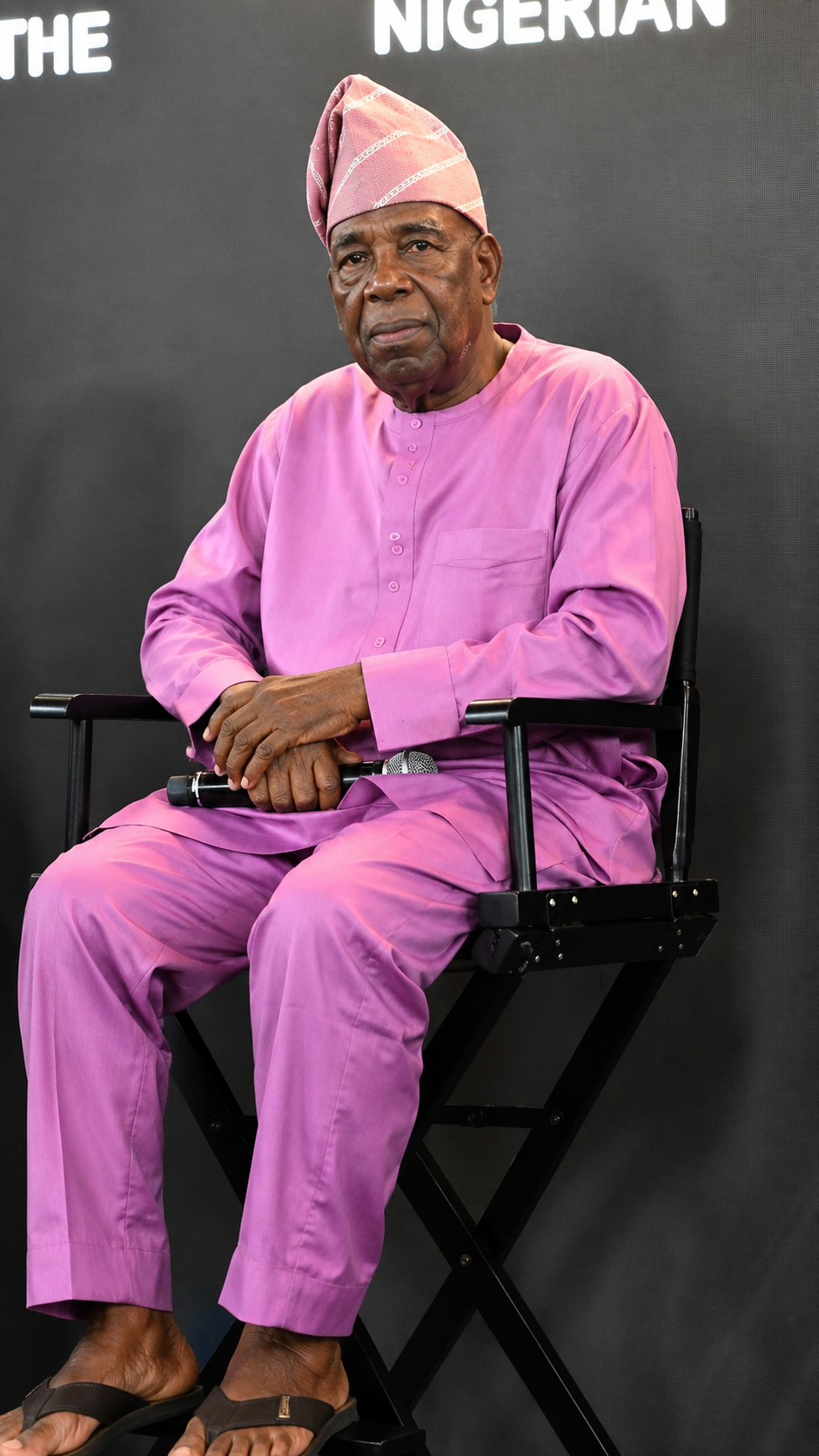
However, a very significant part of the screening was when Alabi-Isama and Corporal Nwafor, two protagonists on opposite sides of the civil war, met for the first time after 50 years and were in a panel discussion. Their warm embrace, which was symbolic enough, was not lost on the audience, and it was greeted with a round of applause.
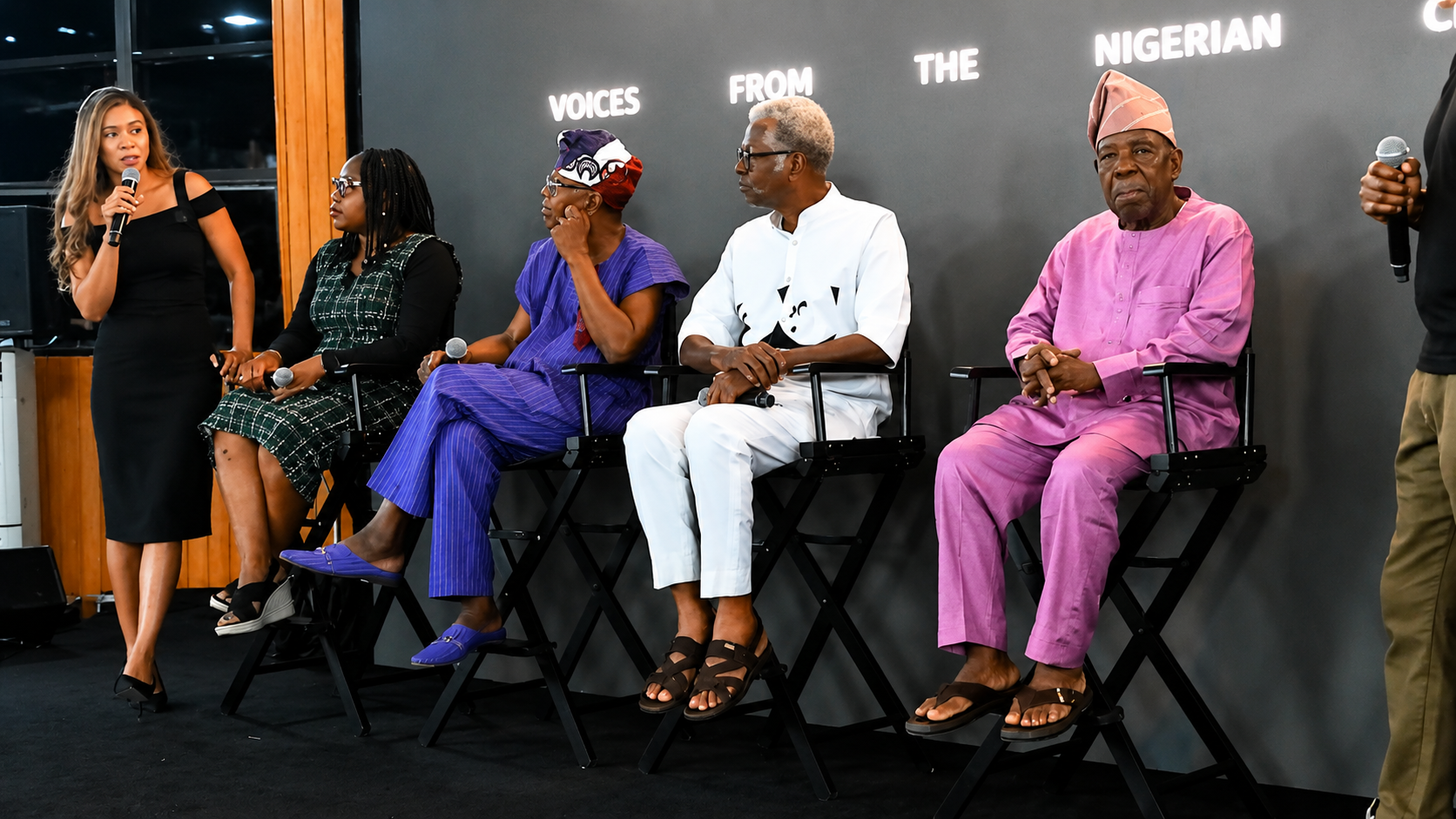
Asked what it felt like seeing both of them, former adversaries during the war, sitting side by side at the screening, Alabi-Isama, always energetic even at 85, said, with a sense of humor, ” I feel like slapping him.” And the hall erupted with laughter.
“I want to take this opportunity to thank the BBC. This is what our government in Nigeria is expected to do. To let children like you see what happened in this country. Some of you were not born during the war. Even your parents were not born during the war. May I ask one more time, is there any of you who would like to be in this type of war again? That is why we are thanking the BBC for allowing this to happen.
My dear children, I’m an 85-year-old man going 86. I have a lot of experience. I have seen it all. The day I saw a woman with kwashiokor and her child, my mother was there, she was crying, and I was crying. In the Marine Commando, we had no prisoner-of-war camp. Every Biafran we captured, we fed them, and we put them back in the Nigerian army. They led us to where the others were. That was why the war ended in the Marine Commando. In the Marine Commando, we never had a refugee camp. Everybody had to go home,” Alabi-Isama said, while responding to the question asked about what he makes of the movie.
Corporal Nwafor, for his part, was also appreciative that the students of the University of Lagos were fortunate to see the devastating effects of war through the documentary.
“We fought a war, an unfortunate war. But they’ve hidden this story from you kids for so very long. That was tragic. But I thank God that it was never late to repent. The war had been fought, won, and lost. And they told us that there was no victor, no vanquished. True, there was no victor. But in a real sense, everybody is vanquished. Both the loyalists and the rebels. And nobody learned a lesson. That’s my regret.
” Everyone has just continued as if nothing happened. But we lost human beings. Unfortunately, the thing is continuing. And it hurts me. Even when I see you kids, my heart bleeds. This is because we don’t have a future. The way we’re going. If not for this, I would have concluded that there would be no future here in 30 to 50 years. But thank God that something different happened,” Corporal Nwafor lamented.
Alhaji Bolomope, the war photographer who took shots of the war, armed with his camera as bullets were flying around, had some words of caution for the students.
“There is no better time than now to watch this film. Look at what is happening. Right now in Nigeria, we are preparing for another election. What led to the Civil War started after an election. Now we are preparing for another election.
“My concern is for the youths. Politicians will call you. They will use you. Did you see the effects of that now? Did you see young children dying? Did you see the elderly person unable to move again? Did you see property being destroyed? May God not let us see that again in Nigeria.
Leke did not mince his words when he espoused the message Surviving Biafra has for Nigerian youths. “Violence is never the answer,” he said. “Having watched this documentary, and heard from the people who fought in the war as well, the people who experienced the war firsthand, I don’t think anybody would want to beat the drums of war. War is by no means a good thing. Even if you fight a war, you still have to sit down and dialogue.
“So why don’t you choose dialogue first? And resolve whatever issues that we may have. And going back to the youths, we need to be more conscious than we are. We need to be more deliberate about the affairs of this country that affect us. We need to come together and start thinking more critically. We’re not young and dismissible. We need to think like we’re the future of this country today, and not tomorrow.”
Surviving Biafra is indeed a cautionary tale. Ultimately, it is designed as a vibrant anti-war statement. During its emotional premiere, the film served as a stark reminder to young Nigerians of the cost of intolerance and failed communication.
By transforming a painful historical scar into a beautiful, shared narrative, Leke and Meji have created more than just a documentary. They have built a vital monument to peace, urging a young continent to remember its past before history repeats itself.