The Southwest Development Commission (SWDC) is set to convene a high-level roundtable in Ibadan, Oyo State, where it will formally launch an ambitious N80 billion Transformed Communities Programme (TransComs), a flagship intervention designed to reshape rural economies across the Southwest.
Scheduled for May 5–6, 2026, at the International Institute of Tropical Agriculture (IITA), the summit marks a critical transition point from programme design to execution. The Commission says the gathering is intentionally structured as a working session rather than a ceremonial event, bringing together senior decision-makers across federal and state governments, development finance institutions, and private sector stakeholders.
SWDC described the initiative as a coordinated response to long-standing structural gaps in rural infrastructure and productivity systems. The programme targets the creation of 137 self-sustaining community economies across Oyo, Ogun, Osun, Ondo, Ekiti, and Lagos states, with a focus on lifting living standards, expanding employment opportunities, and enabling rural communities to function as integrated economic units.
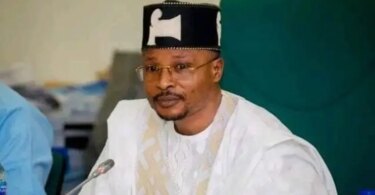
“TransComs is the most serious attempt in a generation to organise the productive potential of Southwest Nigeria’s rural communities into a coherent economic programme,” said SWDC Chairman, Senator Olubunmi Adetunmbi. “The partners in this room on 5 May will not be witnesses to a launch. They will be the architects of it.”
The Ibadan roundtable is expected to host a carefully selected group of participants, including commissioners overseeing agriculture, health, energy, and local government affairs from across the six Southwest states, alongside representatives of key Federal Ministries. The Commission emphasised that participation is strictly by invitation, with the objective of securing actionable commitments rather than broad declarations.
Also expected are senior officials from international development institutions with established mandates in rural transformation and agricultural finance across Sub-Saharan Africa, including the African Development Bank. Private sector actors are also being positioned as critical contributors, particularly those capable of serving as anchor buyers for agricultural outputs or partners in developing agro-processing and digital infrastructure.
According to the Commission, research and technical institutions will play a central role in the programme’s execution framework. Entities such as IITA are expected to provide agronomic expertise that will underpin productivity improvements across all TransCom sites.
The two-day structure of the summit reflects its operational intent. Day one will feature plenary sessions, sector-specific breakout discussions, and open forums, culminating in a roundtable commitment session where participants are expected to outline their roles. Day two will focus on formalising these commitments, with expressions of interest and the development of a joint workplan for the pilot phase in Ogbomoso, which is scheduled as the programme’s first rollout cluster.
At its core, TransComs is positioned as a systemic intervention addressing what SWDC describes as the absence of organised infrastructure in rural Nigeria. While agriculture remains both a livelihood and identity for millions, the lack of integrated support systems—ranging from storage and processing to energy and digital access—has limited productivity and scale.
The programme seeks to address this by clustering three to five neighbouring villages, typically comprising between 2,000 and 8,000 residents, into a unified economic and governance structure known as a TransCom. Each cluster will be developed around seven interdependent pillars: agricultural productivity, agro-industrial processing, energy access, digital infrastructure, healthcare, microfinance, and social protection.
SWDC explains that these components are designed to function as a coordinated system rather than isolated interventions. By aligning investments across these areas, each TransCom is expected to support its own production cycles, facilitate access to markets, and provide essential services without relying on irregular government projects or fragmented donor interventions.
“The result is a community cluster capable of anchoring agro-processing investment, training its own farmers, powering its own facilities, connecting to digital markets, accessing credit, and governing its own development,” the Commission stated.
The programme is being implemented in partnership with the Foundation for Technology Innovation (FTID) and Sustainable Development, under the leadership of Professor Oyebanji Oyelaran-Oyeyinka. His involvement brings a strong emphasis on industrial policy and technological capability development, which the Commission says is central to the programme’s long-term sustainability.
Funding remains a central pillar of the initiative, and the Ibadan summit is expected to play a decisive role in securing commitments. SWDC noted that participating organisations will be required to declare specific financial, in-kind, or institutional contributions before the close of the event, all of which will be documented and subject to audit.
“The summit is the moment at which the funding architecture moves from design to commitment,” the statement said, underscoring the expectation that stakeholders will leave with clearly defined obligations.
The programme operates on a blended financing model, combining anchor funding from SWDC with additional capital mobilised from development finance institutions, state governments, and private sector partners. While the initial launch is pegged at N80 billion, the Commission indicated that the full rollout across all 137 local government areas in the Southwest is projected to approach N100 billion.
The Ogbomoso pilot cluster represents the first phase of capital deployment and is expected to serve as a proof point for scaling the model across the region.
Nigeria Startup News reports that with its integrated design and emphasis on coordinated investment, TransComs signals a shift in how rural development programmes are conceptualised and delivered in Nigeria, moving away from fragmented interventions towards structured, multi-sector economic systems anchored at the community level.
What do you think about this?
Drop your opinion in the comment section.
FOLLOW US & Share this with someone who needs to see this.