Sweden has said it is open to discussions about a possible NATO role in efforts to reopen the Strait of Hormuz, a key global shipping route, according to Swedish Foreign Minister Maria Malmer Stenergard.
In comments to POLITICO ahead of a NATO foreign ministers? meeting, Stenergard stressed that keeping the waterway open is a strategic priority for Europe.
?It’s definitely in Swedish and European interests to make sure that we keep the strait open and that Iran cannot use this as a weapon again,? she said, adding that she is willing to consider different operational formats for securing the route.
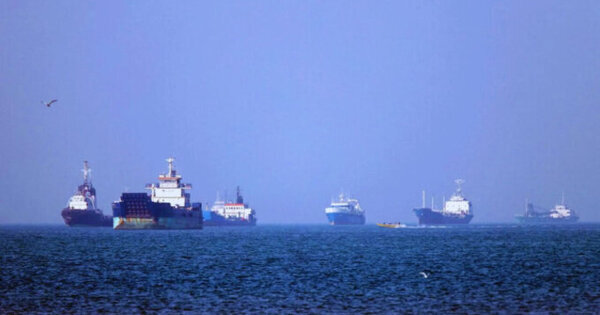
The Strait of Hormuz, through which roughly one-fifth of global oil shipments pass, was disrupted after Tehran halted commercial traffic in response to a U.S.-Israeli bombing campaign against Iran that began on February 28. NATO, however, has so far remained largely outside formal discussions on restoring maritime traffic, with divisions among member states over the broader conflict.
Some European allies, including France, Spain, Italy, and the United Kingdom, have also limited U.S. access to airspace or military bases during the tensions, further complicating coordination within the alliance.
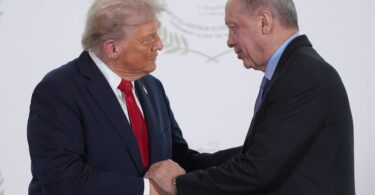
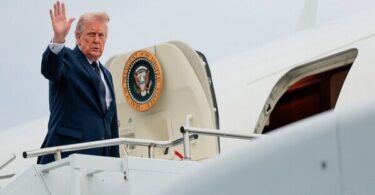
U.S. President Donald Trump has criticized NATO’s role in the crisis, calling the alliance a ?paper tiger? and warning of potential consequences. He also recently announced a reduction of 5,000 U.S. troops stationed in Germany, linking the move to remarks made by Chancellor Friedrich Merz regarding the conflict.
In the absence of NATO involvement, a coalition of roughly 40 countries led by France and the United Kingdom has taken the lead in efforts to restore safe passage through the strait. However, this initiative is conditioned on the end of hostilities.
Despite this, some NATO members are pushing for a more formal role for the alliance, either by replacing the existing coalition or establishing its own mission. According to diplomats cited by POLITICO, such a step is also seen as a way to demonstrate NATO’s relevance to Trump, who has repeatedly questioned the U.S. commitment to the alliance.
?That will definitely be discussed during this meeting,? Stenergard said, referring to talks in Helsingborg, Sweden.
She cautioned that NATO must be careful about expanding its scope beyond traditional areas of operation, but emphasized the importance of maritime security.
?It’s very important that we make sure that we protect the freedom of navigation because it is fundamental for free trade,? she said.
Dutch Foreign Minister Tom Berendsen expressed cautious support for coordination, saying NATO expertise could play a useful role.
?I think it’s always important that we do things in a coordinated way,? he said. ?We need the expertise of NATO there as well.?
However, consensus among all 32 NATO members would be required for any alliance-led mission, and opposition remains strong in some capitals.
French foreign ministry spokesperson Pascal Confavreux rejected the idea that NATO should expand into the region, stating that the alliance’s mandate is geographically limited.
?The North Atlantic Treaty applies to the North Atlantic region,? he said. ?It is not its purpose nor is it the right alliance to focus on the issue in the Middle East and the Strait of Hormuz.?