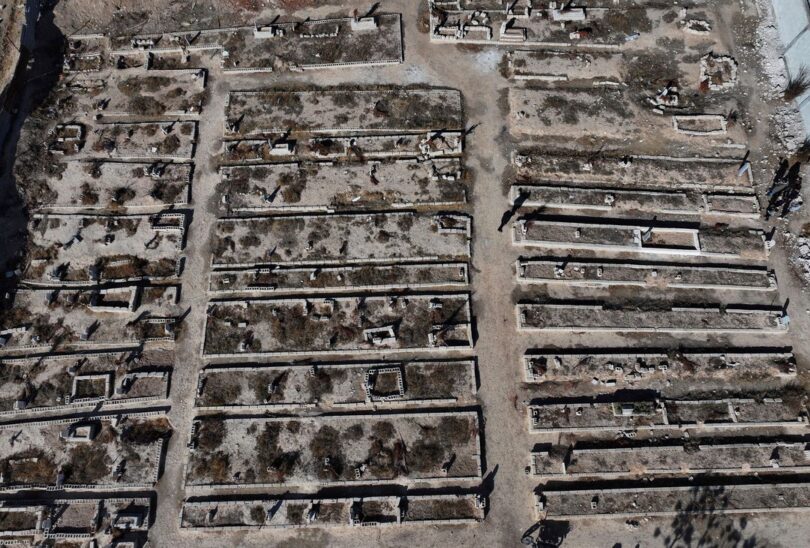
The attack killed more than 1,400 civilians, including hundreds of women and children, and wounded more than 10,000 others.
Following the attack, Syria joined the Organization for the Prohibition of Chemical Weapons (OPCW) on September 13, 2013, and the UN Security Council later that month adopted Resolution 2118 on the destruction of the country’s chemical weapons program.
The OPCW and the UN subsequently established a joint mission that declared the destruction of Syria’s declared chemical weapons stockpile in August 2014.
However, it later became clear that the destruction was limited to sites declared by the Assad regime, as its forces subsequently carried out numerous chemical attacks using chlorine and sarin gas in several cities, most notably Aleppo in northern Syria.
In April 2021, OPCW member states voted to suspend some of Syria’s rights and privileges after the organisation concluded that Syrian government forces had used chemical weapons in attacks on the town of Ltamenah in Hama province in March 2017 and the city of Saraqib in Idlib province in February 2018.
The arrest came days after the OPCW Executive Council adopted a decision restoring Syria’s rights and privileges under the Chemical Weapons Convention.
In November 2025, Syria reactivated its permanent mission to the OPCW in The Hague and appointed Mohammad Katoub as its permanent representative.
Related