The Regional Court of Justice ruled that congresses convened by an administration formed after a congress deemed absolutely null and void could not themselves be considered valid.
Grounds for a ruling of absolute nullity
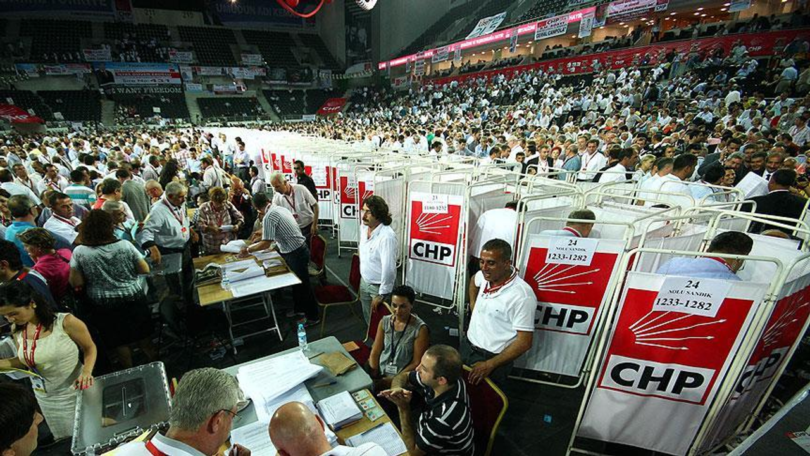
First and foremost, the Court concluded that the will of the delegates had been corrupted.
Based on criminal investigations in the case file, indictments, witness testimony, reports from the Financial Crimes Investigation Board (MASAK), official correspondence, and investigative reports, the Court determined that the voting preferences of certain delegates had been influenced by relationships of interest and benefit.
According to the Court, promises of money, jobs, candidacies, and other benefits had been decisive in the Congress’s outcome.
The decision was based on findings that certain delegates at both the Congress and the Istanbul Provincial Congress had been given money, promised employment in municipalities, offered candidacies or political positions, and provided with various benefits, such as shopping cards.
Related
It was also concluded that delegates’ votes had been monitored and that the secrecy of the delegates’ will, which should have remained confidential, had been compromised.
The Court further found that some delegates had been asked to photograph and send their ballots, thereby preventing the free formation of the electoral will.
Thus, it was determined that the principles of intra-party democracy and equality had been violated.
Referring to Article 69 of the Constitution and Articles 4 and 93 of the Political Parties Law, which require elections for political party organs to be conducted in accordance with democratic principles, party statutes, and the principle of equality among members, the Court concluded that there had been a violation of mandatory provisions of law.
The ruling stated that the irregularities alleged to have occurred during the Congress did not merely constitute grounds for ordinary annulment, but rather amounted to violations of public order and mandatory legal rules, thereby resulting in absolute nullity.
On these grounds, the Court issued a ruling of absolute nullity and provisionally ordered the reinstatement of the previous administration pending the decision’s finality.
Since the Congress was annulled retroactively from the date on which it was held, the Court ruled for a return to the situation existing prior to November 4–5, 2023, allowing Kemal Kilicdaroglu and the party organs of that period to remain in office.
In summary, the Court concluded that the will of the delegates at both the CHP Grand Congress and the Istanbul Provincial Congress had been compromised by various forms of personal gain, and that this situation was contrary to intra-party democracy, equality, and public order, thereby rendering it absolutely null.
When the process outlined above is examined closely, it becomes clear that what occurred cannot be characterised as an external judicial intervention in the internal affairs of the CHP.
Rather, the process constitutes a judicial proceeding initiated by applications from certain delegates who had long served as CHP members, executives, and mayors.
As the allegations were supported by strong and concrete evidence, the Court issued a ruling invalidating the decision and, as an interim measure, reassigned authority to the previous administration.