BY FESTUS ADEDAYO, Ph.D
.
I have severally confessed my love for the South African literature. I fell in love with it early in life while gobbling up narratives of heroic travails of liberation struggle fighters, represented in the works of Mazisi Kunene, Ezekiel Mphalele, Peter Abrahams, Alf Wannenburg, Alan Paton, Alex La Guma and many others. I must have read La Guma’s A Walk In The Night and virtually all his works innumerable times. Of the lot, one South African author whose works equally spellbound me is Can Themba, perhaps because of the self-inflicted tragedy of his early passage.
.
This morning, as I drew my laptop close, I asked AI how frequently “Festus Adedayo” had cited Themba’s works in his column. Its reply was: “Festus Adedayo… has frequently referenced Can Themba’s famous short story to illustrate political and social issues in Nigeria. He uses the story’s themes of betrayal, cruel punishment, and psychological torment to analyze Nigerian leadership, corruption, and societal behavior. ” Indeed, in my piece of September 8, 2019 with the title, What Soured South Africa’s Umqombothi, I said “If the number of times citations are made of a dead artist’s work approximates the invocation of the spirits of the dead, my frequent intrusion into Themba’s graveyard, especially in citing his short story, The Dube Train, should have worn his spirit out by now.”
.
So, when I watched viral videos of the duo of the Nigerian president (twice last week), and the senate president, engage in broadsides against perceived enemies of their government and political party, Themba hopped up my mind like a malevolent viper. Real name Daniel Canodoce, he was popularly known as Can Themba. Can was a young Marabastad-born writer, a drunk of renown, literary prodigy and journalist. He was one of the Drum magazine collectives of the 1950s. Alongside another kindred spirit named Nat Nakasa, they were two South African writers who blended journalism with creative writing. Can and Nakasa were also part of the young black writers of the Apartheid era who lived by the weird dictum, “Live fast, die young and have a good-looking corpse.” Can died on September 8, 1967, aged 43, official cause of death being coronary thrombosis, but widely attributed to a combination of heavy alcohol abuse and profound despair.
.
Indeed, as self-predicted, Can and Nakasa both died young. Nakasa, born May 12, 1937 died July 14, 1965, aged 28. By 1965, he had completed his Nieman Fellowship in the US and was living in Harlem, New York. Brilliant writer and a friend to Nadine Gordimer, he was planning to write a biography of Miriam Makeba. Two days after the proposal, however, Nakasa confessed to a friend that, “I can’t laugh any more and when I can’t laugh, I can’t write.” He sunk into a life of drinking, became depressed and confessed to his friend, Gordimer, that he was afraid he had inherited his mother’s mental illness. Nakasa was shortly found dead by suicide, having jumped from his friend’s seventh-storey apartment.
.
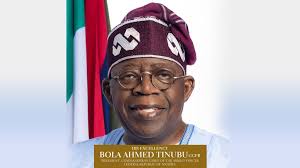
The more I read Can’s The Suit, the more I think the Nigerian president, Bola Tinubu, is a direct lift of its lead character, Philemon. I seem to think that, recently, he manifests the trauma from what I call the Philemon Wound. The plot of The Suit revolves round the life of Philemon, a middle-class South African lawyer. He has an adulterous wife called Matilda and both of them live in Sophiatown. Devoted as Philemon is to Matilda, the latter is fond of turning his home into a tryst immediately he leaves for office. On this particular day, Philemon is told of the escapade of his wife again. Rather than his wont of leaving for home late in the evening, Philemon sneaks home in the middle of the day. As lawyers say, he caught his wife in flagrante with the lover. In the melee that ensued, the lover scampers out of the window but forgets his suit jacket.
.
To effectively deal with the adulterous Matilda, Philemon then concocts a strange and bizarre punishment for her. It became a routine meted out on Matilda. She has to behave to the suit which he permanently hangs on the shelf as a honoured guest. This involves treating it with utmost respect, feeding it, providing ample entertainment for the suit and taking a walk with it, while discussing with it as an animate object. In conceptualizing the punishment, Philemon reckons that this treatment would serve as a bitter and constant reminder to Matilda about her adultery. Remorseful, psychologically beaten and humiliated, Matilda eventually dies of shame. Philemon’s punishment looked like a joke but it was cruel, punishing and deadly.
.
My deep reflection on The Suit tells me that Nigerians are Matilda; Bola Tinubu, Godswill Akpabio and their APC are Philemon. The intense psychological torment this tripod has been inflicting on Nigeria must be a result of an unpardonable adultery we committed. While reviewing my previous pieces, using the Themba short story under discourse as mugshot, AI said I used the story as a metaphor, “to compare the cruel punishment Philemon inflicts on his wife to the way… Nigerian leaders treat their citizens” and that I “highlight how Nigerians are forcefully made to live with the ‘suit’ of bad governance.”
.
At the commissioning of the Nigeria Revenue Service (NRS’) new corporate headquarters in Abuja on April 14, the Philemon spirit first pounced on the senate president, the loquacious Godswill Akpabio, and then the president. Nigeria, whose parliament Akpabio presides over, is unprecedentedly faced with, in the words of the International Crisis Group (ICG), “a severe, multifaceted security crisis in 2026”. This, ICG says, “is characterized by widespread banditry, mass kidnappings, and jihadist terrorism that have displaced over two million people.” Boko Haram and ISWAP stroll to the Northeast to gorge out blood at will, while rampant banditry in the Northwest/North-Central is as frequent as a diabetic strolls to the loo for a pee. Mass abduction of schoolchildren and worshipers have alarmingly spiked in 2025 and 2026 with hundreds of Nigerians currently in captivity. Says ICG, under this government, “rising violence (is) now spreading to previously stable areas”.
.
Since 2016, this government parades one of the hugest casualties of terrorism. Out of the hundreds of soldiers killed by terrorists, several high-ranking officers, which include at least four to five Brigadier Generals and several Colonels, the Tinubu government brandishes the highest fatalities. A few days ago, Brigadier General Oseni Omoh Braimah was killed in a coordinated attack by Boko Haram/ISWAP on a military base in Benisheikh, Borno State. Not long after, the Commanding Officer of the 242 Battalion, Monguno, Borno State, Col. I.A. Mohammed and six soldiers were also killed by an Improvised Explosive Device (IED) reportedly planted by insurgents. In November last year, Brigadier General Musa Uba was killed by ISWAP fighters near Wajiroko in same Borno State.
.
Last month, in a Global Terrorism Index of 2026, a report by the Institute for Economics and Peace said Nigeria is now rated fourth among countries of the world that parade deadliest terrorist operations. Nigeria’s ISWAP coasted home with the trophy of the deadliest terror group in the world, having struck Nigerians last year with over 90 attacks, translating into 384 deaths harvested into its cadaver barn. Experts have put the deaths and Nigerian soldiers’ apparent inability in the face of insurgents to poor welfare, substandard equipment and massive corruption. This is the same insecurity that gulps trillions of Nigeria’s yearly budget. A huge chunk of the budgets is ostensibly funneled into the purses of big-epaulets soldiers and their civilian accomplices in government.
.
It was reported that, as at this month, terrorist violence in Nigeria has marked a significant rise in fatalities, with the lives of over 1,400 of our country people taken. Hundreds of abductions took place in the first 96 days of 2026, the North-Central region having the hugest casualties. Apparently tired of paying ransom, the Nigerian government has left those victims to stew in their own broths inside the forest with their abductors. Some other reports claim that over 750 deaths have been recorded from 171 attacks this year while a newspaper report yesterday said it was 1000. Again, the ordinariness of killings of Nigerians by terrorists under the watch of this government reminds me of another of Can Themba’s work I have equally serially cited. It is a short story called The Dube Train. It, too, is a poignant illustration of the banality and ordinariness of death in the Apartheid era, which is replicated in the chaotic nature of Nigerian life and ten-a-pence commodity that deaths from terrorists and bandits have become.
.
But to Bola Tinubu and his grovelling Senate president, the cadavers of fallen soldiers and terrorists’ captives inside the forest, watched over by the menacing rifles of bloodthirsty insurgents, are raw materials for theatre. They are rich manure to fertilize infantile broadsides and cheap politicking. All that could ooze out from Nigeria’s No 3 is that “Insecurity is increasing because elections are coming, because people don’t know what to do again.” And then the bizarre: “Immediately after the election, two weeks after the election, insecurity will stop. The insecurity is being sponsored by people”.
.
Nigerians have heard that explanation before. During the Jonathan era, when insurgents abducted children of Chibok in a night raid, its explanation was that the abduction was a political reprisal aimed at worsting government in the eyes of the world. That government even pointedly accused the Borno governor of the time as the incubator of that abduction. It is the most simplistic explanation for a governmental drudgery and incapacity. It is a governmental surrender to the firepower of terrorists. The purport of Akpabio’s apparent no-brainer explanation is that, between now and after the election, we should throw our hands up in resignation. Hundreds more will be killed, many more will be captured. Not to worry: Election is the bother. What the flippant legislator was saying is that this government is too tame to tame this shrew. Since government exists principally to ensure the security of lives and property of the people, it goes without saying, a la Akpabio, that the current runners of government have no business superintending over daily deaths, issuing out regretful press releases and condolences.
.
For the president, it was time to eat what he is best at munching: tantrums of politics. In a voice caked with age and feeble, waffling cadences, he took a swipe at nameless opposition. Looking at Akpabio, he threatened to further destabilize the opposition. “I can even send you there to represent me and scatter them the more, because they are in confusion,” Tinubu said. If subjected to a linguistic postmortem, “the more” could mean, either an existence of an earlier effort or an existence of previous “scatter”. The president, at the moment, has yet to fully acquit himself of a groveler’s alleged vow to help him hold down and thus scatter the PDP. In earlier comments, the president made similar unstatesmanlike comments referring to the opposition as “politically displaced persons” or “political IDPs”.
.
A few days after, while addressing national, zonal and state leaderships of his amorphous Renewed Hope Ambassadors, all the president saw of this gruelling, grisly and concerning harvest of the dead is scare-mongering. “They want to scare me off. It is a lie,” he maintained, obstinately. He then waffled into his usual effete singsong, that his government was intent on “break(ing) the shackles of poverty, ignorance and hopelessness.” What hopelessness is greater than what is in Nigeria’s Northeast and Northwest at the moment? What poverty is greater than what Nigerians confront at meal time? What ignorance is more than the inability of millions of Nigerians to send their children to school as a result of the skyrocketing poverty inflicted on them in 2023?
.
At that forum, the president, whose government spent years rightly demonizing the Muhammadu Buhari government, suddenly made an about-turn. “Buhari is me and I am Buhari” he said. Faced with the potential of a huge northern rejection at the polls, Buhari has suddenly become his ally and now didn’t bankrupt Nigeria. To further reinforce this drive for votes, 774 Boko Haram insurgents, who killed our soldiers and our children at the battle front, have suddenly been rehabilitated. Tinubu would seem to be fulfilling a Yoruba saying which demanded that he who would short-change your amala ration, your best bet is to add more water to the cooking pot right from the outset. When the Chief of Defence Staff, General Olufemi Oluyede said Boko Haram insurgents were “our brothers”, it didn’t take long to detect the roots of the message. It was time for the CiC to run after northern votes.
.
At the meeting with the Renewed Hope Ambassadors, the president doubled down on the usual regime repertoire of Ajaokuta steel failure. Yes, it failed. But, Tinubu has been in office for three years now, what has he done to resuscitate it? The only thing he did close to this was meeting Keith Starmer in London on March 19. It was to finalize a major steel agreement. As part of a wider £746 million UK-backed port redevelopment programme, 120,000 tonnes of steel would be supplied by the British Steel for the rehabilitation of the Lagos Port Complex in Apapa and the Tin Can Island Port Complex. The UK government would be richer after its steel supply contract at £70 million and Ajaokuta would remain perpetually comatose.
.
A recent piece published in Agora Policy by Prof Remi Aiyede, with the title Difficult Reforms Demand Structured and Sustainable Citizen Engagement, which takes the sail off the ship of Tinubu’s argument about the beauty of his economic policies, states that “the road to economic salvation cannot be paved with good intentions alone” stating that, “the resultant cost of living crisis (which) naturally erupted into public outcry” is the albatross of the government. What Tinubu and his economic henchmen praise today as a successful reform is a policy reminiscent of the Babangida SAP that is devoid of a human face. It is a Dracula reform that has led thousands to their graveyards and many more to the sanatorium.
.
Then the president wondered why it is difficult for some nameless opposition members to “submit to lawful order of court”. What a cheeky retort! Should Joash Amupitan, the president’s political chef, who is obviously cooking him as sole meal on the menu, be the interpreter of the court’s ruling? Amupitan, obviously fascinated by lawlessness than law, even reasoned that, in his reading of “status quo ante bellum”, he was permitted by law to strike off ADC’s current executive because he didn’t want a replay of Zamfara debacle. And, I wonder: what is the business of INEC if a party decides it doesn’t bother if its potential victory is denied it at the end of the day by the court? Why should someone else’s baggage become someone else’s burden? What is INEC’s bother about ADC’s baggage, if not political harlotry masquerading as umpire-ship?
.
If the ambience of Aso Rock has ostracized the president from reality, let us tell him what obtains in the Nigerian world. Between 2023 and now, Nigerian litigants have been drawn to a frustrating juncture reminiscent of the Bola Ige Sidon look. Believability in the courts as a place of justice has waned irretrievably. Either real or contrived, the general belief is that this government’s state capture has extended from the executive, legislature, to the judiciary. Indeed, the belief is that Aso Rock, having cleverly built mansions for judges, dictates judgments to them over cognac. It is frightening.
.
As we speak, there is a total state capture in Nigeria which the international community would keep mum only at its international peril. The way it is, only a man donning the “Digi Bola” – the Tinubu glasses – will be on the ballot. ADC will also be on the ballot, but represented by either Dumebi Kachukwu or Bala Gombe. Omoyele Sowore will be there, and some characters in the Labour Party. PDP, too, will be on parade. If it is not Nyesom Wike, it will be some other nameless hireling. That is what the president means by him being a democrat. His newest definition of multipartism.
.
These state capturing mechanisms, for which the president is proud, backslid democracies in Venezuela, Russia, Turkey, Thailand, Hungary and Poland. In their work, How Democracies Die (2018), Harvard political scientists, Steven Levitsky and Daniel Ziblatt, wrote a comparative politics book which predicted all the shenanigans to be a sole candidate on the ballot paper on display by the Nigerian president who hides his political wiles behind a finger. Levitsky and Ziblatt said there would be a breakdown of “mutual toleration” and loss of respect for the political legitimacy of the opposition. It is already here. Tolerance would have no place in the dictionary of the ruling Leviathan. It will be as scarce as the excreta of the masquerade. It is already playing out here. Respect for the opinions of the people who hold different political viewpoints is a major kernel of continuous trek on the boulevard of democracy. It is dead here in Nigeria. The authors also said that the moment the system of separation of powers dies in an alleged democratic practice, the people could hear the “eléko òrun” – the hawker of corn meal of heaven – of democracy shouting atop her voice for customers to come look her stuffs up.
.
The good news is that, as hopeless as sustenance of democracy in Nigeria post-2027 recently looks, the recent happenings in Hungary signify a new hope for a conquered people like Nigerians. On April 12, Hungary elected Peter Magyar as the country’s new prime minister. His Tisza party won a landslide of two-thirds majority in the parliament. He thereby ousted the Fidesz party of longtime Prime Minister Viktor Orban, a Donald Trump ally, with 97.35 percent of precincts.
.
Whenever the president engages in his usual broadsides which seem to show that he has water, not blood, flowing in his veins, Can’s The Suit is what I see. I see the two characters of Matilda and Philemon. I think we must have seriously offended him and his APC, so much that our recompense is a psychological warfare. This is reflected in his punishing broadsides, peppered by his servile armour-bearer, the senate president. He is mocking a bitter, captured and psychologically humiliated Nigerian people.
.
ADEDAYO is a columnist, journalist, author, lawyer and political scientist. (First published by the Sunday Tribune, April 19, 2026)