BY LANRE ADEWOLE
.
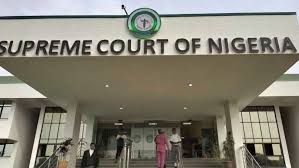
After a needless wait, the Supreme Court last Thursday rendered its considered opinions in the national leadership crises fraying the two main opposition parties; the Peoples Democratic Party (PDP) and the African Democratic Congress (ADC). But in the real sense of it, none of the feuding parties in the disputes went away with tangible victory, with the apex court further deepening the suspicion that the ballot is being deliberately cleared of meaningful opposition to President Bola Tinubu of the ruling All Progressives Congress (APC) by federal forces in the next year’s presidential election.
.
By extension, denying the opposition, especially the ADC of lawful national leadership would mean chaos at the state level and the possibility of the party being unable to field any candidates in the general election, both at the federal and state levels. That would be very sad.
With party membership registers also having a deadline for new inclusion and simultaneous membership of two political parties already outlawed, the apex court rendering the ADC case back to the trial court when according to INEC’s timetable, the substitution of candidates will end in the last days of August, would seem to be setting the stage for many opposition leaders to be partyless by the close of nomination, denying them the opportunity of participating in the process.
That would be unexampled in the running republic.
.
General Olusegun Obasanjo as civilian president tried it in 2007, using the current National Security Adviser (NSA), Nuhu Ribadu as the chairman of the Economic and Financial Crimes Commission to “indict and bar” some so-called corrupt politicians from seeking office. But the target was a poorly-concealed script. The Ota General was trying to bar his estranged deputy; then Vice President Atiku Abubakar from the 2007 ballot, for Obasanjo’s handpicked successor, now-late Umaru Yar’Adua to run almost unopposed; the same tactic the incumbent President is suspected of employing to favour himself.
.
But the Judiciary rose as the bulwark for the fledging democracy, knocking the self-serving agenda down. The Resistance battalion raised and led by the courts culminated in what could even pass for extreme activism with the pronouncement of a man who wasn’t on the ballot as governor of his state. The judgement was novel and very disputable. As a judicial reporter then in the Abuja Bureau of the Nigerian Tribune and present in court, reporting this surreal moment, I remember Justice George Oguntade, now retired, calling the first-of-its-kind ruling a “360 degree justice”. Incidentally, the incumbent Attorney General of the Federation and Minister of Justice, Prince Lateef Olasunkanmi Fagbemi (PLOF) SAN, was the lead counsel to the fellow who didn’t contest election to become governor. Today, Fagbemi is seeking to deregulate, deregister and emasculate the opposition, the basis for which he challenged Obasanjo then on behalf of his client; Rotimi Amaechi, who, instructively, is now a leading member of the opposition Fagbemi is seeking to bury, ostensibly on his principal’s behalf.
What a 360 degree turnaround!
Has Prince stopped believing in rounded justice now that he is Nigeria’s Chief Law Officer? If he could lead Amaechi, backed fully then by Nyesom Wike who became Amaechi’s Chief of Staff after the contentious judgement before their falling out, to fight Obasanjo for trying to de-platform his client, why is he fighting to dish out to others in opposition including his old client, what he couldn’t stomach then?
.
Wike, now of both the “ruling and opposition” parties, led the Amaechi “political” army against Obasanjo as president to fight for ballot recognition for their “candidate”, and was always in court even when Amaechi had to “bolt” to Ghana to avoid being taken into custody by Obasanjo’s goons before the judgement. Now Wike celebrates the discombobulating of the opposition, on whose’s side he should naturally be as a front-row leader of the PDP.
.
May 10 this year, will make it 16 years now-86-year-old Oguntade stepped away from the apex court in retirement. It would be good to have his thoughts on the current jurisprudential practice of litigants particularly of opposition elements, seemingly returning from the ultimate court into ultimate crisis where everyone will be claiming victory from the same pronouncement. Maybe some renegade APC elements, griping over the “consensus” option the ruling party is deploying to shut out popular participation at intra-party level, should sue the leadership under President Tinubu for denying them their rights to vie as party members and let’s see if the apex court would be clear enough in its pronouncements or further befuddle issues.
.
To be fair, unlike recent confusing pronouncements on the leadership crisis in the Labour Party (which the Court of Appeal had to finally solve) and even PDP at some point, the Thursday rulings from Justice Kekere-Ekun-led court were a bit clearer but still short in expectation of what the highest court in the land, assumed to be the firmest guardrail against democratic erraticism, should bring to the table in an existential crisis situation like Nigeria has found herself.
Yes, parties still have till the last days of August to substitute candidates, which is some three clear months away, after which no candidate can lawfully be on the ballot according to the operational Electoral Act 2026, it yet makes for good reasoning and suspicion that the ADC case, sent back to the trial court, except for exceptional accelerated hearing, might not make it beyond the Court of Appeal, by the time INEC portal would be lawfully shut against further candidate nomination.
.
Where will that leave the leading opposition?
.
The subsisting ruling of the apex court can only carry David Mark and co. through the hearing process and the judgement of the trial court will only temporarily serve the winning side, considering that the losing side will still seek reprieve from the two appellate windows; Court of Appeal and the Supreme Court. What if the final victorious faction is different from the one which may have signed candidate nomination to INEC and the portal effectively, officially shut by the time the matter is concluded?
.
To have a semblance of sanity going into the election, Mark and his group would be better seeking rapprochement with Gombe. A leper is only good at a thing with a tin of milk.
.
The Zamfara situation may end up repeating nationally for the opposition party.
.
You wonder what the Supreme Court could have done differently considering the saying the court is not a Father Christmas and can’t give what isn’t asked. Well, I reported the judiciary beat for about 12 years in Abuja for Nigerian Tribune, starting with when Chief Bola Ige, SAN, was the Attorney General and the entire lobby of the ministry would look like a ghost space once his mini convoy arrived. Everybody would disappear into their office. Some men were made for men. But I digress.
When a nation is going through the democratic crisis Nigeria is passing through, a functioning Judiciary can’t be unremarkable. It was the same desire, I believe, not to be sallow, that rallied the leadership of the Oguntade era to not stop at pointing out the lawful PDP candidate for Rivers in 2007 but pushing forward to rule that the lawful candidate must inherit the votes of the “unlawful” candidate of his party (Celestine Omehia), unlike the Zamfara situation when the unlawful candidate forfeited all votes, alongside his party, benefitting the second place and his party.
.
Judgements are considered opinions of judges and this is why split decisions are not uncommon in judiciary world over. There is also the concept of suo moto, when court is being proactive on its own initiative. The Supreme Court failed in this regard considering the urgency after the ADC seeming de-recognition set the nation on the edge.
.
The apex court from the very beginning, did not discharge itself properly on the charge of favouritism and bias, just like INEC and its professor-chairman. Considering the weeks between when the Mark appeal was filed and when the hearing and adjournment for ruling took place, the trial panel had enough time to issue a ruling on Wednesday April 22, and give their reason(s) later. That is how a responsive and responsible judiciary save a nation on the brink. It’s close to per curiam opinion, regularly reached for by the SCOTUS when politicians are overreaching in the United States. It’s also not a strange phenom in the Nigerian Judiciary. Famously, it was used by the Oguntade team in making that governor who didn’t participate in an election. The reasoning was given about three months later. Maybe the Kekere-Ekun leadership isn’t constructing the current political situation as an emergency. It is, if there is a plot to hold the rest down for the incumbent. And the suspicion has been credible.
.
Then the apex court waiting for the opposition to write a reminder before fixing a judgement date only deepened the suspicion of bias. A Supreme Court desirous of saving the nation’s electoral system would have, during hearing, simply queried parties over Section 83 of the Electoral Act 2026 and everybody would have known where they belong. By now, it is likely some parties would be withdrawing their processes at the lower courts. But it seems there is a predestination.
.
The provision provides; , “ (1) The Commission (INEC) shall keep records of the activities of all the registered political parties.
“(2)The Commission may seek information or clarification from any registered political party in connection with any activity of the political party, which may be contrary to the provisions of the Constitution or any other law, guidelines, rules or regulations made under an Act of the National Assembly.
“(3) The Commission may direct its enquiry under subsection (2) to the Chairman or Secretary of the political party at the national, state, local government, or area
council or ward level, as the case may be.
“(4) A political party which fails to provide the required information or clarification under subsection (2) or carry out any lawful directive given by the Commission in conformity with the provisions of this section is liable to a fine not more than N1,000,000.
“(5) Subject to the provision of subsection (3), *no Court in Nigeria shall entertain jurisdiction over any suit or matter pertaining to the internal affairs of a political party.*
“(6) Where such action is brought in negation of this provision –
(a) *no interim or interlocutory injunction shall be entertained by the Court, but the Court shall suspend its ruling and deliver it at the stage of final judgment and shall give accelerated hearing to the matter.*
(b) the Court shall, at the conclusion of the matter, impose costs of not less than ₦10,000,000.00 on the counsel who filed the action and not less than ₦10,000,000.00 on the Plaintiff/Applicant and in addition to payment to the Commission of any cost, including solicitors’ fees incurred by it where joined as a party.”
Will anything be clearer?
.
ADEWOLE is a columnist with Nigerian Tribune. (First published by Sunday Tribune on May 3, 2026)