Washington, DC — More than fifty years ago, an Iranian engineering student landed in New York City carrying little more than a suitcase and an address scribbled onto paper.
He built a life quickly. Suburban house. Small business. Children through university. By the late 1980s, he had become the kind of immigrant success story America likes telling about itself.
His granddaughter, Ava Tavakoli, lives a different version of the same country.
She studied public health in Washington, DC. She rents with roommates in Maryland. Her generation measures stability differently. Carefully. Monthly.
When she speaks about her grandfather’s America, she speaks with warmth, like someone recalling a time of possibility that shaped a family’s path.
“Grandpa believed if you worked hard enough things would eventually settle into place,” Tavakoli says quietly. “I think people my age don’t assume that anymore.”
Still, she insists she does not see herself anywhere else.
“There’s a reason people are still trying to come here. Even now.”
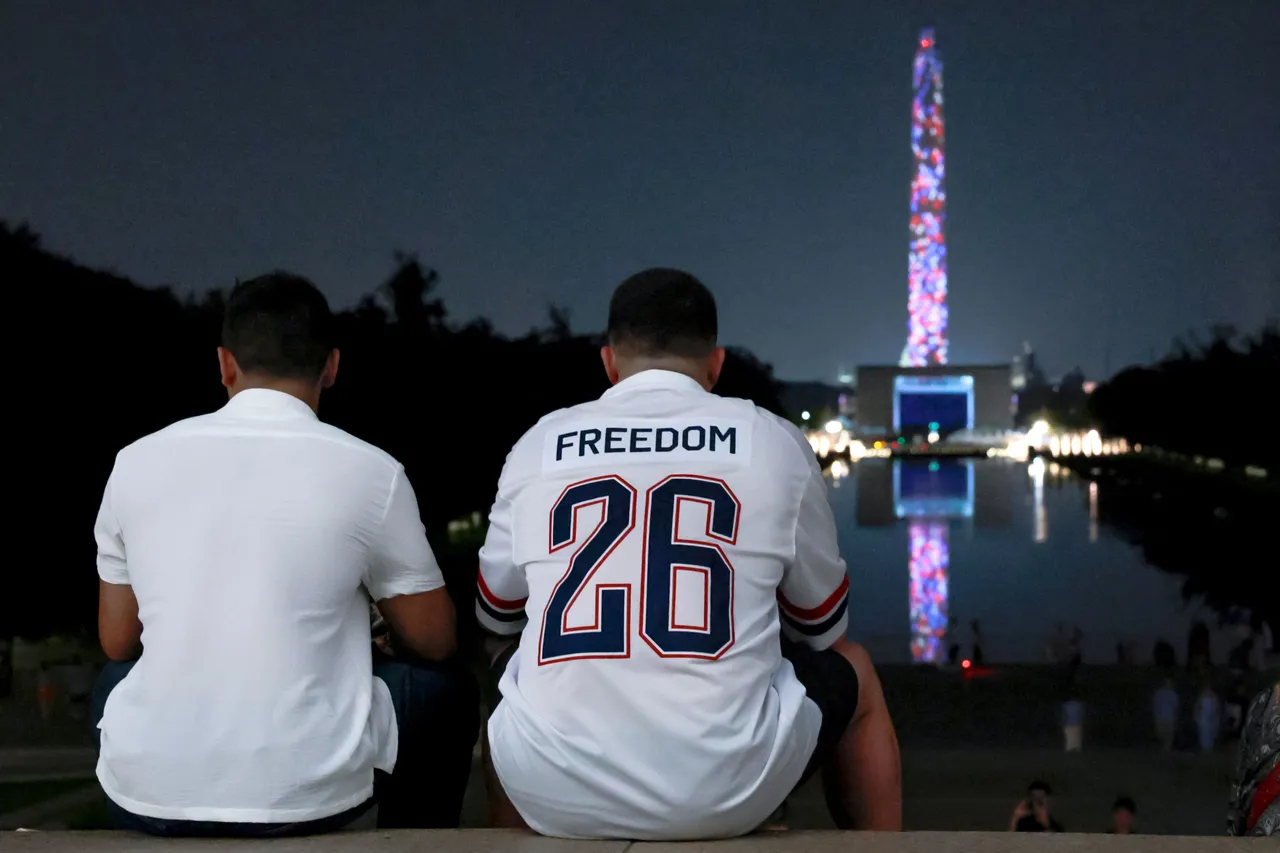
Outside, Washington is already preparing for the celebrations. Barricades near the Mall. Tourists in baseball caps and shorts moving through humid streets. Helicopters overhead. The city is rehearsing patriotism.
Freedom 250
The anniversary arrives at an uneasy moment for the country itself. America remains wealthier and militarily stronger than any rival. It still pulls top global talent, students, workers and migrants from every continent.
Immigrants often notice these changes first because they compare America against somewhere else, against memory itself.
Khalid Akhtar, a retired Pakistani-American postal worker in New York, remembers arriving in the late 1980s after hearing stories from relatives already in Brooklyn. He worked grocery shifts first, then factory work, then the postal service for nearly three decades.
What stayed with him was not simply the money. It was anonymity.
Back home in Karachi, he says, your name often arrives before you do. Family background, class, neighbourhood. America felt different because nobody knew where to place him yet.
“You could become somebody else here,” he says. “That was the attraction.”
His son became a doctor in Texas. The optimism remained.
Akhtar says he still feels a quiet gratitude toward the country that allowed him to build a life from almost nothing.
“I originally hail from Jodia Bazar in Karachi; there were many Makranis, and it was a simpler time, but when I arrived here I thought if I worked hard enough, nobody could stop me,” he says. “Mostly, that turned out to be true.”
He pauses for a moment before adding another thought.
“America is not easy anymore. Maybe it never was. But it still gives people room.”
Admiration, attachment and quiet realism
Across immigrant communities, that sentiment repeats itself in different forms. Admiration mixed with fatigue. Attachment mixed with realism.
For second-generation immigrants, the relationship with America is usually less dramatic and more conditional.
An Indian-American software engineer in Seattle, Jatin Sasun, describes loving the country while understanding it more critically than his parents ever did.
They arrived during the technology boom believing almost entirely in upward mobility. Their son inherited the opportunities alongside the contradictions.
“My parents saw America as escape,” Sasun says. “People my age see the trade-offs too.”
He says his parents still speak about the US with the excitement of newcomers.
“For them, this country opened every door,” he says. “For my generation, some of those doors feel heavier. But they’re still there.”
That shift appears across immigrant communities now.
The first generation often speaks about sacrifice and arrival. Their children speak about precarity, identity and cost. Not because they reject America, but because they grew up inside its systems rather than chasing entry into them.