BY SUYI AYODELE
.
“Neither a borrower nor a lender be; For loan oft loses both itself and friend, And borrowing dulls the edge of husbandry.” William Shakespeare, Hamlet (Act 1, Scene 3)
.
Nigeria has shifted from incurring debt as an instrument of policy to embracing it as a condition of survival. It is a dangerous evolution—made worse when President Bola Ahmed Tinubu appears to regard debt not as leprosy, but as ornament.
.
Greek philosopher, Plutarch (before AD50-after 120), wrote a piece titled: “That We Ought Not to Borrow.” What the old Greek philosopher said in the piece, published in Vol. X of the Loeb Classical Library edition of the Moralia, 1936 (Pg. 315-339), shows that borrowing is worse than leprosy in all ramifications. Plutarch’s piece summarises the Greeks’ attitude to borrowing.
.
Incidentally, every argument he posted in the material aligns with the African’s philosophy of a borrower ending up a broke person. Our elders, right from the beginning of time, say: Àì l’ówó l’ówó kìí jé ká ní owó l’ówó (being broke makes one to be more broke).
.
They say this because the broke man goes a-borrowing and ends up using the little he has to service his debts thus ending up without money. A man without money is a sad man. That confirms the age-long axiom of he who goes a-borrowing goes a-sorrowing.
.
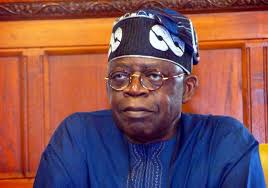
President Tinubu, on Tuesday last week, at an engagement with all the movers and shakers of events from Plateau State, said to those critical about the rate of borrowing by his administration that “borrowing is not leprosy.” He added that whenever the occasion arose for him to borrow, he would not hesitate to do so.
.
Maybe we should allow Tinubu to speak: “If we have to borrow money, we will, because borrowing is not leprosy; we just have to work hard to be able to repay it.” To the President, going by these uttered words, what matters is the ability to pay. And to pay back the countless debts incurred by his administration, Nigeria and Nigerians must work hard.
.
It is not what Tinubu said that worries me. My concern is the metaphor he deployed – “leprosy”. That is the worst of all contagious diseases. Anyone who contracts leprosy is usually isolated. Leprosaria, in ancient days, were built in the deep forest. This is why it is said that: A kìí kó ilé adétè sí ìgboro; inú igbó ni adétè ńgbé (no one builds the house of a leper in the city; lepers live in the forest).
.
The idea of the forest in this ancient saying itself depicts graphic metaphors of a pariah, isolation, and of an individual who lives with ultimate shame. So, when our President deployed that metaphor, its meaning goes beyond the theatrical message his audience thought they heard and clapped for. What Tinubu told his audience is that Nigeria had not borrowed to that level when it would become an isolated nation, a leprous entity that nobody would dare touch with a 10-feet pole! We may soon get there, anyway! Back to ancient Greek.
.
Ancient Greek philosophy never supports borrowing. Rather, it considers borrowing, which usually comes with heavy interest, as another form of servitude. The borrower, in the Greek mindset, is not just a slave to the lender; he is equally considered a weakling and one with the base of all moral values. Plato, Aristotle, and other ancient philosophers believed that a borrower, especially a reckless one, is an ‘unnatural and socially corrosive” individual. Any borrowing that imposes heavy interest on the borrower, they said, is ‘predatory.’ (See: “Lending and Borrowing in Ancient Athens,” by Paul Millett, Cambridge University Press, Cambridge, 2022).
.
This is the summary of Plutarch’s work, where he argues that taking loans comes with its own degree of disgrace and leads to “a voluntary loss of freedom and a sign of folly.” A simple review of Plutarch’s essay says: “That We Ought Not to Borrow” (Greek: De vitando aere alieno) is a famous essay….that argues against debt, describing it as a form of slavery to lenders that causes stress and ruins financial freedom. Plutarch advises avoiding loans, whether rich or poor, arguing it is either unnecessary or impossible to repay.”
.
In an October 5, 2021, piece on this page with the title: “Buhari and the chronic debtor-wife of Osin”, I expressed worry at the rate at which the administration of General Muhammad Buhari was taking loans. I warned that Nigerians would be left in pain and sorrow at the end of the day. The introductory paragraph of the said article is worth repeating here:
.
“Permit me to call this Buhari regime Onígbèsè Aya Osin (The chronic debtor-wife of Osin). Osin is the Yoruba deity of royalty. According to the legend, Osin married a shameless woman who owed virtually everyone in the community. In our tradition, once a person’s behaviour is off the mark of our acceptable mores, norms and traditions, we give such a person a descriptive name. This wife’s reputation followed her everywhere she went. ‘Onigbese’ is the Yoruba word for chronic debtor; ‘Aya’ is wife. Her cognomen is an exercise in character portrayal. She is known as Onigbese Aya Osin, who buys pangolin without paying, and buys porcupine on credit. She sees the woman hawking a hedgehog; she runs after her empty-handed. She uses the money from antelope to pay for deer. Yet, she fries neither for her husband nor cooks for her concubine. Her first child is sold into slavery to service her debts; her lastborn is pawned off for her indebtedness. When she talks, she accuses her husband of not covering her shame whereas, she neither informs the husband nor takes permission from him before buying bush meat on credit.”
.
Whatever we saw in the Buhari administration that informed the above has since paled into insignificance in the administration of Tinubu. This government borrows with reckless abandon! That is troubling. And unlike Buhari, who was decent about it, the current set of Onígbèsè in the Aso Rock Villa adds arrogance to the charade. This is why, when he had nothing more to tell us all, Tinubu said that our level of indebtedness had not reached the leprosy stage where no nation would want to touch us.
.
Whatever Tinubu said during the encounter, his spokesman, Bayo Onanuga, further amplified. In his criticism of the borrowing spree of this government, Peter Obi, the 2023 Labour Party (LP) presidential candidate, said that “Borrowing is not only leprosy, but a killer cancer when it is borrowed for consumption and not production as it is in Nigeria today.” He further lamented the nation’s “Debt that is not tied to measurable economic value; debt that does not translate into jobs, growth, or improved living standards for the Nigerian people.”
.
Onanuga, responding to Obi, said that the opposition politician was “bringing up the same old arguments again with your sensationalist approach.” Like his master, Onanuga stressed that “…Every sovereign nation borrows money, and as President Tinubu correctly pointed out, borrowing is not a disease. If you really want to know, the government has been taking loans to pay for important infrastructure projects, not to spend on everyday things. The fact that we are getting money and have lenders who are willing to lend shows that our country is trustworthy and able to pay back the money.”
.
I read Onanuga’s position, and I wondered if ‘silence is no longer golden’, as we were told, especially when one does not have something intelligent to say! How can borrowing become an ornament that a government should wear like a medal, the way Onanuga deodorised it? So, if every nation of the world wants to lend us money, we should take all the loans with reckless abandon, the way the government, the ‘old activist’, is defending does? And, if we may ask: what are the “important infrastructure projects” Onanuga is talking about?
.
Do they include the $2.7 billion borrowed from the World Bank by this administration in 2023, part of which is the $700 million loan taken for adolescent girls’ secondary education that we have nothing to show for except the daily kidnapping of our school boys and girls up North? Or the preposterous $750 million loan for power sector recovery, only for the Aso Rock Villa to detach itself from the National Grid?
.
Can we also ask Onanuga if his “important infrastructure projects” for which this government took a World Bank loan of $4.25 billion in 2024, include the $1.57 billion loan to strengthen human capital, improve health for women and children, and build climate resilience, without anything to show for it? What about the $357 million, $57 million, and $86 million loans for rural road access and agricultural marketing projects, in a country where bandits, herdsmen and terrorists don’t allow farmers to go to their farms?
.
Is the 2025 World Bank loan of $2.695 billion, part of which $500 million was said to have been for education under the HOPE Education loan, or the $253 million and $247 million for NG-CARES, also part of Onanuga’s “important infrastructure projects?” What sort of awkward reasoning governs this nation?
.
Can someone please help tell those in power and their defenders that figures don’t lie! According to the Debt Management Office (DMO), Nigeria’s total public debt in 2015 was approximately N12.12 trillion to N12.6 trillion ($63–$64 billion). Various independent reports confirmed that figure, which is said to include both domestic and external debt stocks, representing the total liability at the time the administration of President Goodluck Ebele Jonathan ended in May 2015.
.
But by December 31, 2023, according to the DMO, the nation’s total public debt was N97.34 trillion (US$108.23 billion). Again, the figure includes the external and domestic debt of the Federal Government, the 36 state governments, and the Federal Capital Territory.
.
Fast forward to the three-year-old administration of President Tinubu, Nigeria’s total public debt is projected to exceed N159 trillion (approx. $110 billion, “driven by a N68.32 trillion budget that relies heavily on borrowing. The government has allocated roughly ₦15.81 trillion for debt servicing (interest and fees) in 2026 alone, highlighting a severe debt service burden on the economy.”
.
Pray, what do you call a disease that makes a government spend over 80% of its revenue to service debt, if not ACUTE LEPROSY? What can be more cancerous than a government which borrows to satisfy the President’s fantasies at the expense of good living conditions for the citizenry? How do you describe a government which goes a-borrowing to finance its own budgets if not a leprous and cancerous government?
.
And since Onanuga has deliberately chosen not to understand why the government he defends has “lenders who are willing to lend” as he posted in response to Obi, I suggest, and very strongly too, that he takes a simple tutorial in Plutarch, who posits that “…the Persians regard lying as the second among wrong-doings and being in debt as the first; for lying is often practiced by debtors; but money-lenders lie more than debtors and cheat in their ledgers, when they write that they give so-and‑so much to so-and‑so, though they really give less…” This is why Onanuga and his ilk will be eternally wrong in their celebration of “lenders who are willing to lend.”
.
The Greek philosopher adds in the piece that, while he had “not declared war against the money-lenders”, he must point it out “to those who are ready to become borrowers how much disgrace and servility there is in the practice and that borrowing is an act of extreme folly and weakness.”
.
In concluding the piece, “That We Ought Not to Borrow”, Plutarch cautions thus: “Have you money? Do not borrow because you are not in need. Have you no money? Do not borrow, for you will not be able to pay….therefore in your own case do not heap up upon poverty, which has many attendant evils, the perplexities which arise from borrowing and owing, and do not deprive poverty of the only advantage which it possesses over wealth, namely freedom from care; since by doing so you will incur the derision of the proverb: I am unable to carry the goat, put the ox then upon me.” May the cosmos give us the grace to learn from ancient wisdom!
.
AYODELE is a columnist with Nigerian Tribune. (First published by Nigerian Tribune on Tuesday May 5, 2026)