
Advertisement
Advertisement
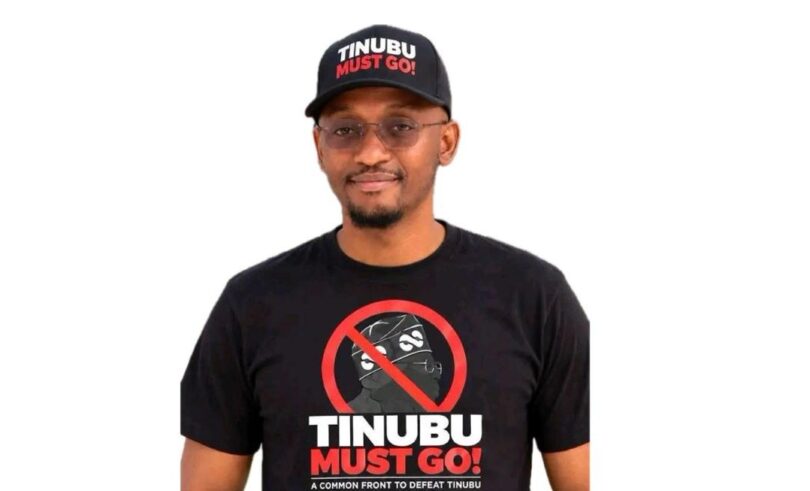
I read some comments regarding the recent online polls conducted under the Tinubu Must Go (TMG) movement in the Arewa social media space, led by Barr. Abba Hikima. Besides the majority of supportive comments, which are not my primary concern here, I noticed some critical comments, largely from non-partisan observers, questioning the methodology, representational power and general implication of the polls. Of course, there were also negative comments from supporters of President Tinubu.
I felt the need to share my humble opinion as a researcher interested in research methodology and political communication.
First of all, skepticism about opinion polls is a universal concern. It arises partly from people’s experiences with polls that have failed to accurately predict some elections and referendums, such as Brexit and the 2016 Hillary Clinton versus Donald Trump election. Many unintentional and intentional practices, methodological limitations and the dynamic nature of human beings can contribute to misprediction.
If you want to learn more about the politics and business of opinion polling, read David W. Moore’s The Opinion Makers: An Insider Exposes the Truth Behind the Polls. However, professional polls have also produced useful and reasonably accurate estimates when appropriate methodologies were applied.
The TMG poll is, however, different from a conventional public opinion poll. The organisers conducted it primarily to help them decide which among the opposition candidates they would support. They did not conduct it to predict the outcome of the 2027 election.
I can therefore call the exercise successful in terms of participation and mobilisation. However, I want to call the attention of TMG not to generalise the result as a nationwide poll. Such a claim would not stand the test of research methodology, particularly in terms of population coverage, sample representation and sampling technique.
Generally, this type of online poll can be understood as a form of qualified-volunteer or convenience-based polling. What I believe the TMG result can tell us more directly is something about the Hausa-speaking social media space, particularly the Northwest and Northeast online communities that actively participated in the exercise. And politicians know what these online communities can do. I am not disputing the participation of others outside the zones, but I dont think the number is significant to represent them.
Abba Hikima, a supporter of Peter Obi, unveiled the Tinubu Must Go movement on Facebook on September 15. His post generated significant engagement, with about 73,000 likes, 21,000 comments and 2,900 shares. Several opposition influencers, particularly from the Arewa/ Hausa-speaking social media space, joined the conversation, and the movement quickly became a prominent online campaign against the Tinubu administration. A day later, ruling party supporters responded by creating slogans such as Tinubu Must Stay (TMS). I presented something regarding this at the end.
According to the TMG document, the movement describes itself as a nationwide, citizen-led community bringing together Nigerians across different political persuasions with the objective of encouraging a united opposition front and exploring the possibility of a single opposition candidate for the 2027 election. They wrote letters to four opposition figures: Atiku Abubakar, Peter Obi, Seyi Makinde and Omoyele Sowore, asking them to engage in dialogue towards a possible united opposition front.
The first post announcing the decision to conduct the poll was published on September 23 on Hikima’s Facebook page and attracted about 24,000 likes, 18,000 comments and 900 shares. The poll was subsequently conducted within 24 hours. The final figure circulated by TMG was 109,799 votes: Atiku Abubakar/Rotimi Amaechi, ADC: 80,809 votes (73.6%); Peter Obi/Rabiu Musa Kwankwaso, NDC: 24,519 votes (22.3%); and Others: 4,471 votes (4.1%).
What does this poll show? First, it provides direction for the TMG leadership to know the candidate they will support. Secondly, it tells us a lot about the strength of TMG’s online mobilisation in Northern Nigeria, and I don’t think we have its equivalent now. It can be used to predict the popularity of the Atiku/Amaechi ticket in the Northern online community.
But I became even more interested in what people were saying in the comments because in feedback assessment, the tone and direction of audience feedback can sometimes tell us more than the crude number of likes and comments. A post may have 20,000 comments, but most of those comments might be hostile to the message; that is a failure.
To examine this, I compared the feedback under two opposing political messages: Abba Hikima’s post, “Tinubu Must Go,” on September 15, and Bashir Ahmad, a prominent APC voice in the Arewa social media space, post, “Tinubu Must Stay,” on September 16. I randomly examined 200 comments (not representative, but to see the direction) under each post and classified the comments according to whether they were supportive or oppositional to the position expressed in the respective post.
Roughly 85 per cent of the comments under Abba Hikima’s TMG post were supportive, while about 15 per cent were oppositional. Under Bashir Ahmad’s TMS post, the pattern was almost reversed: roughly 10 per cent were supportive, while about 90 per cent were oppositional.
Lastly, for me, TMG set the political agenda, demonstrated visibility and mobilisation capability, and created political momentum, and that is critical in political communication.
Isah Nasidi, PhD, is a lecturer and Strategic Communication consultant based in Abuja and the author of Political Communication in the Post Truth Era: Concept, Laws and Strategies and siyasa ba da gaba ba. [email protected]