
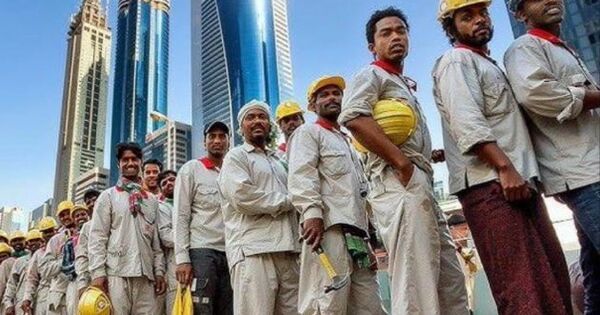
HANOI, Vietnam: Millions of foreign workers have helped build the rich Gulf economies, but many have not fully shared in that wealth. Now they face a difficult choice: stay in the region for better pay despite the danger, or return to their poorer home countries where prices have risen because of the war.
Some, like Mohammad Abdullah Al Mamun, worked in Saudi Arabia for 15 years and sent money back to support his family in a very poor part of Bangladesh. This year, he planned to return home, build a bigger house, and spend time with his child, whom he hardly knew.
But on March 8, a missile hit his workers’ camp. He suffered serious burns and later died. He was one of more than two dozen foreign workers killed in the Middle East after the United States and Israel went to war with Iran in February.
Mamun never got to choose, as his body was sent home in a coffin. His wife said they don’t know what they will do next.
In many Gulf countries, migrant workers make up most of the population. While professionals from wealthier regions work in business and finance, laborers from poorer countries in Asia and Africa often work long hours in extreme heat with little protection.
A workers’ rights group said many migrants had no access to bomb shelters and were stuck during the conflict. At least 24 foreign workers in the Middle East and four in Israel were killed in missile and drone attacks, along with several sailors at sea. Experts say migrant workers are in a very risky situation.
Although a ceasefire was announced in early April, peace talks have not made progress. Iran has blocked a key oil route, the Strait of Hormuz, and says it will reopen it only if the war ends and U.S. sanctions are lifted.
Asian Countries Affected
The conflict has caused prices of fuel, fertilizer, and other goods to rise, especially affecting Asian countries. Money sent home by migrant workers is very important to countries such as India, Bangladesh, Pakistan, Sri Lanka, and Nepal. It is now even more needed as families struggle and governments try to afford energy imports.
At the same time, economies in the Middle East are suffering from damaged energy infrastructure and reduced exports. Fighting could start again if tensions remain high.
Mamun’s family learned about his injury through phone calls, and a video showed him badly burned and asking for help.
Other workers continue to live in fear. A Bangladeshi factory worker in Qatar said he worked long hours while missiles flew overhead and had to hide when alarms sounded. Despite the danger, he said he must keep working because he needs the money.
A taxi driver in Qatar said his income has dropped sharply because fewer people are traveling, and he has not been able to send money home to his family in Egypt. He said workers like him are suffering because of the war.
Experts warn that job losses in sectors such as construction will hurt migrant workers the most, especially those without formal contracts. Some may also face unfair treatment, such as not being paid or being suddenly fired.
In Israel, a Filipino caregiver continued working and looking after elderly people despite frequent missile warnings, even going out for supplies when needed. He worries that if he returns home, his family may not be able to survive financially.
He said he knows life can end at any moment, but he also wonders what kind of life he would return to if he leaves.