
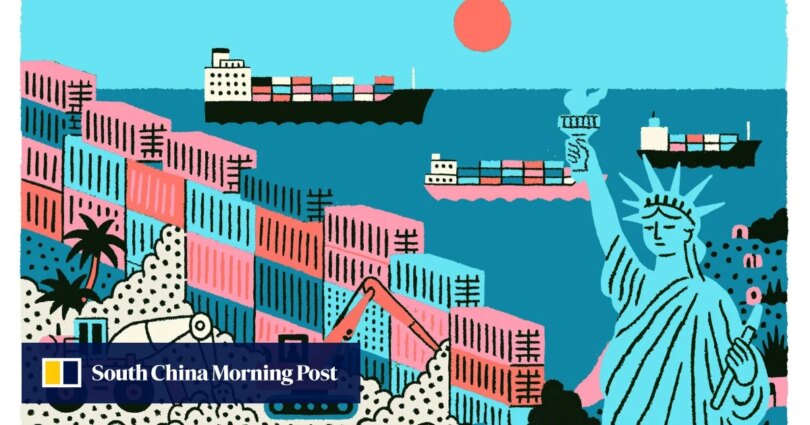
The Great Depression had just begun when former president Herbert Hoover signed the Smoot-Hawley Tariff Act, targeting more than 20,000 imported goods in June 1930 despite explicit warnings from over 1,000 economists.
Wind the clock back further, and the first major piece of legislation passed by the United States after the adoption of its constitution was the Tariff Act of 1789, or the “Alexander Hamilton tariff” – a reference to the country’s first treasury secretary, a staunch advocate of duties and subsidies to nurture nascent industries.
But while the White House argued its trade policy has revived an economic agenda that powered American growth for much of the past 250 years, historians and trade analysts disagreed.
Instead, they said, the duties Trump unleashed in his second term have had more far-reaching consequences than those of their forebears – reversing decades of open-market policies, penalising allies and falling short of the administration’s own promises, even as it moved to establish a more permanent tariff authority.