
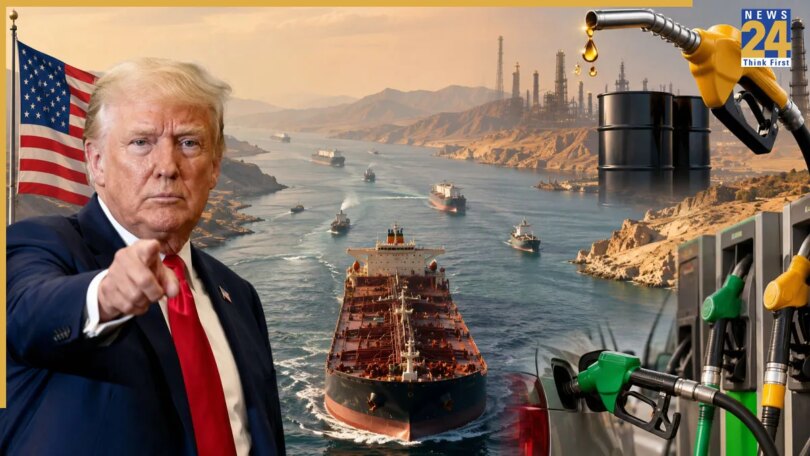
The ongoing conflict between the United States and Iran could soon affect countries that depend on oil imports, including India. US President Donald Trump has announced a 20% security charge, or what he called a Hormuz toll tax, on commercial ships passing through the Strait of Hormuz.
Trump said the United States is protecting one of the world’s most important shipping routes and that countries using this route should help pay for its security. If implemented, the new charge could increase the cost of transporting oil and gas, leading to higher fuel prices in many countries.
What did Trump announce?
Trump said the US will once again enforce a naval blockade around the Strait of Hormuz and provide security for commercial ships passing through the area.
According to him, every commercial ship using the route will have to pay a 20% security charge. The money collected will be used to cover the cost of US naval operations protecting ships from attacks during the ongoing conflict with Iran.
Why is the Strait of Hormuz so important?
The Strait of Hormuz is one of the world’s busiest and most important oil shipping routes. Around 20% of the world’s oil supply passes through this narrow waterway every day.
Any disruption in this region can affect global oil prices and increase shipping costs. The ongoing US-Iran conflict has already made the route riskier for oil tankers and cargo ships.
Will India have to pay the Hormuz toll tax?

India could be among the countries most affected if the proposal is implemented.
The country imports nearly 90% of its crude oil, and much of it comes from Gulf countries such as Iraq, Saudi Arabia, the UAE, Kuwait and Qatar. Most of these oil shipments travel through the Strait of Hormuz before reaching India.
Could petrol, diesel and LPG become more expensive?
Yes, higher shipping costs could increase India’s fuel import bill. If oil becomes more expensive to import, oil companies may have to pay more for crude oil. This could eventually lead to higher prices of petrol, diesel and LPG.
The impact may not stop there. Higher fuel costs can also:
- Increase transportation expenses.
- Make goods and services more expensive.
- Add pressure on inflation.
- Increase India’s import bill and current account deficit.
- Put pressure on the Indian rupee.
Industries that rely heavily on fuel and energy may also face higher operating costs.
Read Also: Why are Gen Z protesting against Nepal PM Balen Shah? Key reasons behind Kathmandu unrest
The post Trump imposes 20% Hormuz toll tax on commercial ships: What it means for India; Will petrol, diesel prices rise? appeared first on News24.